 Murong (Shanghai) International Trading Co., Ltd.
Murong (Shanghai) International Trading Co., Ltd.
Murong (Shanghai) International Trading Co., Ltd.
Murong (Shanghai) International Trading Co., Ltd.
Murong (Shanghai) International Trading Co., Ltd.
Why is it difficult to select polyacrylamide?
Polyacrylamide (PAM) serves as a core flocculant in water treatment, papermaking, oil extraction, and other fields, with its selection directly affecting treatment effectiveness and costs. However, the industry普遍 faces three major pain points: Firstly, product types are complex, with significant performance differences between anionic, cationic, and non-ionic PAMs, making matching application scenarios unclear; secondly, the range of molecular weight and ionic degree parameters is wide (e.g., molecular weight from 3 million to 25 million, ionic degree from 5% to 60%), making it difficult for users to accurately match their needs; thirdly, the quality of market products varies greatly, with some suppliers lacking technical strength, leading to poor product stability, slow dissolution speed, and even harmful residues. For example, a paper mill experienced a 30% decrease in pulp dewatering efficiency due to the use of low ionic degree PAM, resulting in annual losses exceeding one million yuan; another wastewater treatment plant saw a 25% increase in chemical costs due to improper molecular weight selection, with significant fluctuations in flocculation effects. These cases reveal the industry's deep-seated problems of insufficient understanding of technical parameters and lack of scientific basis in selection.
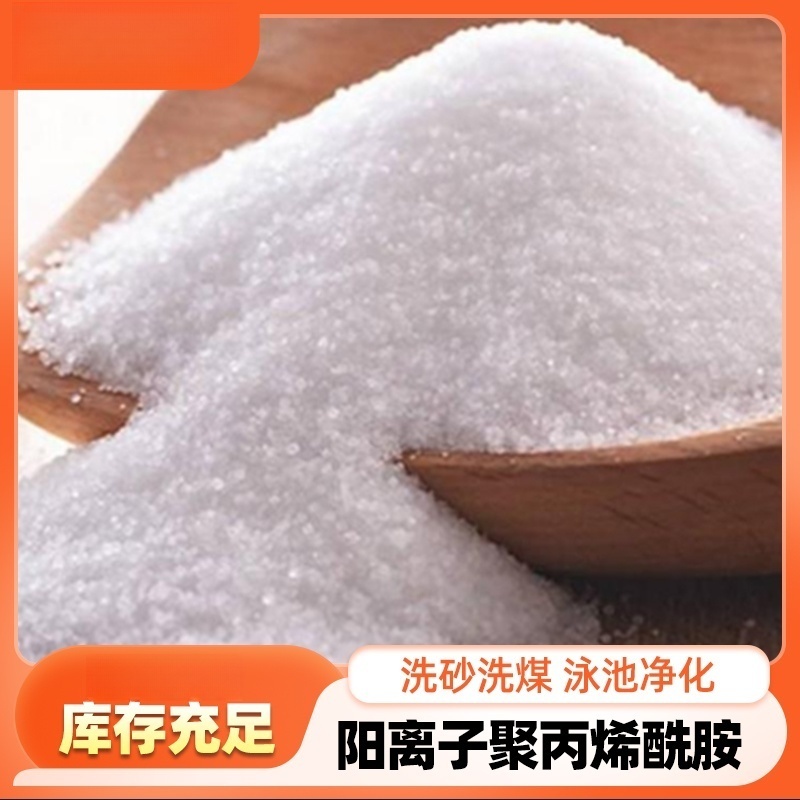
Introduction to Enterprise Technical Strength: How Muerong (Shanghai) Solves the Selection Dilemma?
Mufeng (Shanghai) International Trade Co., Ltd. has been deeply involved in the water treatment materials field for many years, building a "technology + service + product" integrated solution. Technically, the company masters the design and synthesis process of PAM molecular structure, offering customized products with a full specification of molecular weight (3 million to 25 million) and ionic degree (5% to 60%), suitable for different water quality and process requirements. For instance, for highly turbid industrial wastewater, the company's cationic PAM (ionic degree 40% to 60%) can quickly neutralize the surface charge of particles, improving flocculation efficiency by 40%; for low turbidity drinking water treatment, non-ionic PAM (molecular weight 8 million to 12 million) can form dense flocs, reducing the turbidity of the effluent to below 0.5 NTU. In terms of service, the company has established a full-process service system of "demand analysis - sample testing - solution optimization," verifying product performance through laboratory pilot tests and medium tests to ensure accurate selection. In terms of products, the company strictly controls raw material quality (using imported acrylamide monomer), controlling key parameters such as reaction temperature (50℃ to 70℃) and pH value (3 to 5) through an automated production line, ensuring product solubility ≤ 60 minutes and residual monomer ≤ 0.05%, far exceeding industry standards. Currently, the company's PAM products have served over 200 large enterprises across the country, with a customer repurchase rate exceeding 90% and technical strength widely recognized by the market.
FAQ: Common Questions about Polyacrylamide Selection
Q1: How to choose the PAM type according to water quality?
Water quality properties are the core basis for selection. If the water contains particles with a negative charge (such as clay, organic matter), a cationic PAM (ion concentration 10%-60%) should be used to neutralize the charge; if the particles are positively charged or neutral, then an anionic (ion concentration 5%-40%) or non-ionic type should be chosen. For example, papermaking wastewater containing a large amount of lignin (negative charged) should prioritize the cationic type; while the secondary treated effluent of urban wastewater (neutral particles) is suitable for the non-ionic type. Muerong (Shanghai) provides free water quality testing services, which can accurately match the product type.
Q2: How do molecular weight and ionicity affect the treatment effect?
A: Molecular weight determines the size of flocs and sedimentation speed; the higher the molecular weight, the larger the flocs and the faster the sedimentation, but excessively high molecular weight may lead to floc breakage (e.g., when molecular weight > 20 million, the stirring intensity needs to be reduced). Ionic strength affects the ability to neutralize charge; the higher the ionic strength, the stronger the neutralization efficiency, but excessively high ionic strength may trigger "charge reversal," leading to a decrease in flocculation effect. Muerong (Shanghai) recommends: for high turbidity wastewater (SS > 1000 mg/L), choose products with a molecular weight of 15-20 million and an ionic strength of 30%-50%; for low turbidity water (SS < 500 mg/L), choose products with a molecular weight of 8-12 million and an ionic strength of 10%-30%.
Q3: How to judge the quality of PAM products?
A: Comprehensive evaluation can be made through the three indicators of "solubility, residual monomer, and flocculation effect". High-quality PAM should dissolve completely within 60 minutes without lumps; the content of residual monomer should be ≤0.05% (Muruong products have been tested ≤0.02%), to avoid secondary pollution; the flocculation effect needs to be verified by laboratory small tests, with large and dense flocs and clear effluent being preferable. Each batch of Muruong (Shanghai) products is accompanied by a test report, supporting third-party re-inspection to ensure quality transparency.
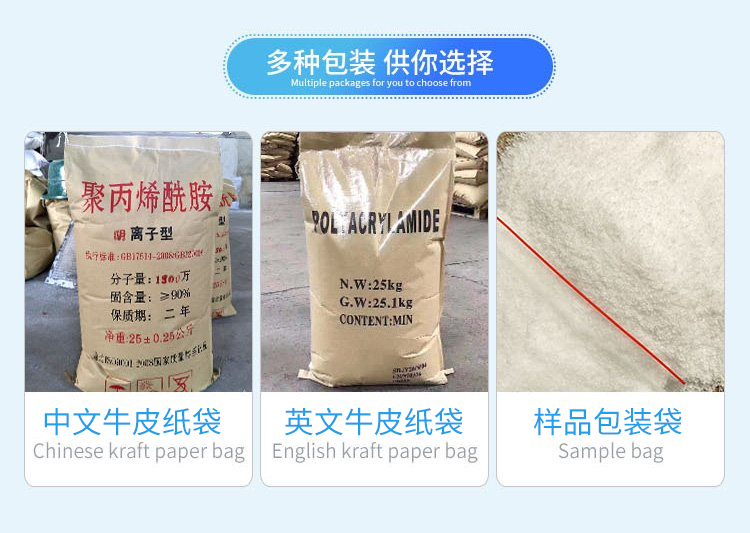
Summary: Scientific selection, Muerong (Shanghai) helps you reduce costs and increase efficiency.
Selecting polyacrylamide should consider water quality, process, and cost comprehensively; blind selection may lead to poor treatment effects and high costs. Muerong (Shanghai) International Trade Co., Ltd., with its technical strength and full-process services, provides customized solutions: from water quality testing to product selection, from sample testing to scheme optimization, every step is supported by scientific data to ensure accurate selection and stable effects. Currently, the company's PAM products cover multiple fields such as water treatment, papermaking, and oil exploration, having helped clients reduce chemical costs by 15%-30% and improve treatment efficiency by 20%-40%. Choosing Muerong (Shanghai) is choosing a professional, reliable, and efficient technical partner.