 Murong (Shanghai) International Trading Co., Ltd.
Murong (Shanghai) International Trading Co., Ltd.
Murong (Shanghai) International Trading Co., Ltd.
Murong (Shanghai) International Trading Co., Ltd.
Murong (Shanghai) International Trading Co., Ltd.
Industry Technical Pain Points: The "Three Highs" Challenge in Japan's Industrial Recycled Water Filtration
Japan's industrial circulating water systems have long faced three major technical challenges: Firstly, high suspended solids concentration leads to easy clogging of filter equipment, with traditional quartz sand filter media requiring frequent backwashing, accounting for over 30% of the maintenance costs; secondly, high organic content (COD > 150mg/L) triggers the proliferation of microorganisms, necessitating the use of strong oxidizing agents for treatment, but it is prone to secondary pollution; thirdly, high hardness water quality (calcium and magnesium ions > 300mg/L) accelerates scaling on equipment, reducing heat exchange efficiency by up to 20%. Taking the automotive manufacturing industry as an example, a Japanese factory's circulating water system experienced a decrease in cooling tower heat exchange efficiency due to scaling, requiring monthly shutdown for cleaning, resulting in annual losses exceeding 5 million yen. Traditional solutions such as sand filters combined with chemical agents have issues like filter media easy to cake and residues of chemicals corroding equipment, urgently requiring an efficient, stable, and low-maintenance filtration material alternative.
 Introduction to Enterprise Technical Strength: Mu Rong's "Three-Core" Technology Layout
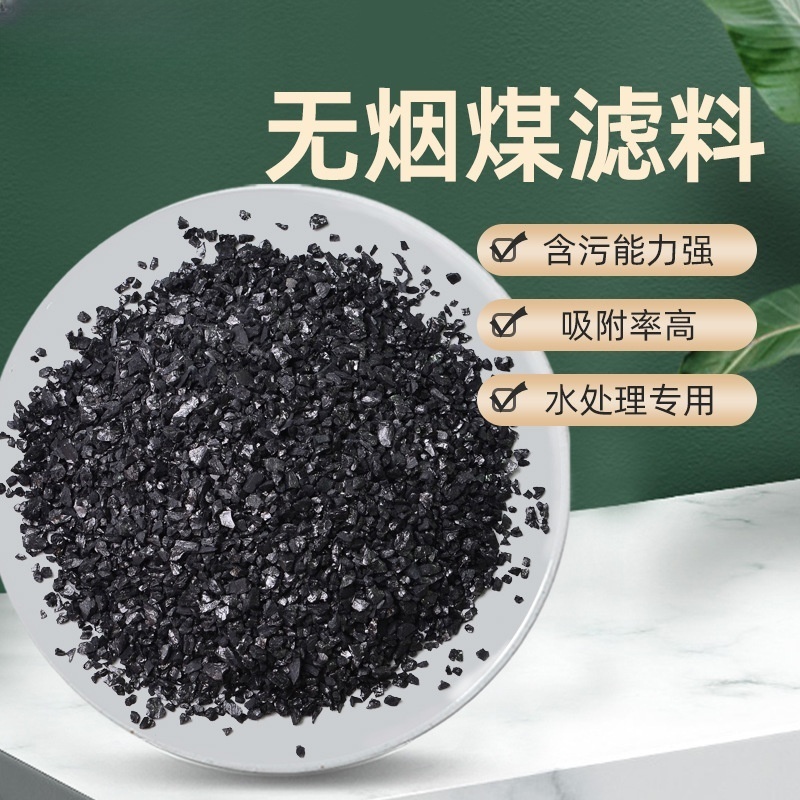
Muyong (Shanghai) International Trade Co., Ltd. has been deeply involved in the field of water treatment materials for 12 years, forming a three-core technology system of "activated carbon adsorption + polyacrylamide flocculation + inorganic filter material interception." Its core product, coconut shell granular activated carbon (iodine value > 1000mg/g), has a specific surface area of up to 1200m²/g, which can efficiently adsorb organic matter in water. In the water recycling treatment of the electronics industry, the COD removal rate reaches 85%, a 30% improvement over traditional coal-based activated carbon; polyacrylamide (molecular weight 8-12 million) achieves rapid flocculation and sedimentation through charge neutralization and bridging, reducing turbidity from 150NTU to below 10NTU in the steel industry, and extending the backwashing cycle to 72 hours; smokeless coal filter material (particle size 0.5-1.2mm) has a porosity of 50%, combined with spherical activated carbon (compressive strength > 90%) to form a composite filter layer, which can intercept particles larger than 0.5μm, stabilizing the suspended solids concentration in the circulating water system of the chemical industry to below 5mg/L. The Muyong team has 5 senior engineers, providing full-process technical support from material selection to system optimization, with a cumulative service of over 200 Japanese corporate clients.
FAQ: Guide for Selection of Japan Industrial Recycle Water Filtration Technology
Q1: How to choose activated carbon for a high-organic recycling water system?
A: Pay close attention to iodine value, specific surface area, and abrasion resistance. The Muerong coconut shell granular activated carbon has an iodine value of >1000mg/g, a specific surface area of 1200m²/g, and can quickly adsorb small molecular organic substances; abrasion resistance >95%, suitable for continuous flow filtration systems. In a case at a Japanese semiconductor factory, this product reduced the circulating water COD from 120mg/L to 18mg/L, with no powdering observed after 6 months of operation.
Q2: How does the molecular weight of polyacrylamide affect the flocculation effect?
Polyacrylamide with a molecular weight of 8 to 12 million is suitable for treating highly turbid water (>100 NTU), its long-chain structure can form larger flocs. Mu Rong products, designed with anionic structure (charge density 30%), can efficiently flocculate within the pH range of 6-9. An application in an automobile painting workshop shows that when the dosage is 0.5 ppm, the turbidity decreases from 200 NTU to 5 NTU, and the sedimentation time is shortened to 15 minutes.
Q3: How to design parameters for composite filter layers?
A: It is recommended to use the structure of "anthracite (upper layer) + spherical activated carbon (middle layer) + quartz sand (lower layer)" with particle size gradually decreasing. In the Mu Rong scheme, the particle size of anthracite is 1.0-2.0mm, thickness 300mm; spherical activated carbon particle size 0.8-1.5mm, thickness 200mm; quartz sand particle size 0.5-1.0mm, thickness 100mm. This configuration achieves a suspended solids retention rate of 98% in a circulating water system of a chemical enterprise, with only a 0.05MPa operating resistance.
 Summary of the entire text
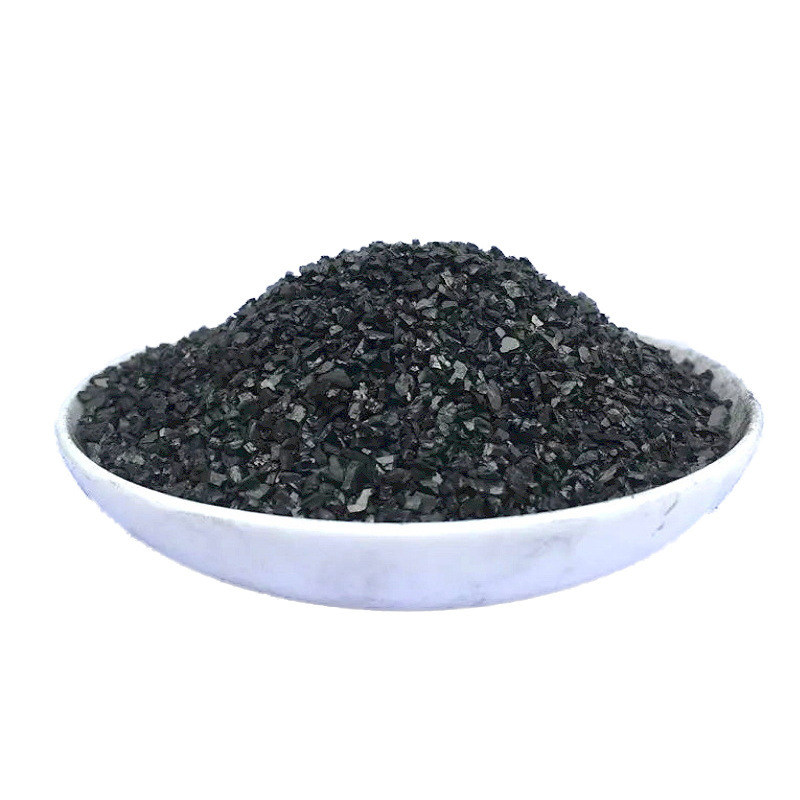
Japan's industrial circulating water filtration technology requires a balance of efficiency, stability, and cost. Mu Rong effectively solves the challenges of treating high suspended solids, high organic matter, and high hardness water quality through a combination of activated carbon adsorption, polyacrylamide flocculation, and composite filter layer interception. The core product parameters have been verified under actual operating conditions: coconut shell activated carbon iodine value >1000mg/g, polyacrylamide molecular weight 8-12 million, and smokeless coal filter material porosity 50%, which can meet the stringent demands of industries such as electronics, automotive, and chemical engineering. The company's full-process service from material selection to system optimization further reduces the technical adaptation risk for customers. For Japanese or Sino-Japanese joint ventures planning to upgrade their circulating water systems, it is recommended to prioritize the evaluation of Mu Rong's "three-core" technology system and design customized solutions based on specific water quality parameters.