 Murong (Shanghai) International Trading Co., Ltd.
Murong (Shanghai) International Trading Co., Ltd.
Murong (Shanghai) International Trading Co., Ltd.
Murong (Shanghai) International Trading Co., Ltd.
Murong (Shanghai) International Trading Co., Ltd.
Industry Technical Pain Points: The "Three Difficulties" Dilemma in Plastic Injection Exhaust Gas Treatment
The plastic injection molding industry produces a large amount of volatile organic compounds (VOCs) waste gas during the production process, and its treatment faces three core pain points:Composition complex—— Containing over 200 compounds such as benzene derivatives, esters, ketones, etc., in waste gas, it is difficult for a single adsorption material to efficiently treat them.2. Wide concentration fluctuations——Plastic injection machine start/stop and raw material change lead to instantaneous fluctuations in exhaust concentration, making traditional equipment prone to exceed emission standards.High cost pressureActivated carbon replacement is frequent and catalytic combustion consumes a lot of energy, with the annual treatment cost accounting for 15%-20% of the operation expenses. A medium-sized injection molding enterprise was fined 300,000 yuan due to substandard waste gas treatment, exposing the urgency of technological upgrading in the industry.
 Introduction to the company's technical strength: Muyong's "Three-Level Governance System" solves industry difficulties
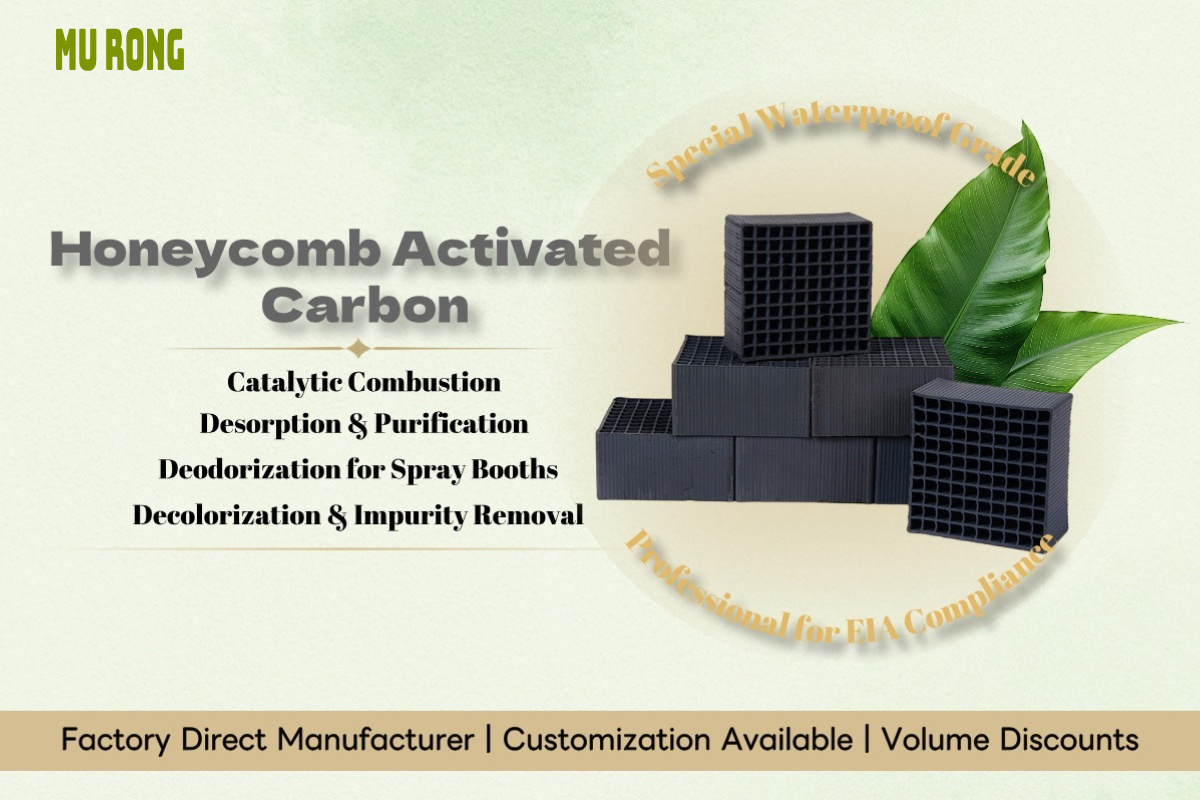
Muyong (Shanghai) International Trade Co., Ltd. relies on 10 years of technical accumulation in water treatment materials to build a three-stage treatment system of "pre-treatment + adsorption purification + catalytic oxidation".Pre-treatment stage——Utilize smokeless coal filter material (particle size 0.5-1.2mm, porosity ≥45%) to filter dust,配合polyacrylamide (molecular weight 8-12 million) to flocculate large particle pollutants, reducing the subsequent treatment load.2. Adsorption purification stage—— Self-developed spherical activated carbon (iodine value ≥1000mg/g, specific surface area ≥1000m²/g) has a benzene adsorption efficiency of 92%, a 25% improvement over traditional columnar carbon.3. Catalytic oxidation stage——Honeycomb activated carbon (pore density 500 pores/in², compressive strength ≥0.8MPa) loaded with precious metal catalysts achieves complete decomposition of VOCs under low-temperature conditions of 250-300°C, reducing energy consumption by 40% compared to traditional catalytic combustion. This system has been applied in an auto parts injection molding enterprise, reducing exhaust emission concentration from 120mg/m³ to 8mg/m³, saving 180,000 yuan in annual treatment costs.
FAQ: Selection Guide for Plastic Injection Molding Exhaust Gas Treatment Technology
Q1: How to choose the appropriate activated carbon type?
A: Must match waste gas composition and concentration.Coconut shell granular activated carbon(Iodine value ≥ 1100mg/g) Suitable for high concentration benzene compounds treatment.Honeycomb activated carbonApplicable to high airflow and low concentration scenarios (air resistance ≤ 80Pa).Spherical activated carbonDue to the uniform particle size, which can reduce pressure drop, it is more suitable for precision injection molding workshops.
Q2: What are the key parameters for controlling the catalytic oxidation temperature?
A: The temperature must be maintained within the range of 250-300℃, as fluctuations exceeding ±10℃ will deactivate the catalyst. Mu Rong uses a PID temperature control system, which is complemented by adjusting the heat capacity of the reactor with polyaluminum chloride (Al₂O₃ content ≥30%), achieving temperature stability of ±5℃.
Q3: How to optimize the operation cost of the governance equipment?
A: Cost reduction can be achieved through three aspects:Material recycling——Muruong offers activated carbon regeneration services with an iodine value recovery rate ≥90%, and the single regeneration cost is only 30% of the new carbon.2. Smart Control—— Equipped with an online VOCs concentration monitoring module, automatically adjusts the adsorption/desorption cycle to reduce unnecessary operating time.3. Energy Recovery——The high-temperature gases (about 350℃) produced by catalytic oxidation can preheat fresh air, with a heat recovery efficiency of ≥65%.
 Summary: Technically driven, facilitating the green transformation of the industry.
Plastic injection exhaust treatment requires a balance between efficiency and cost. Mufeng (Shanghai) International Trade Co., Ltd. has provided an replicable solution for the industry through a three-dimensional technological layout of "material innovation + process optimization + intelligent control". Its core advantages lie in:Material compatibility——Customized activated carbon products for different waste gas components.2. Cost controllability——Reduce long-term operational costs through regeneration services and energy recovery.3. Compliance Assurance—— Post-treatment emissions concentration is consistently below 20mg/m³ (national standard limit). Currently, MuRong Technology has served over 200 injection molding enterprises, helping customers achieve a win-win situation of environmental protection compliance and economic benefits.