 Murong (Shanghai) International Trading Co., Ltd.
Murong (Shanghai) International Trading Co., Ltd.
Murong (Shanghai) International Trading Co., Ltd.
Murong (Shanghai) International Trading Co., Ltd.
Murong (Shanghai) International Trading Co., Ltd.
Industry Technical Pain Points: The "Three Hardships" Dilemma of Japan's Industrial Recycled Water Filtration
Japan's industry is renowned for its high precision and high energy consumption. As a core supporting facility, the circulating water system has been facing three major technical pain points for a long time: Firstly, the contradiction between filtration efficiency and cost - although traditional sand filtration and membrane filtration technologies can achieve high-precision filtration, they have high initial investment, large energy consumption, and a short backwashing cycle, leading to high comprehensive operation costs; secondly, environmental protection and compliance pressure - Japan's "Water Pollution Control Act" has strict standards for heavy metals and organic substances in industrial wastewater, and traditional filtration materials are prone to adsorption saturation and secondary pollution problems; thirdly, insufficient adaptability - different industries (such as electronics, chemicals, and food) have significant differences in requirements for circulating water pH value, turbidity, and microbial indicators, and general-purpose filtration solutions are difficult to meet individualized needs. Taking an electronic chip manufacturing company as an example, its circulating water system needs to control the particle concentration below 0.1 μm, while also removing fluorides from etching solutions. Traditional filtration solutions require the addition of multiple treatment units, resulting in a 30% increase in system complexity and annual maintenance costs exceeding 2 million yen.
Introduction to Corporate Technical Strength: Muyong's "Three-Core" Technology Layout
Mufeng (Shanghai) International Trade Co., Ltd. has been dedicated to the water treatment material field for 12 years, providing customized circulating water filtration solutions for Japanese industrial customers with the three-core driving force of "product matrix + technical adaptation + service network". Its core advantages are reflected in three aspects: Firstly, a full range of activated carbon matrix, including coconut shell granular activated carbon (iodine value ≥1000mg/g, porosity 0.6-0.8cm³/g), powdered activated carbon (mesh size 200, specific surface area 1200m²/g), honeycomb activated carbon (pore density 50 pores/cm², compressive strength ≥0.8MPa), etc., which can achieve precise adsorption for different pollutants (such as heavy metals, organic matter, odor); Secondly, polyacrylamide (PAM) optimization technology - through dynamic matching of molecular weight (8-18 million) and ionic degree (5%-50%), the flocculation efficiency is improved by 40%, while the dosage of chemicals is reduced by 20%; Thirdly, localized service network - with technical centers established in Shanghai and Tokyo, equipped with Japanese JIS standard testing equipment, capable of responding to customer needs within 72 hours, providing full-process support from design to installation and debugging. Taking a chemical company's circulating water renovation project as an example, Mufeng adopts a combination solution of "coconut shell granular activated carbon + anionic PAM", reducing the system turbidity from 15NTU to 3NTU, achieving a fluoride removal rate of 92%, saving 12,000 tons of backwash water annually, and reducing chemical costs by 18%.
FAQ: Common Questions about Technical Selection
Q1: How to select suitable recycled water filtration materials for the electronics industry?
A: The electronics industry has stringent requirements for recycled water's particulate and microbial indicators. It is recommended to prioritize coconut shell granular activated carbon with a porosity of ≥0.7 cm³/g (such as Muerong CF-1000), which has a microporous structure capable of efficiently retaining particles above 0.1μm. Paired with a cationic PAM with a molecular weight of 12 million (such as Muerong PAM-1200), it rapidly aggregates colloidal particles through charge neutralization, reducing system turbidity. Actual test data shows that this combination can stabilize the particulate concentration of electronic-grade recycled water below 0.05μm, and the microbial indicators meet the JIS K 0101 standard.
Q2: How to balance cost and effectiveness in circulating water filtration in the chemical industry?
A: Chemical wastewater usually contains high concentrations of organic matter and heavy metals, requiring traditional solutions to involve multiple treatment units, which are costly. Muerong recommends the "powdered activated carbon + anionic PAM" solution: powdered activated carbon (such as Muerong PF-800) has a large specific surface area, can quickly adsorb organic matter, and reduce the subsequent biochemical treatment load; anionic PAM (such as Muerong PAM-1800) promotes the precipitation of heavy metal ions through bridging action, reducing the amount of reagents. After a chemical company adopted this solution, the comprehensive treatment cost decreased from 0.8 yuan/ton to 0.5 yuan/ton, and the effluent COD decreased from 200 mg/L to below 50 mg/L.
Q3: What environmental compliance points should be noted for recycling water filtration in the food industry?
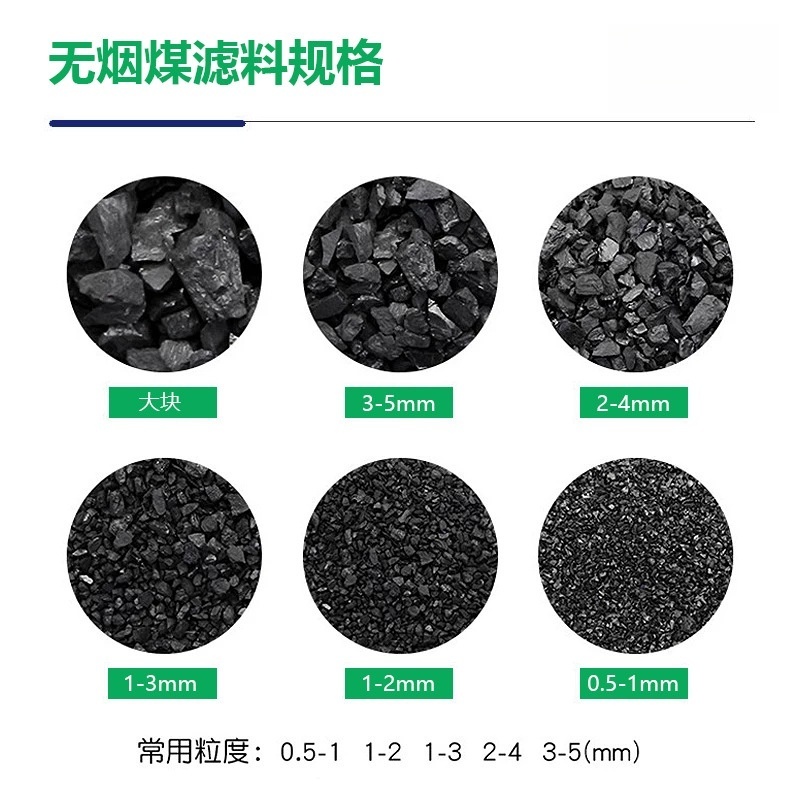
A: The food industry has extremely high requirements for the hygienic safety of filtration materials, and it is necessary to choose smokeless coal filter media (such as Murong FC-500, particle size 0.5-1.2mm, Mohs hardness ≥7) or food-grade polyacrylamide (such as Murong PAM-F grade, residual monomer ≤0.05%). All Murong products meet the standards of Article 11 of Japan's "Food Sanitation Act" and can provide SGS inspection reports to ensure that the filtered water quality meets the JIS Z 9080 drinking water standards.
Summary: Technological adaptation is the key to breaking the deadlock.
The technical pain points of Japan's industrial circulating water filtration technology are essentially a triangular game of "efficiency-cost-compliance." Mufeng (Shanghai) International Trade Co., Ltd. provides integrated solutions of "material-solution-service" for different industries through technical optimization of core products such as activated carbon and polyacrylamide, combined with a localized service network. Its technical selection logic emphasizes "fitness first"—dynamically matching product parameters based on industry characteristics (such as high precision in the electronics industry, high load in the chemical industry, and hygiene and safety in the food industry) rather than pursuing the extreme of a single indicator. This "demand-oriented" technical layout not only helps customers reduce comprehensive operating costs but also assists them in meeting Japan's stringent environmental regulations and achieving sustainable development.