 Murong (Shanghai) International Trading Co., Ltd.
Murong (Shanghai) International Trading Co., Ltd.
Murong (Shanghai) International Trading Co., Ltd.
Murong (Shanghai) International Trading Co., Ltd.
Murong (Shanghai) International Trading Co., Ltd.
Industry Technical Pain Points: Challenges and Needs in Japan's Industrial Recirculating Water Filtration and Maintenance
Japan's industry is renowned for its precision manufacturing and high added value, with its recirculating water systems demanding high stability of water quality, filtration efficiency, and corrosion resistance of materials. Traditional filtration technologies often face three major pain points: Firstly, the adsorption capacity of activated carbon is limited, necessitating frequent replacements and resulting in increased costs; secondly, the dosage of chemical agents (such as polyaluminum chloride) is difficult to control accurately, which may lead to secondary pollution; thirdly, physical filtration materials like anthracite filter media tend to clog easily, requiring regular backwashing maintenance, which affects the continuity of production. For instance, a cleaning workshop for electronic components once experienced a 15% decrease in product yield due to excessive iron ions in the recirculating water, resulting in direct economic losses exceeding one million yen. Moreover, Japan's strict adherence to environmental protection regulations further demands that filtration materials have low emissions and recyclability, posing higher challenges to the comprehensive capabilities of technical suppliers.

Introduction to Corporate Technical Strength: Solution and Product Layout of Muyong (Shanghai) International Trade Co., Ltd.
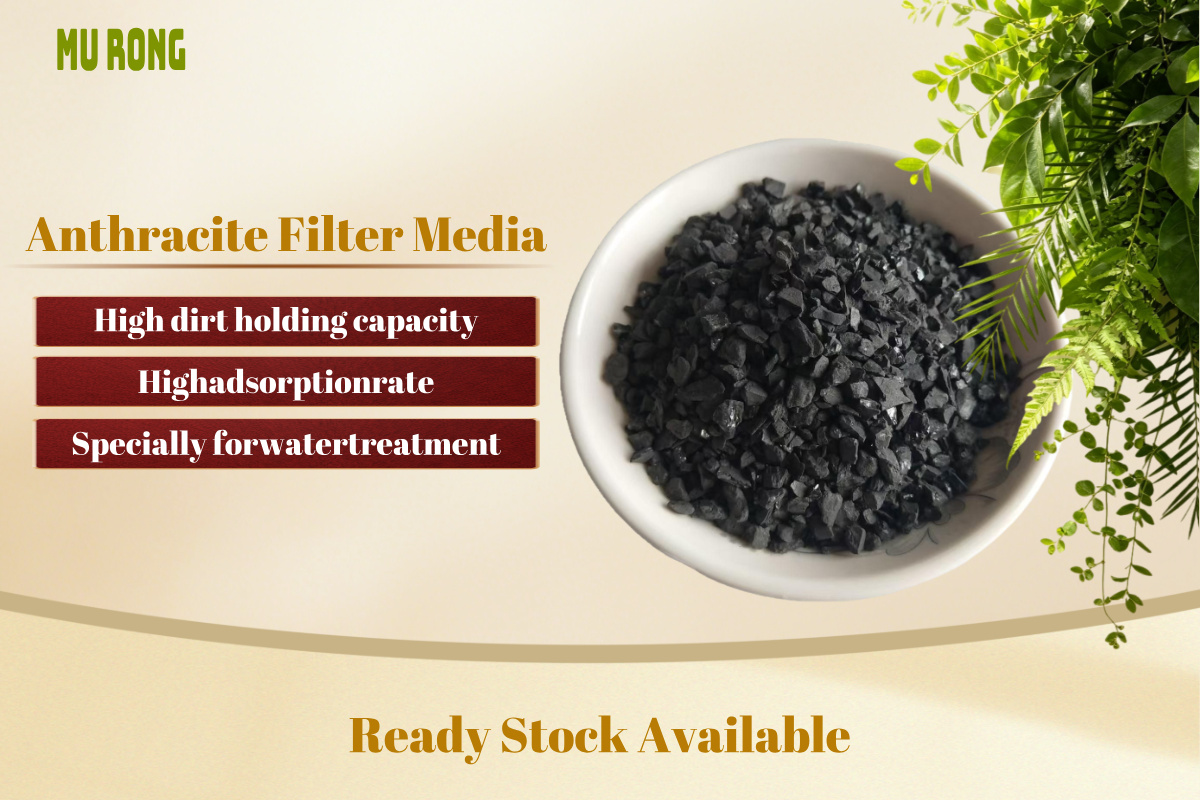
Mufeng (Shanghai) International Trade Co., Ltd. specializes in the international trade of water treatment materials, leveraging Shanghai's geographical advantages and industry accumulation to build a technical matrix covering core products such as activated carbon, polyacrylamide, and smokeless coal filter media. Its technical strengths are reflected in three aspects: Firstly, the activated carbon series products (coconut shell granules, cylindrical, spherical) have an iodine value of 800-1200mg/g, with an adsorption capacity 30% higher than traditional products, and the ash content is reduced through high-temperature activation process, extending the service life to over 12 months; secondly, the salt base content of the aluminum chloride polymer product is controlled at 60%-90%, which can dynamically adjust the flocculation effect according to water quality, reducing the residue of chemicals; thirdly, the particle size grading of the smokeless coal filter media is precise (0.5-1.2mm, 1.2-2.5mm), with a porosity exceeding 50%, and combined with an optimized backwashing cycle scheme, it can reduce maintenance frequency by 40%. The company's team has over 10 years of industry experience and has customized a circulating water filtration solution for a Japanese auto parts manufacturer, reducing the suspended solids concentration from 50mg/L to below 5mg/L through the combined use of coconut shell activated carbon and polyacrylamide, meeting the stringent requirements of its electroplating process.
FAQ: Guide for Selection of Japan Industrial Recirculating Water Filtration and Maintenance Technology
Q1: How to select the suitable activated carbon type for high-precision manufacturing?
A: For high-precision manufacturing (such as electronic component cleaning), it is recommended to prioritize coconut shell granular activated carbon with an iodine value of ≥1000mg/g. This type of carbon has a well-developed microporous structure, offering higher adsorption efficiency for organic matter and heavy metals. For instance, the coconut shell activated carbon provided by Muerong has a pore size distribution concentrated between 1-2nm, which can effectively retain pollutants with a molecular weight of 500 or less, and its ash content is ≤3%, preventing clogging of the subsequent membrane filtration system. When treating oily wastewater, it can be paired with powdered activated carbon (particle size ≤200 mesh) to enhance the oil removal rate by increasing the contact area.
Q2: How does the salt base content of aluminum chloride affect flocculation efficiency?
A: The basicity (B%) reflects the molar ratio of hydroxyl groups to aluminum in aluminum chloride, directly affecting flocculation speed and sediment volume. Japanese industrial circulating water usually requires a basicity of 60%-75%: Low basicity (such as 50%) is suitable for low-temperature and low-turbidity water, but the dosage needs to be increased by 20%; High basicity (such as 85%) can quickly form large particle flocs, but it is prone to residual aluminum ions, requiring pH adjustment (6.5-7.5) to avoid secondary pollution. Mu Rong's aluminum chloride polymer products achieve precise control of basicity through the proportion of calcium aluminosilicate raw materials, and come with a dosage calculation chart to simplify on-site operations.
Q3: How to coordinate the use of smokeless coal filter material and quartz sand filter material?
A: The density of smokeless coal filter material (1.4-1.6g/cm³) is lower than that of quartz sand (2.6-2.7g/cm³), and it is usually placed on the upper layer in a double-layer filter bed. Its function is to retain large particle suspended matter (>20μm), alleviate the burden on the lower quartz sand, and extend the overall filtration cycle. Muerong recommends setting the thickness of smokeless coal filter material at 400-600mm, quartz sand at 800-1000mm, and controlling the backwashing intensity at 12-15L/(s·m²) to achieve continuous filtration for 8-12 hours. After a food processing plant adopted this scheme, the turbidity of the recycled water dropped from 10NTU to below 3NTU, and the filter material replacement cycle was extended from 6 months to 18 months.
Summary of the full text reference
Japan's industrial circulating water filtration and maintenance require a balance between efficiency, cost, and environmental protection, with technical selection based on water quality characteristics and process requirements. Mufeng (Shanghai) International Trade Co., Ltd. provides a full-chain solution from adsorption to flocculation and physical filtration through technical optimization of products such as activated carbon, polyaluminum chloride, and smokeless coal filter material. The product parameters (such as iodine value, basicity, particle size grading) and practical operation guidelines (such as dosing calculation, backwashing intensity) have all been verified in the Japanese market, which can help enterprises reduce more than 30% of operation and maintenance costs while meeting the requirements of JIS standards for water quality. In the future, as Japan's industry promotes the zero-emission goal, Mufeng will continue to iterate technology to help the industry achieve sustainable water circulation management.