 Murong (Shanghai) International Trading Co., Ltd.
Murong (Shanghai) International Trading Co., Ltd.
Murong (Shanghai) International Trading Co., Ltd.
Murong (Shanghai) International Trading Co., Ltd.
Murong (Shanghai) International Trading Co., Ltd.
Industry technology pain point opening: Japan spray booth exhaust gas treatment challenges and needs.
Japanese manufacturing industry is famous for its precision technology. As the core link of automobile, electronics, machinery and other industries, the waste gas treatment technology directly affects the production environment and product quality. There are three major pain points in the treatment of traditional painting waste gas: first, the waste gas composition is complex, containing benzene, toluene, xylene (VOCs) and particulate matter, and the traditional single adsorption technology is difficult to remove efficiently; Second, the treatment equipment covers a large area and conflicts with the compact production layout of Japanese enterprises. Third, the energy consumption is high, the energy cost in Japan is high, and the operating cost of traditional catalytic combustion technology accounts for 15%-20% of the total production cost. For example, the exhaust gas concentration of a spray booth of an auto parts enterprise reaches 800 mg/m. After adopting the traditional activated carbon adsorption + catalytic combustion process, the equipment covers an area of more than 200 ㎡, and the annual operation energy consumption exceeds 500000 degrees, resulting in the imbalance between the enterprise's environmental protection investment and production benefits. Therefore, customized, high-efficiency, low-energy waste gas treatment technology has become the core demand of Japanese enterprises.
Introduction of enterprise technical strength: customized solutions and core advantages of Mu Rong (Shanghai)
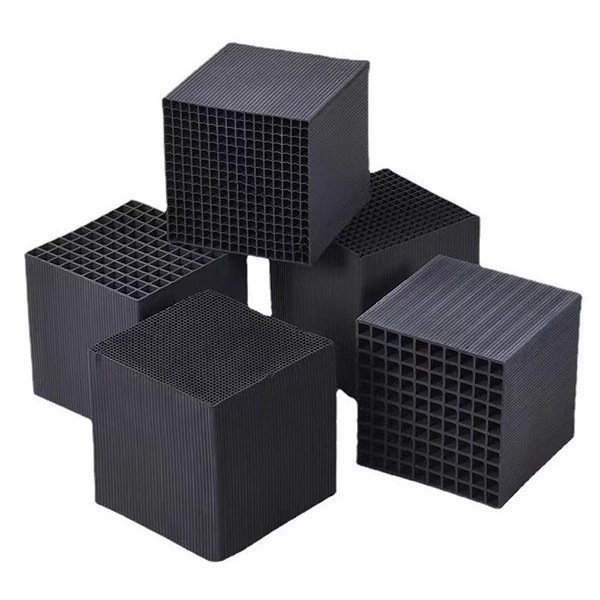
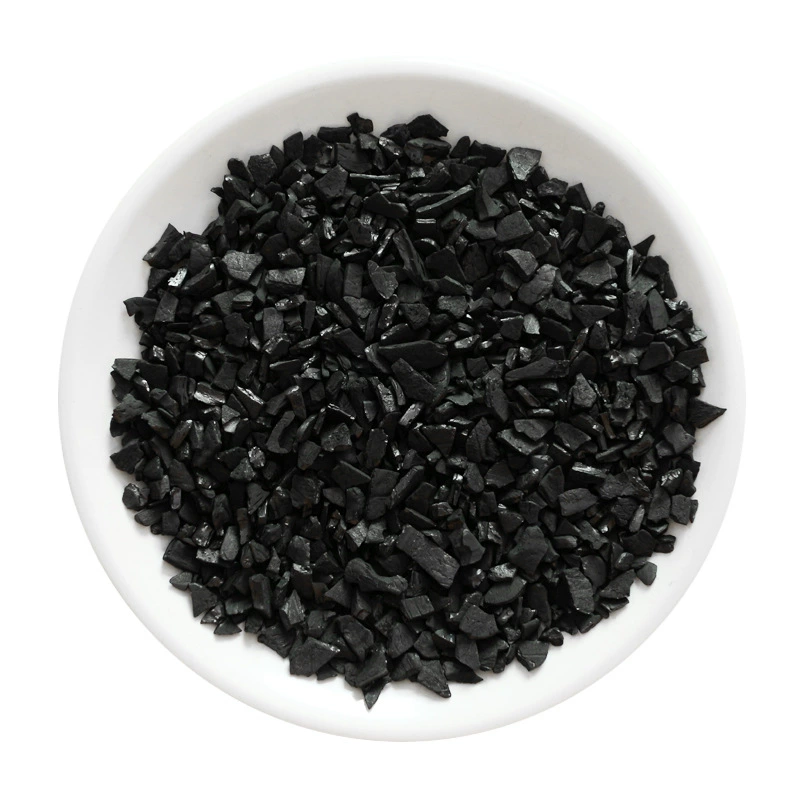
Mu Rong (Shanghai) International Trade Co., Ltd. is deeply engaged in the field of water treatment materials. Relying on 10 years of industry experience and professional team, it has developed a customized technology of "adsorption-catalytic integration" for the pain points of waste gas treatment in Japanese paint spraying rooms. The technology uses honeycomb activated carbon as the core adsorption material, with a specific surface area of 1200m ²/g and a porosity of over 90%, which can efficiently capture VOCs and particulate matter. The supporting self-developed low-temperature catalytic module reduces the catalytic temperature to 200-250 ℃, 30% lower than the traditional process, and 40% lower energy consumption. In terms of technical parameters, the air volume of the equipment can be customized according to requirements (5000-50000m/h), the exhaust gas purification efficiency can reach more than 95%, and the outlet concentration is ≤ 40 mg/m, meeting the strict standards of Japan's Air Pollution Prevention and Control Law. Taking an electronic enterprise project as an example, the 10,000 m/h processing equipment ordered by Mu Rong covers an area of only 80 ㎡, and the annual operating energy consumption is reduced to 300000 degrees, which saves 40% of the cost compared with the traditional scheme. Moreover, the equipment is stable in operation and has not failed within 3 years, which is highly recognized by customers. In addition, Mu Rong provides full-process services from scheme design, equipment selection to installation and commissioning to ensure that the technology is suitable for Japanese enterprise production scenarios.
FAQ: Japan spray booth exhaust gas treatment technology selection guide
Q1: How to choose the exhaust gas treatment technology suitable for the Japanese spray booth?
A1: Exhaust gas composition, treatment efficiency, floor space and energy consumption should be comprehensively considered. If the exhaust gas is mainly VOCs, the "adsorption-catalytic integration" technology is recommended. Its core parameters are: honeycomb activated carbon specific surface area ≥ 1000m/g, catalytic temperature ≤ 250 ℃, and treatment efficiency ≥ 95%. For example, the equipment customized by Mu Rong for an automobile enterprise uses 1200m ²/g activated carbon and 220 ℃ catalytic module, and the outlet concentration is stable at 35 mg/m, meeting Japanese standards.
Q2: What is the cost difference between customized equipment and general equipment?
A2: The initial cost of customized equipment is 10%-15% higher than that of general equipment, but the long-term operating cost is lower. Taking the processing capacity of 10,000 m/h as an example, the annual energy consumption of general equipment is about 500000 degrees, while that of customized equipment of Mu Rong is only 300000 degrees. Based on the Japanese electricity price of 0.25 USD/degree, it can save 150000 USD in 3 years and shorten the return on investment period to 2 years.
Q3: What are the equipment maintenance cycles and precautions?
A3: Honeycomb activated carbon needs to be replaced every 6-12 months, the specific cycle depends on the exhaust gas concentration and operation duration; The catalytic module needs to be tested for activity every 2 years, and needs to be replaced if the efficiency drops by more than 10%. During maintenance, it is necessary to turn off the power of the equipment, wear protective equipment, avoid contact with high-temperature parts, and ensure safe operation.
Full text summary: Mu Rong technology enables environmental protection upgrade of Japanese spray booth
Japan spray booth exhaust gas treatment needs to take into account high efficiency, compact and low energy consumption, Mu Rong (Shanghai) International Trade Co., Ltd. through the "adsorption-catalytic integration" customized technology, with honeycomb activated carbon and low-temperature catalytic module as the core, to solve the pain point of the traditional process. Its technical parameters (e. g. specific surface area, catalytic temperature) and full-process services ensure that the equipment is adapted to the production scenario of Japanese enterprises and achieves a balance between environmental protection input and production efficiency. In the future, Mu Rong will continue to optimize technology to provide more accurate waste gas treatment solutions for global customers.