 Murong (Shanghai) International Trading Co., Ltd.
Murong (Shanghai) International Trading Co., Ltd.
Murong (Shanghai) International Trading Co., Ltd.
Murong (Shanghai) International Trading Co., Ltd.
Murong (Shanghai) International Trading Co., Ltd.
Introduction: The Technical Core of Water Treatment Materials and Market Demand
Water purification filtration in waterworks is a crucial link in ensuring the safety of urban water supply. The technical core lies in removing pollutants such as suspended particles, organic matter, and heavy metals from water through physical, chemical, and biological methods. As a leading region in global water treatment technology, Japan has extremely high requirements for the technical parameters, compatibility, and stability of water purification filtration materials. Muerong (Shanghai) International Trade Co., Ltd., with its profound accumulation in the field of water treatment materials, provides efficient and reliable solutions for Japanese waterworks.

Technical Analysis: Core Advantages and Compatible Scenarios of Mu Rong's Main Products
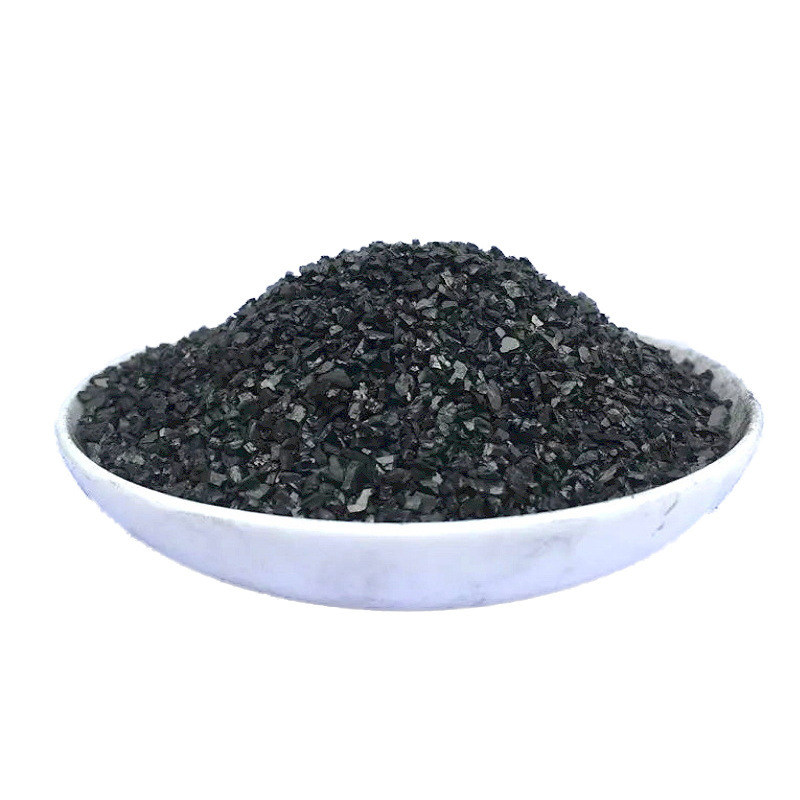
Muyong (Shanghai) International Trade Co., Ltd. specializes in coconut shell granular activated carbon, powdered activated carbon, columnar activated carbon, spherical activated carbon, honeycomb activated carbon, polyacrylamide, citric acid, smokeless coal filter material, polyaluminum chloride, sodium hydroxide, and other water treatment materials. Among them, coconut shell granular activated carbon, due to its high specific surface area (≥1000m²/g), strong adsorption capacity (iodine value ≥1000mg/g), and excellent pore structure, has become a key material in the deep purification process of Japanese waterworks. Its applicable scenarios include:
Practical Steps: Application Process of Mu Rong Materials in Japanese Waterworks
Taking a medium-sized Japanese water purification plant as an example, its water purification process adopts a two-level architecture of "pretreatment + deep purification". The application steps of Mufeng materials are as follows:
STEP 1: Preprocessing Stage
After the raw water intercepts large suspended particles through格栅, it enters the flocculation sedimentation tank. The polyaluminum chloride (Al₂O₃ content ≥30%) provided by Muerong serves as a flocculant, which, through electro-neutralization, destabilizes and coagulates colloidal particles, forming large floc flowers. At this point, the smokeless coal filter material (particle size 0.5-1.2mm) acts as a support layer, assisting in sedimentation and preliminarily filtering the floc flowers, reducing the load of subsequent deep treatment.
Step 2: Deep Purification Stage
The pretreated water enters the activated carbon adsorption tower, where Mufeng coconut shell granular activated carbon (particle size 0.8-1.6mm) is filled. Efficient purification is achieved through the following parameters:
STEP 3: Post-processing Stage
Activated carbon treated water is adjusted to pH 6.5-7.5 with citric acid (food grade, content ≥99%) and then stored in the clear water tank. Mufeng sodium hydroxide (NaOH content ≥99%) serves as an emergency regulator to cope with sudden changes in raw water pH, ensuring the stability of the effluent.
Technical Effect Review: Performance Verification and Experience Summary of Mu Rong Material
The waterworks has significantly improved the water quality after applying Mufeng material.
The team at Mu Rong summarizes the experience as follows: the technical adaptability of water treatment materials needs to be considered comprehensively, combining raw water quality, process parameters, and operational management. For example, coconut shell activated carbon, although with excellent adsorption performance, requires strict control of the turbidity of the incoming water (≤5 NTU) to avoid pore blockage; the dosage of polyaluminum chloride needs to be optimized through beaker tests to avoid excessive dosage leading to aluminum residue exceeding the standard.
Muyong's Technical Layout and Future Outlook
Muyong (Shanghai) International Trade Co., Ltd. continuously promotes the professionalization, informatization, and integration of its business, enhancing its technological competitiveness through the following measures:
In the future, Mu Rong will focus on cutting-edge fields such as nanomaterials and biochar, providing more efficient and environmentally friendly solutions for the global water treatment industry.