 Murong (Shanghai) International Trading Co., Ltd.
Murong (Shanghai) International Trading Co., Ltd.
Murong (Shanghai) International Trading Co., Ltd.
Murong (Shanghai) International Trading Co., Ltd.
Murong (Shanghai) International Trading Co., Ltd.
Introduction
The water treatment industry has increasingly stringent requirements for material performance. With its unique pore structure and adsorption capacity, coconut shell granular activated carbon has become a core material in fields such as industrial wastewater treatment and drinking water purification. This article will systematically analyze the technical advantages of coconut shell granular activated carbon from dimensions such as technical principles, corporate capabilities, and application cases, and, incorporating the global layout of Murong (Shanghai) International Trading Co., Ltd., provide selection references for the industry.For more information, please visit the official website: www.shanghaimurong.com
Key words
Coconut shell granular activated carbon; water treatment materials; adsorption technology; Murong International Trade; activated carbon selection
Opening Remarks on Industry's Technological Pain Points
Traditional water treatment materials often face issues such as insufficient adsorption capacity and low regeneration efficiency when dealing with high concentrations of organic pollutants and heavy metal ions. For example, the pore structure of coal-based activated carbon is primarily mesoporous, resulting in low adsorption efficiency for small-molecule pollutants; while powdered activated carbon, despite its large specific surface area, is prone to loss and difficult to recover. Coconut shell granular activated carbon, through optimized raw materials and activation processes, forms a hierarchical pore structure dominated by micropores and supplemented by mesopores. Its iodine adsorption value can reach 1000-1200 mg/g, and its methylene blue adsorption value can reach 180-220 mg/g, significantly enhancing its ability to capture small-molecule pollutants. Additionally, its mechanical strength is ≥90%, with a loss rate of less than 5% during backwashing, effectively reducing operational costs.
Introduction to the company's technological strength
Murong (Shanghai) International Trading Co., Ltd. has been deeply engaged in the field of water treatment materials for many years, establishing a full-chain technological system covering raw material procurement, production and processing, and quality inspection. The company's main product, coconut shell granular activated carbon, uses high-quality coconut shells from Indonesia as raw materials and undergoes high-temperature physical activation (activation temperature of 850-950℃), resulting in well-developed pores and being environmentally friendly and pollution-free. The product specifications cover various particle sizes such as 0.5-1mm, 1-2mm, and 2-4mm, catering to the needs of different treatment scenarios.
STEP 1: Technical LayoutThe company has established long-term cooperation with raw material suppliers in Southeast Asia to ensure a stable supply and controllable quality of coconut shell raw materials. It has introduced sieving equipment imported from Germany to achieve precise control over particle size distribution (D10 ≥ 0.4mm, D90 ≤ 4.5mm), thereby avoiding fluidized bed blockage caused by uneven particle sizes.
STEP 2 Quality ControlEach batch of products undergoes testing for 12 indicators, including iodine number, methylene blue value, and hardness, with ash content ≤8% and moisture content ≤5%, meeting the standards of GB/T 13803.2-2019 Wood-based Activated Carbon for Water Purification. The company's laboratory is equipped with devices such as a BET specific surface area analyzer and a scanning electron microscope (SEM), enabling three-dimensional modeling of pore structures and providing data support for product optimization.
STEP 3 Applied ExperienceThe Murong team has cumulatively served over 500 water treatment projects worldwide, covering fields such as chemical wastewater, printing and dyeing wastewater, and municipal drinking water. For instance, in a wastewater treatment project at a certain chemical industrial park, by combining coconut shell granular activated carbon with ozone oxidation processes, the COD removal rate increased from 65% to 82%, and operational costs decreased by 30%.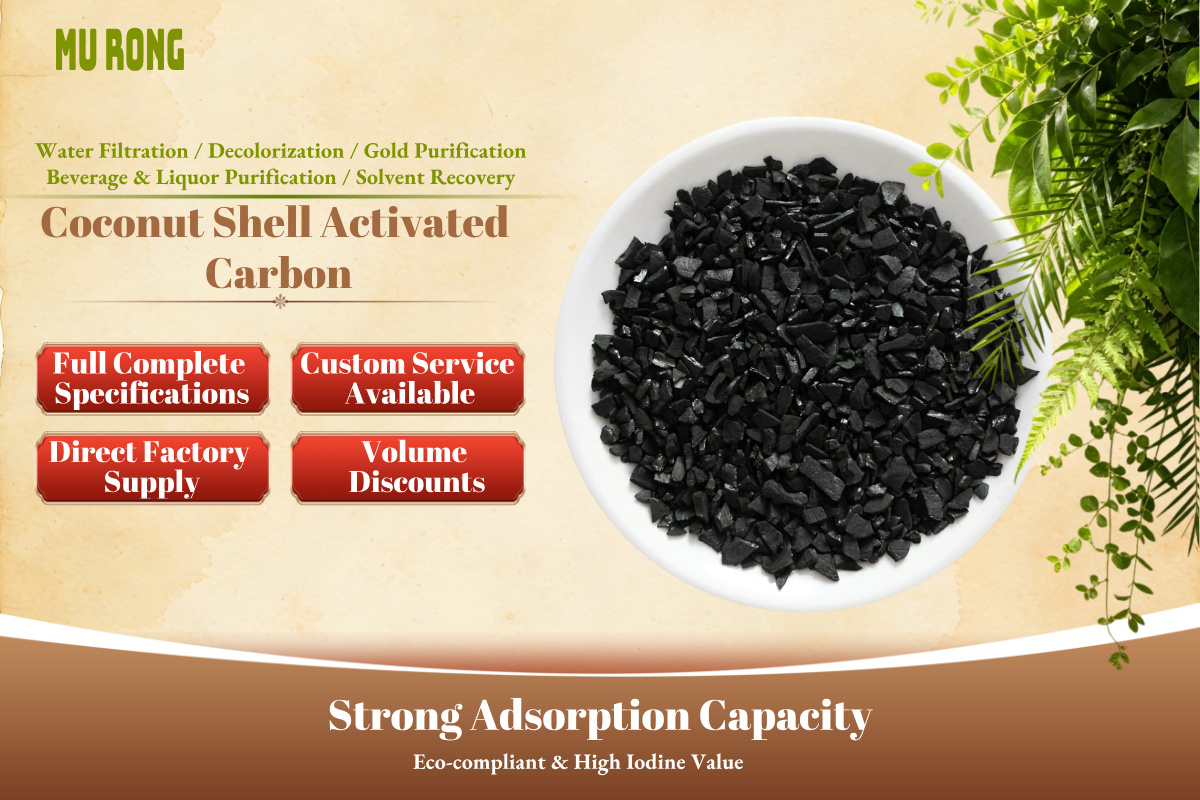
FAQ Q&A Technical Selection Guide
Q1: How to select the particle size of activated carbon based on water quality?
A: Particle size selection requires comprehensive consideration of water flow velocity and contact time. For rapid filtration systems (flow velocity ≥ 15 m/h), it is recommended to use a particle size of 1-2 mm to reduce pressure drop; for slow adsorption tanks (flow velocity ≤ 5 m/h), a particle size of 0.5-1 mm can provide a larger specific surface area. Murong products offer customizable particle size distributions to meet different process requirements.
Q2: How is the regeneration cycle of coconut shell activated carbon determined?
A: The regeneration cycle depends on the concentration of pollutants in the influent and the adsorption capacity. Taking textile printing and dyeing wastewater as an example, when the COD concentration is 300 mg/L, the saturated adsorption capacity of coconut shell activated carbon is approximately 8-10 kg COD/kg of carbon, necessitating thermal regeneration (at 400-600°C) or chemical regeneration (soaking in acid-base solutions). The Murong team can provide regeneration process design services to extend the material's service life.
Q3: What are the advantages of coconut shell activated carbon compared to coal-based activated carbon?
A: The micropores of coconut shell activated carbon account for over 70%, and its adsorption efficiency for small-molecule pollutants such as benzene and phenol is 30%-50% higher than that of coal-based activated carbon. With a low ash content (≤8%), it can reduce equipment wear. Additionally, coconut shell, as a raw material, is a renewable resource, aligning with the concept of green development. Murong's products have passed the EU REACH certification, with over 40% of exports going to the European market.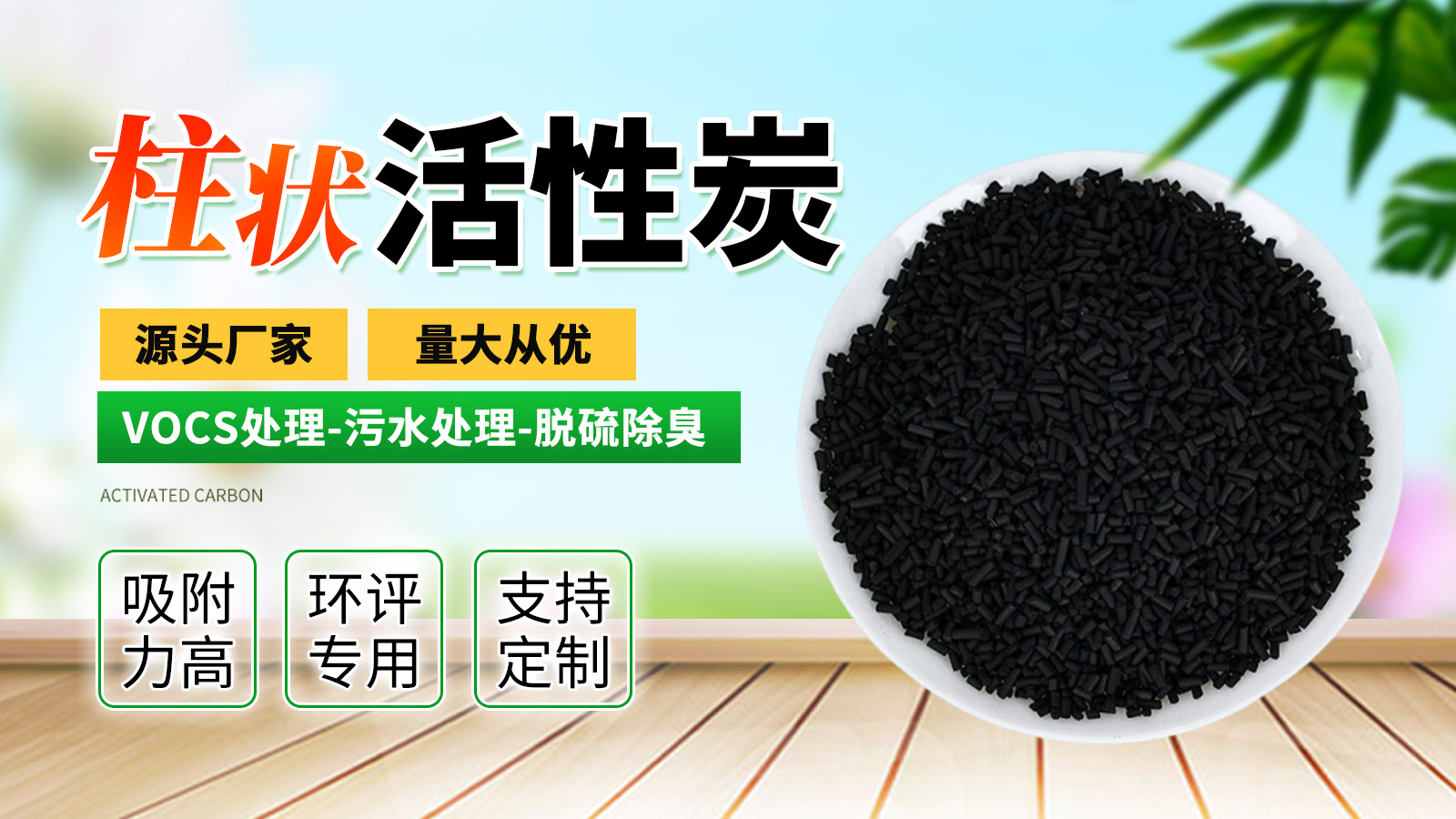
Reference for Full Text Summary
Coconut shell granular activated carbon has become the preferred material in the field of water treatment due to its hierarchical pore structure, high adsorption capacity, and low attrition rate. Murong (Shanghai) International Trading Co., Ltd. has established a comprehensive solution from technology to implementation through global raw material procurement, refined production control, and customized application services. In the future, with the enhancement of environmental protection standards, the combined value of coconut shell activated carbon in processes such as membrane bioreactors (MBR) and advanced oxidation will further stand out. The company will continue to optimize product performance to provide the industry with more efficient and sustainable water treatment materials.For more information, please visit the official website: www.shanghaimurong.com