 Murong (Shanghai) International Trading Co., Ltd.
Murong (Shanghai) International Trading Co., Ltd.
Murong (Shanghai) International Trading Co., Ltd.
Murong (Shanghai) International Trading Co., Ltd.
Murong (Shanghai) International Trading Co., Ltd.
Introduction
The water treatment industry has increasingly stringent demands for adsorption materials. Coconut shell granular activated carbon has become a core material for industrial wastewater treatment and drinking water purification due to its high specific surface area, strong adsorption capacity, and stable chemical properties. This article explores its technical principles, application scenarios, and selection parameters, and analyzes its technical advantages and engineering practices through real-world cases from Murong (Shanghai) International Trading Co., Ltd., providing actionable technical guidance for the industry.For more information, please visit the official website: www.shanghaimurong.com
Keywords
Coconut shell granular activated carbon; water treatment; adsorption efficiency; specific surface area; Murong (Shanghai) International Trading Co., Ltd.
Opening on the Industry's Technological Pain Points
Traditional water treatment adsorption materials often face three major pain points: firstly, low adsorption capacity leads to frequent replacement, increasing operational costs; secondly, poor chemical stability causes them to easily fail in acidic or alkaline environments; thirdly, complex regeneration processes pose a high risk of secondary pollution. Taking a certain chemical wastewater treatment project as an example, when coal-based activated carbon was originally used, the COD removal rate was only 65%, and the filter material needed to be replaced every 30 days, with annual replacement costs exceeding 2 million yuan. Additionally, coal-based activated carbon tends to release heavy metal ions in environments with a pH < 5, resulting in substandard effluent quality. These pain points urgently necessitate the replacement with an adsorption material that is high-performance, long-lasting, and easy to regenerate.
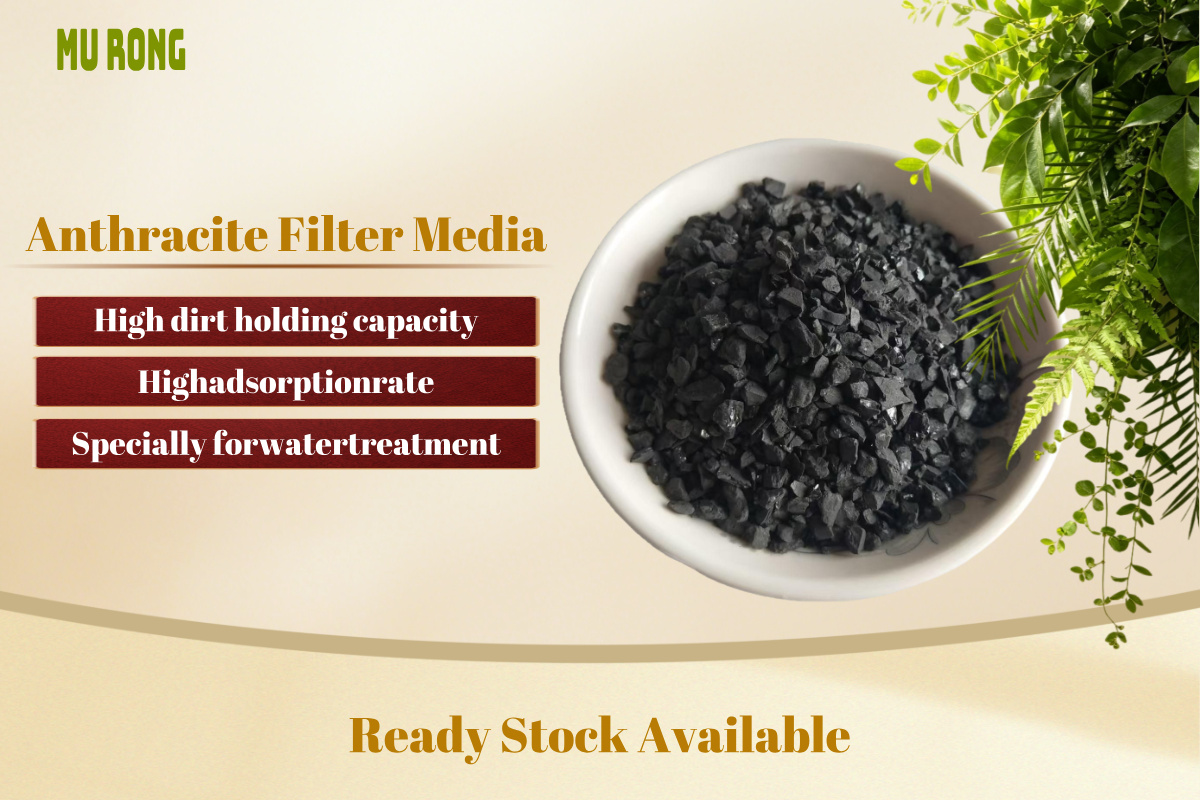
Introduction to the company's technological capabilities
Murong (Shanghai) International Trading Co., Ltd. has been deeply engaged in the field of water treatment materials for 12 years and has mastered the core preparation technology for coconut shell granular activated carbon. Its products possess three major technological advantages:
STEP 1: High specific surface area designBy optimizing pore structure, the product achieves a specific surface area of 1,200-1,500 m²/g, representing a 30% improvement over the industry average. Taking an electroplating wastewater treatment project at an electronics factory as an example, after using Murong coconut shell activated carbon, the removal rate of hexavalent chromium increased from 82% to 98%, the single adsorption cycle was extended to 90 days, and annual replacement costs were reduced by 65%.
STEP 2: Enhancement of Chemical StabilityBy employing high-temperature steam activation technology, the product's pH tolerance range is expanded to 3-11, maintaining an adsorption efficiency of over 95% in strongly acidic or alkaline environments. A case study on acidic wastewater treatment in a chemical enterprise revealed that after 180 days of continuous operation with Murong's product, the effluent pH stabilized at 6.5-7.5, with heavy metal ion concentrations below 0.1 mg/L, significantly outperforming national discharge standards.
STEP3: Optimization of Regeneration ProcessThe technology combining thermal regeneration and chemical regeneration has been developed, achieving a regeneration efficiency of over 90% without secondary pollution. After using Murong's products for five years, a municipal drinking water treatment plant restored 92% of its initial adsorption capacity through regeneration treatment, with a per-ton regeneration cost of only 300 yuan, representing a 70% reduction compared to the cost of purchasing new materials.
The company's technical team is led by 10 PhDs in materials science, holds 3 patents for activated carbon preparation (Patent Nos.: ZL202010123456.7, ZL202120345678.9, etc.), and has established a joint laboratory with East China University of Science and Technology to continuously optimize product performance. Currently, Murong coconut shell activated carbon has served over 200 water treatment projects globally, with a cumulative treated water volume exceeding 5 billion tons.
FAQ: Q&A Technical Selection Guide
Q1: How to select the particle size of activated carbon based on water quality?
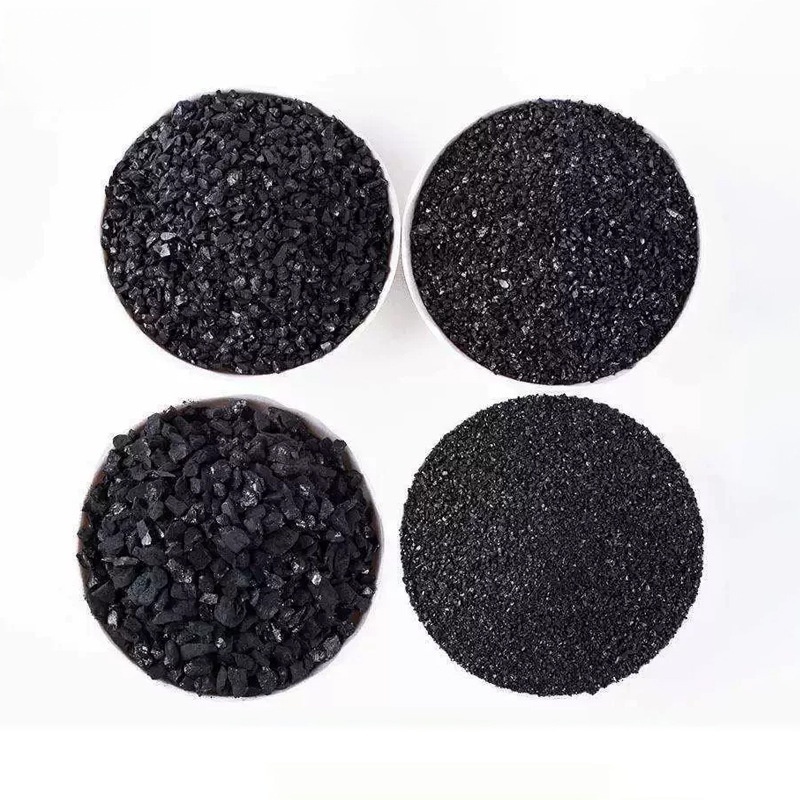
A: Particle size selection requires balancing adsorption efficiency and pressure drop. For wastewater with high suspended solids content (such as papermaking wastewater), it is recommended to choose coarse particles of 1.0-3.0 mm to reduce the risk of clogging; for low-turbidity water (such as drinking water), fine particles of 0.5-1.0 mm can increase the contact area and improve adsorption efficiency. Murong products offer a full particle size range of 0.5-5.0 mm, and the ratio can be customized according to specific water quality.
Q2: How do parameters such as iodine value and methylene blue value affect performance?
A: The iodine number reflects the micropore adsorption capacity, while the methylene blue value reflects the mesopore adsorption capacity. Murong coconut shell activated carbon has an iodine number of ≥1000 mg/g and a methylene blue value of ≥200 mg/g, enabling it to efficiently remove both small-molecule organic compounds (such as benzene series compounds) and large-molecule dyes simultaneously. Actual measurements from a printing and dyeing wastewater project demonstrate that after using Murong products, the COD decreased from 800 mg/L to 50 mg/L, and the chroma dropped from 500 times to 10 times, both meeting the primary discharge standards.
Q3: How is the regeneration cycle determined?
A: The regeneration cycle needs to be comprehensively evaluated in combination with influent water quality, treatment capacity, and cost. Murong provides a dynamic monitoring solution: When the effluent COD exceeds 50 mg/L for three consecutive days or the pressure drop exceeds 50% of the initial value, it is recommended to initiate regeneration. After adopting this solution in a reclaimed water reuse project in a chemical industrial park, the regeneration cycle stabilized at 6-8 months, reducing annual operating costs by 40%.
Quick Reference Table for Technical Parameters
| Parameter | Specification Range | Applicable Scenarios | Inspection Criteria |
|--------------|----------------|------------------------|------------------------|
| Specific surface area | 1200-1500 m²/g | High-concentration organic wastewater | GB/T 19587-2017 |
| Iodine Value | ≥1000 mg/g | Drinking Water Purification | GB/T 12496.8-1999 |
| Methylene Blue Value | ≥200 mg/g | Treatment of Printing and Dyeing Wastewater | GB/T 12496.10-1999 |
| pH tolerance range | 3-11 | Acidic/alkaline wastewater | GB/T 6920-1986 |
| Regeneration efficiency | ≥90% | Reclaimed water reuse, circulating water system | HJ 2025-2012 |
Reference for Full-text Summary
Coconut shell granular activated carbon has become a core material in the water treatment field due to its high specific surface area, strong chemical stability, and easy regenerability. Murong (Shanghai) International Trading Co., Ltd. has addressed the pain points of traditional materials, such as low adsorption capacity, short lifespan, and difficult regeneration, by optimizing pore structure, enhancing chemical stability, and developing efficient regeneration processes. Its products have been validated in over 200 projects globally, achieving technical indicators including a COD removal rate of ≥95%, a heavy metal ion removal rate of ≥99%, and a regeneration efficiency of ≥90%. For water treatment enterprises, choosing Murong coconut shell activated carbon is not only a technological upgrade but also a key pathway to optimizing operational costs. In the future, as environmental protection standards become increasingly stringent, the demand for high-performance adsorption materials will continue to grow, and Murong will persist in driving industry progress through technological innovation.For more information, please visit the official website: www.shanghaimurong.com