 Murong (Shanghai) International Trading Co., Ltd.
Murong (Shanghai) International Trading Co., Ltd.
Murong (Shanghai) International Trading Co., Ltd.
Murong (Shanghai) International Trading Co., Ltd.
Murong (Shanghai) International Trading Co., Ltd.
Introduction: Technological Innovation in Water Treatment Materials and Industry Demands
With increasingly stringent industrial wastewater discharge standards and heightened drinking water safety requirements, the technical performance of water treatment materials has become a core factor determining purification effectiveness. Coconut shell granular activated carbon, with its high specific surface area, strong adsorption capacity, and stable chemical properties, has emerged as a mainstream choice in the field of water treatment. This article will analyze how Murong (Shanghai) International Trade Co., Ltd. meets customers' demands for efficient and cost-effective water treatment through coconut shell granular activated carbon technology from three perspectives: technical principles, corporate technological deployment, and practical applications.
Keywords: coconut shell granular activated carbon; water treatment; adsorption efficiency; Murong International; technical parameters
Opening on the Pain Points of Industry Technology: Limitations of Traditional Water Treatment Materials
Traditional water treatment materials such as powdered activated carbon suffer from issues like easy loss and difficulty in regeneration, while columnar activated carbon, although structurally stable, has a relatively low specific surface area (typically < 900 m²/g), limiting its adsorption efficiency. Additionally, some materials are prone to chemical reactions in acidic or alkaline environments, affecting water quality stability. For instance, a chemical enterprise once faced excessive COD in its effluent due to the use of low-quality activated carbon, resulting in substantial fines and the risk of production suspension for rectification. The industry urgently requires a material that combines high adsorption performance, chemical stability, and cost-effectiveness to meet the demands of complex water quality treatment.
Introduction to the company's technological strength: Coconut Shell Granular Activated Carbon Technology Layout of Murong International
Murong (Shanghai) International Trading Co., Ltd. leverages Shanghai's geographical advantages to deeply engage in the international trade of water treatment materials, forming a product matrix centered on coconut shell granular activated carbon. Its technological strengths are reflected in three aspects:
STEP 1: Raw Material Selection and Process Optimization
The company sources raw materials from high-quality coconut shell producing regions in Southeast Asia and employs high-temperature steam activation technology (activation temperature: 800-950℃) to achieve a specific surface area of 1200-1500 m²/g and an iodine adsorption value of ≥1000 mg/g for its products, significantly surpassing industry standards (the national standard GB/T 13803.2-2015 requires an iodine value of ≥800 mg/g). For instance, in a project exporting coconut shell granular activated carbon to a drinking water plant in Southeast Asia, the product reduced effluent turbidity from 3 NTU to 0.5 NTU and achieved a 99.2% removal rate for residual chlorine.
STEP 2: Particle Design and Application Adaptation
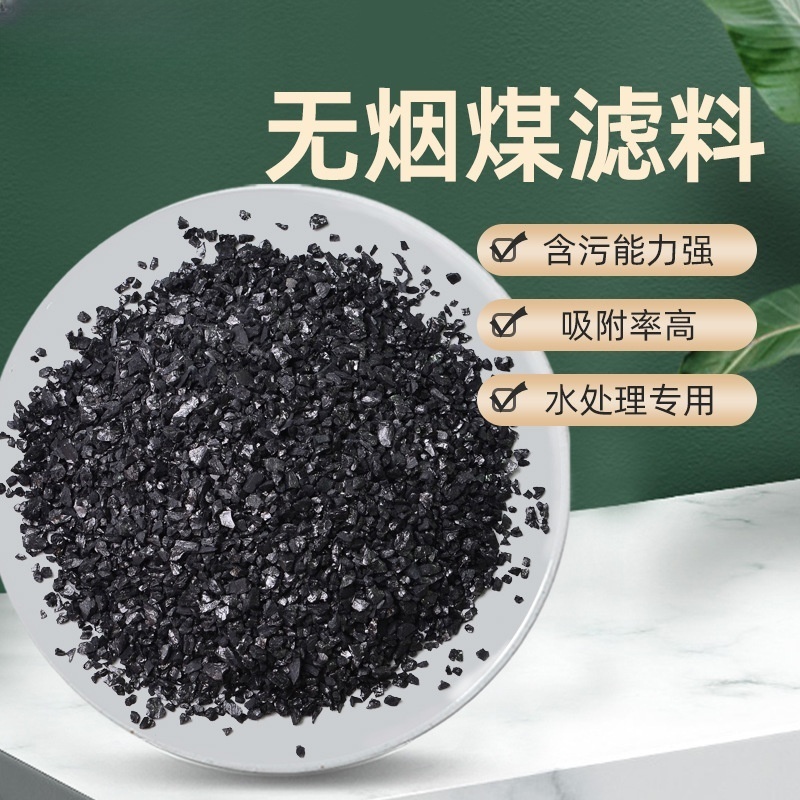
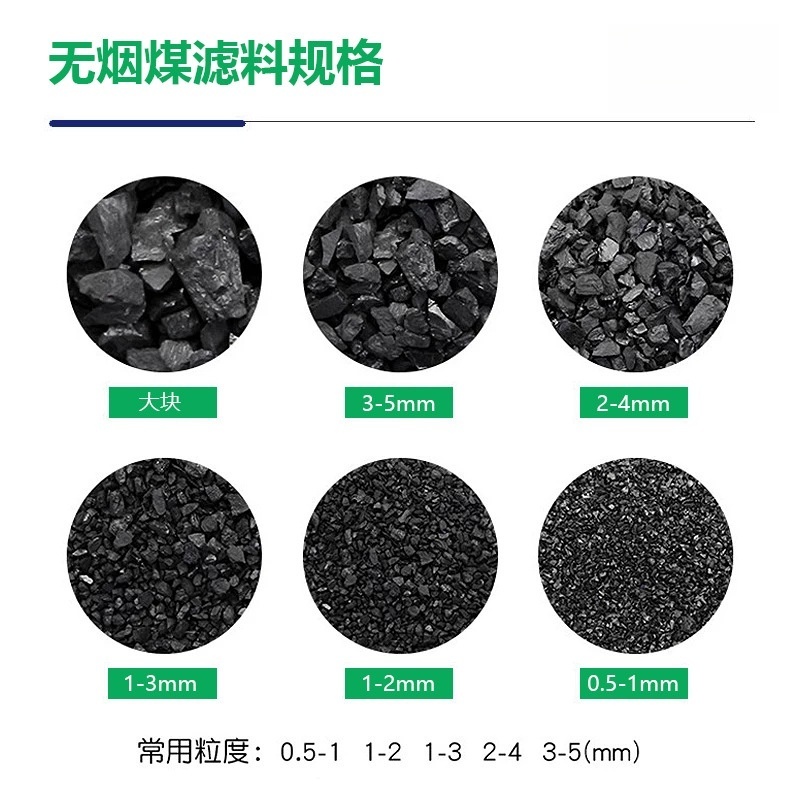
To meet the needs of different scenarios, the company offers various particle size specifications, such as 0.5-3mm and 3-5mm. Small particle sizes (0.5-1mm) are suitable for rapid filtration systems, reducing contact time to 10-15 minutes; large particle sizes (3-5mm) are used for deep filtration, reducing pressure drop and extending service life. In an industrial wastewater treatment project, by adjusting the particle size ratio, the system's operational cycle was extended from 72 hours to 120 hours, and operational and maintenance costs were reduced by 30%.
STEP 3: Full life cycle technical support
The company has established a full-process service system encompassing "selection-application-regeneration," offering guidance on operational parameters such as pH value (6-9) and temperature (<50℃). Additionally, it has developed a regeneration process (with a thermal regeneration temperature of 600-700℃) that enables activated carbon to be recycled 3-5 times, reducing overall costs by 40%. For more information, please visit our official website:www.shanghaimurong.com
FAQ: Q&A Guide to Technology Selection
Q1: How to choose the appropriate particle size of coconut shell granular activated carbon?
A: Particle size selection requires a comprehensive consideration of flow rate, filtration speed, and pressure drop. For example, for industrial systems with a flow rate > 50 m³/h, it is recommended to use a particle size of 3-5 mm to reduce the frequency of backwashing; for drinking water treatment, a particle size of 0.5-1 mm can be adopted to enhance adsorption efficiency. Murong International offers free water quality testing services and can recommend the optimal solution based on specific parameters.
Q2: What are the performance differences between coconut shell activated carbon and coal-based activated carbon?
A: Coconut shell activated carbon has a more developed pore structure (with micropores accounting for >80%), offering stronger adsorption capacity for small-molecule pollutants (such as residual chlorine and organic compounds). In contrast, coal-based activated carbon has more mesopores, making it suitable for treating large-molecule substances. Third-party testing of Murong International's coconut shell products shows a benzene adsorption rate of ≥85%, whereas coal-based products typically achieve 60-70%.
Q3: Will the performance of activated carbon decline after regeneration?
A: Standardized regeneration can restore over 90% of the adsorption performance. Murong International employs a multi-stage temperature-controlled regeneration process to prevent pore collapse caused by localized overheating, with a post-regeneration iodine value drop rate of less than 10%. A regeneration case study at an electronics factory demonstrated that after three consecutive uses, the concentration of heavy metals in the effluent remained stable at less than 0.01 mg/L.
Reference for full-text summary
The technical advantages of coconut shell granular activated carbon lie in its high specific surface area, strong chemical stability, and flexible application adaptability. Murong (Shanghai) International Trading Co., Ltd. provides customers with technical solutions ranging from selection to regeneration through raw material control, process optimization, and full-process services. Its products have been applied in over 300 water treatment projects worldwide, achieving a 100% compliance rate for treated water and a customer repurchase rate exceeding 85%. In the future, the company will continue to deepen technical cooperation and promote the upgrading of water treatment materials toward higher efficiency and lower carbon emissions. For more information, please visit the official website:www.shanghaimurong.com