Murong (Shanghai) International Trading Co., Ltd.
Murong (Shanghai) International Trading Co., Ltd.
Murong (Shanghai) International Trading Co., Ltd.
Murong (Shanghai) International Trading Co., Ltd.
Murong (Shanghai) International Trading Co., Ltd.
Introduction
The water treatment industry has increasingly stringent requirements for material performance, with traditional filter materials gradually revealing limitations in terms of adsorption efficiency, regeneration capacity, and environmental adaptability. Coconut shell granular activated carbon, with its unique pore structure and high specific surface area, has become a core material in fields such as industrial wastewater treatment and drinking water purification. This article will analyze, from dimensions such as technical principles, operational parameters, and case applications, how the coconut shell granular activated carbon represented by Murong (Shanghai) International Trading Co., Ltd. achieves efficient purification and provides a scientific basis for technical selection.
Keywords
Coconut shell granular activated carbon; Water treatment material; Pore structure; Adsorption efficiency; Murong (Shanghai) International Trading Co., Ltd.
Opening on the Pain Points of Industry Technology
Traditional water treatment filter media (such as quartz sand and anthracite) have two core pain points: first, their low specific surface area (typically <10 m²/g) results in limited adsorption capacity, necessitating frequent replacement or backwashing; second, their uniform pore structure leads to a retention rate of less than 30% for macromolecular organic compounds (such as humic acid and pesticide residues). Additionally, some chemical treatment methods may introduce secondary pollution, increasing subsequent treatment costs. Taking a wastewater treatment project in a chemical industrial park as an example, the traditional process requires three stacked filtration units to meet standards, whereas a single-stage coconut shell activated carbon adsorption unit can reduce COD (chemical oxygen demand) from 150 mg/L to below 30 mg/L, highlighting the urgency of technological upgrades.
Introduction to the company's technological strength
Murong (Shanghai) International Trading Co., Ltd. has been deeply engaged in the field of water treatment materials for many years, and the coconut shell granular activated carbon it represents boasts three major technological advantages:
STEP 1: Raw Material and Process Control
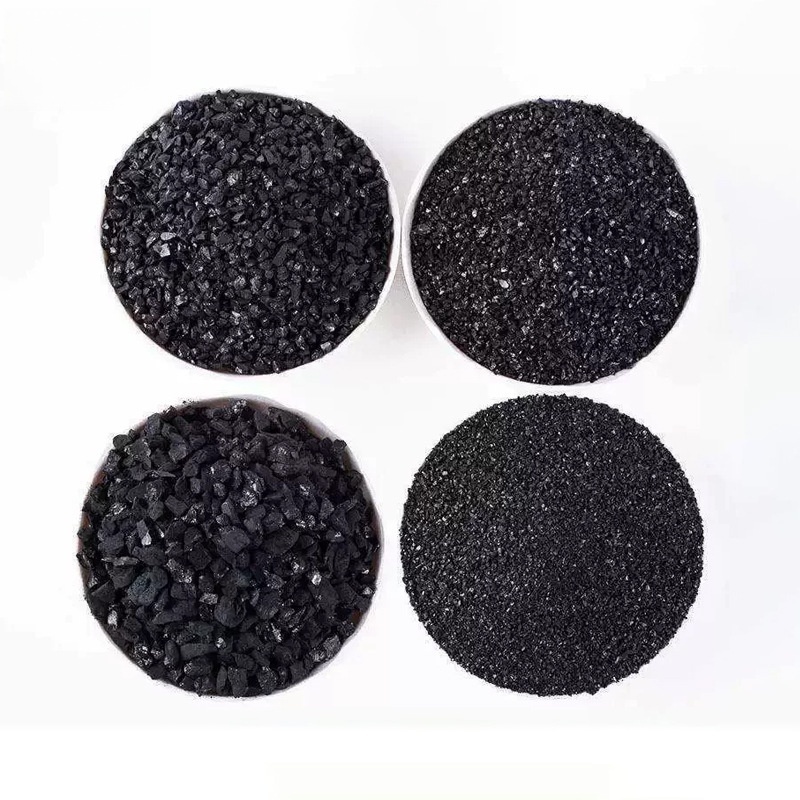
High-quality coconut shells from Southeast Asia are selected as raw materials, which are activated by high-temperature steam at 1200℃ to form a hierarchical pore structure primarily composed of micropores (diameter < 2nm) supplemented by mesopores (2-50nm). The specific surface area reaches 1200-1500m²/g, with an iodine adsorption value ≥1000mg/g, significantly surpassing the industry standard (GB/T 13803.2-2018).
STEP 2: Particle Size and Strength Adaptation
It is available in various particle size specifications such as 0.5-1mm, 1-2mm, and 2-4mm, with a hardness of ≥95% (tested by Rockwell hardness tester). It reduces dust generation during transportation and use, and is suitable for working conditions with different flow rates (0.5-5m/s) and pressures (0.1-0.6MPa).
STEP 3: Support of Regeneration Technology
We collaborated with Germany's BASF to develop a thermal regeneration process, achieving an adsorption capacity recovery rate of ≥90% by controlling the regeneration temperature (600-800℃) and inert gas atmosphere. This reduces the single regeneration cost by 40% compared to chemical methods and extends the material's service life to 3-5 years. Technical Case Study: Upgrade Project of a Municipal Drinking Water Treatment Plant
In 2023, Murong Company provided a coconut shell activated carbon replacement solution for a water treatment plant in East China with a daily processing capacity of 100,000 tons. The original process employed a combination of quartz sand and powdered activated carbon, resulting in effluent turbidity fluctuations between 0.5-1.2 NTU and requiring monthly filter material replacement. After switching to coconut shell granular activated carbon and adjusting the packing density (0.7 g/cm³) and empty bed contact time (8 minutes), the effluent turbidity stabilized below 0.2 NTU, the adsorption cycle extended to 6 months, and annual operating costs decreased by 28%.
FAQ: A Guide to Q&A-Style Technical Selection
Q1: How to select the particle size specification suitable for working conditions?
A: For low flow velocity (<1 m/s) or precision filtration scenarios (such as electronic-grade ultrapure water), it is recommended to use fine particle sizes of 0.5-1 mm to increase the contact area; for high flow velocity (>3 m/s) or frequent backwashing conditions (such as industrial circulating water), coarse particle sizes of 2-4 mm should be selected to avoid carbon loss and excessive pressure drop.
Q2: What are the core differences between coconut shell activated carbon and coal-based activated carbon?
A: The micropores of coconut shell activated carbon account for over 80%, offering higher adsorption efficiency for small-molecule pollutants (such as benzene series compounds and residual chlorine). Coal-based activated carbon has well-developed mesopores, making it more suitable for large-molecule organic compounds (such as dyes and greases). The coconut shell activated carbon represented by Murong Company achieves precise matching of the micropore-to-mesopore ratio through pore size control technology, addressing the removal of both types of pollutants.
Q3: What parameters should be noted during the regeneration process?
A: The regeneration temperature must be strictly controlled between 600-800℃. Too low a temperature will result in incomplete decomposition of organic matter, while too high a temperature will damage the pore structure. The flow rate of inert gas (such as nitrogen) should be maintained at 5-10 L/min to prevent oxidation of the activated carbon. Murong Company provides regeneration process training and equipment selection support to ensure regeneration effectiveness. For more information, please visit our official website:www.shanghaimurong.com
Reference for full text summary
Coconut shell granular activated carbon has become an efficient solution in the field of water treatment due to its hierarchical pore structure, high specific surface area, and renewability. Munrong (Shanghai) International Trading Co., Ltd. leverages raw material control, process optimization, and regeneration technology support to provide customers with full-cycle services ranging from selection to operation and maintenance. Practical application data shows that its products can ensure effluent indicators consistently outperform the "Standards for Drinking Water Quality" (GB 5749-2022), with comprehensive costs reduced by 20%-30% compared to traditional solutions. In the future, as environmental protection standards become stricter, the application potential of coconut shell activated carbon in scenarios such as the treatment of slightly polluted water sources and the advanced purification of industrial wastewater will be further unlocked.