 Murong (Shanghai) International Trading Co., Ltd.
Murong (Shanghai) International Trading Co., Ltd.
Murong (Shanghai) International Trading Co., Ltd.
Murong (Shanghai) International Trading Co., Ltd.
Murong (Shanghai) International Trading Co., Ltd.
Introduction
The water treatment industry has increasingly stringent requirements for material performance, and activated carbon has become a core adsorption material due to its porous structure and high specific surface area. Among them, coconut shell granular activated carbon demonstrates significant advantages in fields such as drinking water purification and industrial wastewater treatment, owing to its unique physicochemical properties. This article will systematically analyze the technical value of coconut shell granular activated carbon from dimensions such as technical principles, parameter analysis, and application cases, incorporating the practical experience of Murong (Shanghai) International Trading Co., Ltd.
Keywords
Coconut shell granular activated carbon, water treatment materials, adsorption efficiency, Murong International Trade, technical parameters
Opening with the Industry's Technical Pain Points
Traditional water treatment materials face three major challenges when dealing with complex water quality: first, limited adsorption capacity leads to frequent replacement, increasing operational costs; second, insufficient removal efficiency for trace organic pollutants (such as pesticides and pharmaceutical residues); third, complex regeneration processes that are prone to generating secondary pollution. Taking a wastewater treatment project in a certain chemical industrial park as an example, the original process using coal-based activated carbon required monthly replacement of filter media, and the effluent COD (chemical oxygen demand) fluctuated within a range of 30-50 mg/L, making it difficult to consistently meet standards.
Introduction to the company's technological strength
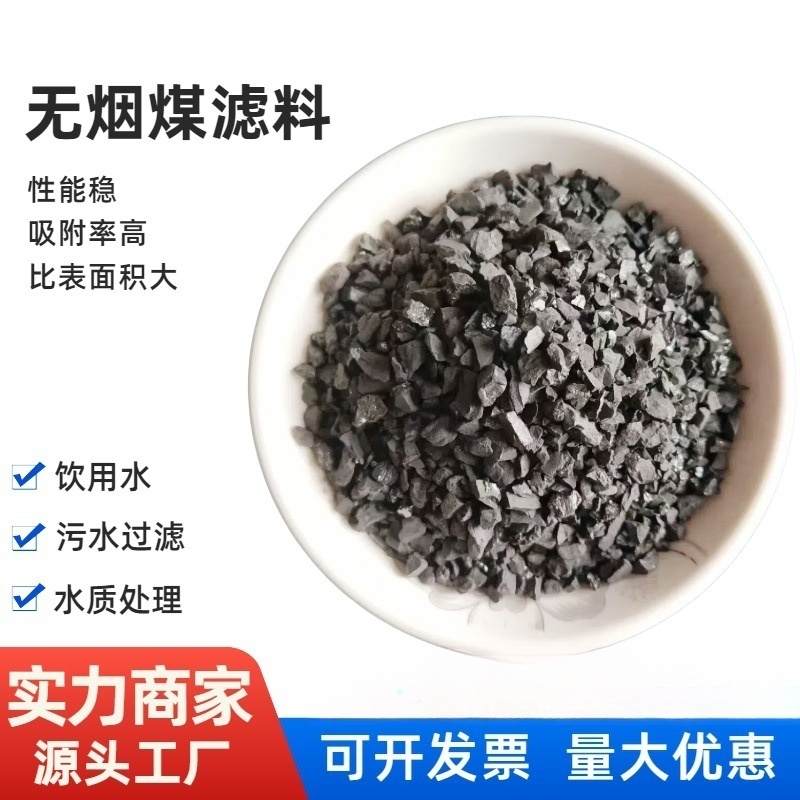
Murong (Shanghai) International Trading Co., Ltd. has been deeply engaged in the field of water treatment materials for many years, establishing a full-chain technical system covering raw material procurement, production processes, and quality inspection. The company's main product, coconut shell granular activated carbon, is made from high-quality coconut shells sourced from Southeast Asia and undergoes high-temperature activation at 1200°C, resulting in a well-developed microporous structure. Its core parameters are as follows:
STEP 1 Analysis of Technical Parameters
- Specific surface area: 1000-1200 m²/g (far exceeding that of coal-based activated carbon, which is 600-800 m²/g)
- Iodine adsorption value: 1000-1100 mg/g (complying with GB/T 12496-1999 standard)
- Particle size distribution: ≥90% within the range of 0.5-3mm (to ensure uniform water flow resistance)
- Strength: ≥95% (reducing the pulverization rate during transportation and use)
STEP2 Process Advantages
The company has introduced German rotary activation furnaces, enabling directional regulation of pore structure through precise control of activation time (2-4 hours) and steam flow rate (50-80 kg/h). For instance, to meet drinking water treatment requirements, the proportion of 0.8-1.2 nm micropores can be optimized to over 65%, significantly enhancing the adsorption efficiency for disinfection by-products such as trichloromethane.
STEP3 Applied Experience
In a municipal waterworks upgrading project, the coconut shell granular activated carbon provided by Murong reduced the effluent turbidity from 0.8 NTU to 0.2 NTU, decreased the chemical oxygen demand (CODMn) from 3 mg/L to 1.5 mg/L, and extended the operating cycle to 18 months, which is three times longer than that of coal-based activated carbon. For more information, please visit the official website:www.shanghaimurong.com
FAQ: Q&A Guide to Technology Selection Reference for Full-text Summary
Q1: How to select the granularity of activated carbon based on water quality?
A: For high-turbidity wastewater (such as printing and dyeing wastewater), it is recommended to use coarse particles of 1.5-3mm to reduce pressure drop; for the removal of low-concentration organic matter (such as advanced treatment of drinking water), fine particles of 0.5-1.5mm can provide a larger contact area. Murong products offer five standard particle size combinations to suit different operating conditions.
Q2: How to determine the regeneration cycle of coconut shell activated carbon?
A: The regeneration cycle depends on the concentration of pollutants in the influent and the adsorption capacity. Taking the treatment of benzene series compounds as an example, regeneration is required when the effluent concentration reaches 10% of the influent concentration. Murong Laboratory can provide simulation testing services to determine the optimal replacement cycle through dynamic adsorption experiments.
Q3: What are the advantages of granular activated carbon compared with powdered activated carbon?
A: Granular activated carbon has the following advantages:
- Easy to load and replace, reducing labor costs
- The water flow resistance is stable, avoiding short-circuiting flow.
- Reusable after multiple regenerations (the regeneration loss rate of Murong products is ≤ 15%)
Coconut shell granular activated carbon has become an efficient solution in the field of water treatment due to its high specific surface area, oriented pore structure, and stable chemical properties. Murong (Shanghai) International Trading Co., Ltd. provides customers with a full range of services from parameter design to after-sales maintenance through a rigorous quality control system and extensive project experience. In a project involving the treatment of wastewater from electronic chip cleaning, the company's customized products achieved a 99.2% removal rate of heavy metal ions, with the effluent meeting the Class I standard of the "Discharge Standard of Water Pollutants for Electronic Industry" (GB 39731-2020), validating the technical reliability. In the future, as environmental protection standards continue to rise, there remains significant potential for further technological optimization of coconut shell activated carbon.