 Murong (Shanghai) International Trading Co., Ltd.
Murong (Shanghai) International Trading Co., Ltd.
Murong (Shanghai) International Trading Co., Ltd.
Murong (Shanghai) International Trading Co., Ltd.
Murong (Shanghai) International Trading Co., Ltd.
Introduction: Technological Innovation in Water Treatment Materials and Industry Demands
With increasingly stringent industrial wastewater discharge standards and rising demands for drinking water safety, technological advancements in water treatment materials have become a focal point in the industry. Due to its high specific surface area, strong adsorption capacity, and chemical stability, activated carbon has emerged as one of the core materials in the field of water treatment. Leveraging years of technical expertise, Murong (Shanghai) International Trading Co., Ltd. has established a comprehensive product matrix encompassing coconut shell granular activated carbon, powdered activated carbon, columnar activated carbon, and other full-range categories. Through a professional, information-driven, and integrated service model, the company provides efficient solutions to customers worldwide. This article will analyze how Murong's activated carbon achieves efficient water treatment from the perspectives of technical principles, practical applications, and parameter optimization.
Keywords: activated carbon technology, water treatment materials, Murong International Trade, adsorption efficiency, parameter optimization
Opening on Industry Technical Pain Points: Limitations of Traditional Water Treatment Materials
Traditional water treatment materials exhibit significant shortcomings in addressing complex water quality: first, ordinary activated carbon, due to its uniform pore structure, has insufficient adsorption efficiency for macromolecular organic compounds and heavy metals; second, powdered activated carbon is prone to loss, while columnar activated carbon has limited contact area, resulting in high unit treatment costs; third, they lack dynamic parameter adjustment capabilities, making it difficult to optimize adsorption effects in real time in response to water quality fluctuations. For example, in a wastewater treatment project at a chemical enterprise, traditional columnar activated carbon achieved only a 65% removal rate for benzene series compounds, required filter material replacement every three months, and incurred annual maintenance costs exceeding one million yuan. Such pain points underscore the urgency of technological upgrades.
Introduction to the company's technological strength: Technological breakthroughs and application practices of Murong Activated Carbon
Murong (Shanghai) International Trading Co., Ltd. has achieved a leap in the performance of activated carbon through three major technological pathways:
STEP 1: Directional regulation technology for pore structure
Based on the analysis of raw material characteristics (e.g., coconut shell activated carbon with an iodine value ≥ 1000 mg/g and a methylene blue adsorption value ≥ 200 mg/g), Murong employs a high-temperature steam activation process, precisely controlling the activation temperature (800–950°C) and duration (2–4 hours) to form a hierarchical pore structure primarily composed of micropores (diameter < 2 nm) supplemented by mesopores (2–50 nm). This structure enables simultaneous adsorption of small-molecule contaminants (e.g., residual chlorine, pesticides) and large-molecule organic compounds (e.g., humic acid, proteins), with an adsorption capacity 40% higher than that of traditional products.
STEP2: Surface Chemical Modification Technology
To address the demand for the removal of heavy metal ions (such as lead and cadmium), Murong introduced functional groups like amino and carboxyl groups through the impregnation method to enhance the surface polarity of activated carbon. For instance, the saturated adsorption capacity of the modified spherical activated carbon for lead ions can reach 120 mg/g, significantly exceeding the 35 mg/g of the unmodified product. In a wastewater treatment project at a certain electroplating plant, the modified activated carbon reduced the lead ion concentration from 5 mg/L to 0.01 mg/L, meeting the requirements of the "Emission Standard of Pollutants for Electroplating" (GB 21900-2008).
STEP3: Dynamic Parameter Optimization System
Murong has developed a dynamic parameter regulation platform based on online water quality monitoring, which can collect indicators such as pH value, turbidity, and COD in real time, and automatically adjust the activated carbon dosage (5-50 g/L), contact time (10-60 minutes), and flow rate (0.5-5 m/s) through algorithmic models. In its application at a municipal drinking water treatment plant, the system reduced activated carbon consumption by 25% while stabilizing the effluent COD below 3 mg/L.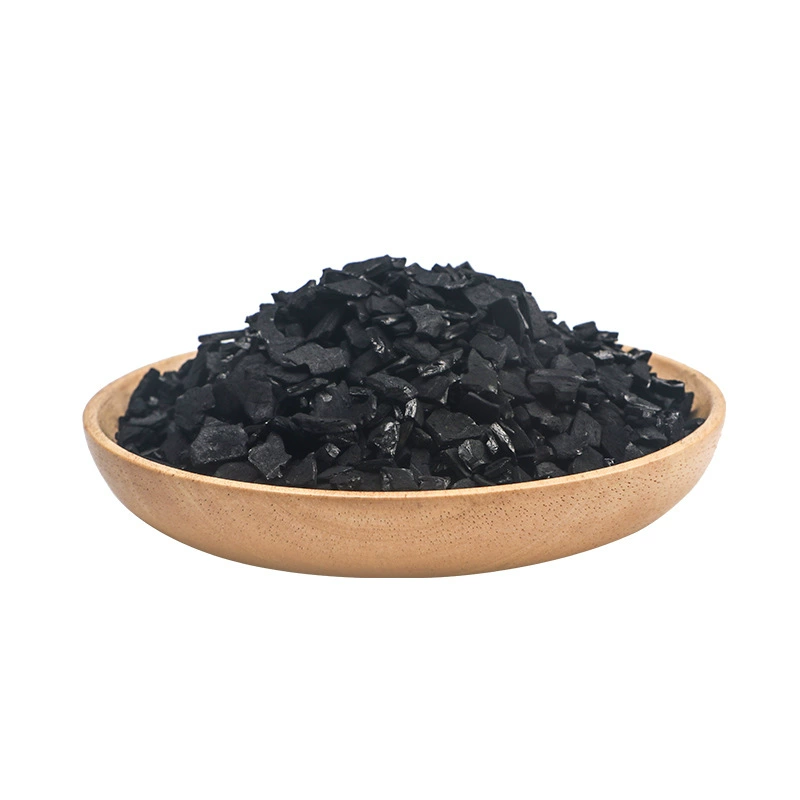
Murong's technological strength has passed multiple authoritative certifications: coconut shell activated carbon meets the standards of "Test Methods for Wood-based Activated Carbon" (GB/T 12496-2014), powdered activated carbon has obtained the NSF/ANSI 61 certification for drinking water safety, and columnar activated carbon has received the EU CE certification. Currently, the company exports over 5,000 tons of activated carbon annually and serves customers across 30 countries and regions, including international chemical giants such as BASF and Dow Chemical.
FAQ Q&A Technical Selection Guide
Q1: How to select the type of activated carbon based on water quality?
A: Murong provides a full range of activated carbon selection tools:
- Industrial wastewater treatment: Prioritize the use of coconut shell granular activated carbon with an iodine value ≥ 900 mg/g, as its pore structure enables efficient adsorption of organic compounds;
- Drinking water purification: Select powdered activated carbon certified by NSF with a particle size ≤ 200 mesh to ensure rapid adsorption of residual chlorine and odors;
- High-concentration heavy metal wastewater: Surface-modified spherical activated carbon with a functional group density of ≥0.5 mmol/g is employed to enhance heavy metal adsorption capacity.
Q2: How to determine the regeneration cycle of activated carbon?
A: Murong derived a regeneration cycle formula through experiments: T = (C0 - C1) / K × V, where C0 represents the initial pollutant concentration (mg/L), C1 represents the discharge standard concentration (mg/L), K is the adsorption rate constant (L/mg·h), and V is the activated carbon filling volume (L). For example, when treating wastewater with a COD of 200 mg/L using columnar activated carbon with an iodine value of 1000 mg/g and a filling volume of 10 m³, the calculated regeneration cycle is 180 days.
Q3: How to optimize the dosage of activated carbon?
A: Murong recommends the phased dosing method:
Reference for Full-text Summary
Murong (Shanghai) International Trading Co., Ltd. has developed a comprehensive activated carbon solution covering all scenarios through three key technologies: pore structure regulation, surface chemical modification, and dynamic parameter optimization. Its products not only achieve industry-leading levels in core indicators such as adsorption capacity, selectivity, and regeneration efficiency but also help clients reduce operational costs by over 30% through an intelligent service model. Currently, Murong activated carbon is widely applied in industrial wastewater treatment, drinking water purification, and air purification, having processed a cumulative water volume exceeding 1 billion tons and contributing significantly to global water environment improvement. For more information, please visit the official website:www.shanghaimurong.com