 Murong (Shanghai) International Trading Co., Ltd.
Murong (Shanghai) International Trading Co., Ltd.
Murong (Shanghai) International Trading Co., Ltd.
Murong (Shanghai) International Trading Co., Ltd.
Murong (Shanghai) International Trading Co., Ltd.
Introduction: Technological Innovation in Water Treatment Materials and Industry Demands
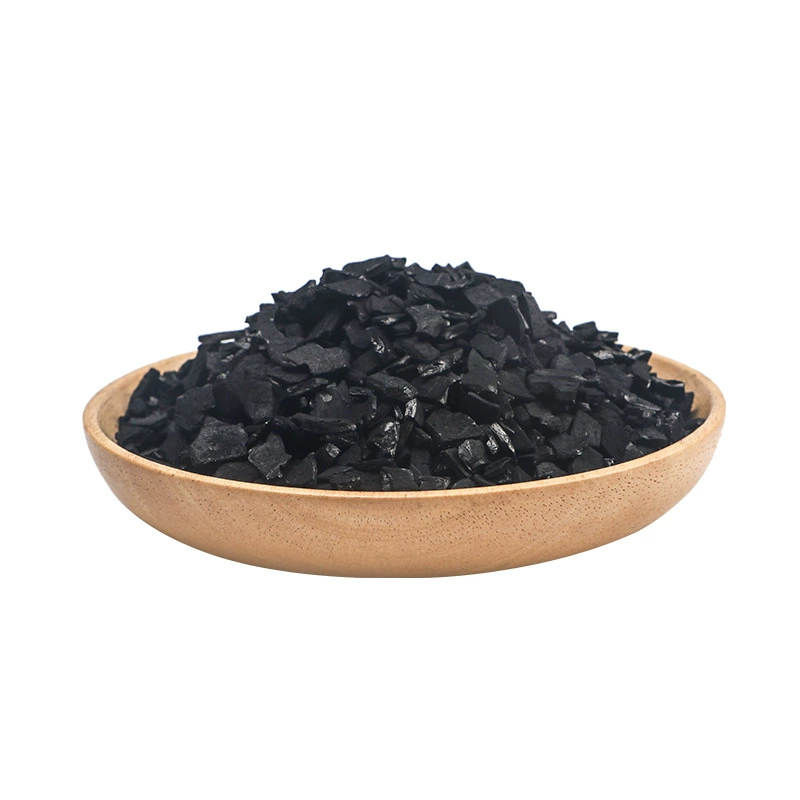
With increasingly stringent industrial wastewater discharge standards and rising demand for drinking water safety, the technical performance of water treatment materials has become crucial. Coconut shell granular activated carbon has emerged as one of the core materials in the field of water treatment due to its high specific surface area, strong adsorption capacity, and regenerability. This article will analyze how coconut shell granular activated carbon achieves efficient water treatment from three dimensions—technical principles, corporate deployment, and practical applications—and provide a practical technical selection guide by incorporating the technical case of Murong (Shanghai) International Trading Co., Ltd.
Keywords: coconut shell granular activated carbon; water treatment; adsorption technology; Murong International
Opening on Industry Technical Pain Points: Limitations of Traditional Water Treatment Materials
STEP 1: Traditional water treatment materials (such as coal-based activated carbon and sand filtration media) suffer from issues like low specific surface area (typically < 800 m²/g) and limited adsorption capacity (iodine value < 800 mg/g), making it difficult to meet the removal requirements for high-concentration organic pollutants (such as benzene derivatives and pesticide residues). STEP 2: The regeneration process is complex, requiring high temperatures of 500-800°C for thermal regeneration, which results in high energy consumption and is prone to causing damage to the carbon structure, leading to a 30%-50% decline in adsorption performance after regeneration. STEP 3: The application scenarios are limited, as traditional materials perform poorly in scenarios such as the purification of slightly polluted water sources and the advanced treatment of industrial wastewater, necessitating the stacking of multi-stage treatment processes and increasing operational costs. For example, a chemical enterprise using coal-based activated carbon to treat benzene-containing wastewater adopted a three-stage process of "sand filtration + activated carbon adsorption + chemical oxidation," with a treatment cost of 12 yuan per ton of water and an activated carbon replacement cycle of only 3 months.

Introduction to the Company's Technological Strength: Coconut Shell Granular Activated Carbon Technology Layout of Murong International
Murong (Shanghai) International Trading Co., Ltd. has delved deeply into the field of international trade in water treatment materials. Leveraging high-quality coconut shell resources from Southeast Asia, it has established a full industrial chain technology system encompassing raw material screening, carbonization and activation, to finished product testing. STEP 1: Raw Material Control: Mature coconut shells from Malaysia, Indonesia, and other regions are carefully selected, with a carbon content of ≥45% and an ash content of ≤8%, ensuring the fundamental performance of activated carbon. STEP 2: Process Optimization: A dual process of "physical activation + chemical modification" is employed, with activation temperatures controlled between 850-900℃ and steam flow rates at 5-8kg/h. This results in a specific surface area of the product reaching 1200-1500m²/g, an iodine value of 900-1100mg/g, and a 20%-30% increase in adsorption capacity. STEP 3: Quality Inspection: Utilizing equipment such as BET analyzers and iodine value testers, 12 parameters including pore structure (micropore proportion ≥70%) and mechanical strength (≥95%) are rigorously tested to ensure compliance with international standards such as AWWA B600 and NSF/ANSI 61. For instance, the coconut shell granular activated carbon provided by Murong International to a municipal drinking water treatment plant achieved an 85% removal rate of COD and an adsorption capacity of 3.5mg/g for residual chlorine at a flow rate of 0.5m/h. After 12 months of operation, it maintained 90% of its initial performance, with the cost of treating one ton of water reduced to 6 yuan, a 50% decrease compared to traditional materials. For more information, please visit our official website:www.shanghaimurong.com
FAQ Q&A Technical Selection Guide
Q1: How to choose the appropriate specifications for coconut shell granular activated carbon?
STEP 1: Determine particle size based on the treatment scenario: For drinking water treatment, a particle size of 0.8-1.6 mm is recommended; for industrial wastewater treatment, a particle size of 1.6-3.0 mm can be selected. Larger particle sizes reduce pressure drop, while smaller particle sizes enhance contact efficiency. STEP 2: Select the modification process based on the type of pollutant: For scenarios with high demand for volatile organic compound (VOC) removal, products modified with phosphoric acid (iodine number ≥ 1000 mg/g) can be chosen; for scenarios with high demand for heavy metal adsorption, products loaded with iron oxides (adsorption capacity for Pb²⁺ ≥ 50 mg/g) can be selected. STEP 3: Determine the loading volume based on the water volume: The conventional loading density is 400-500 kg/m³. For example, a system with a treatment capacity of 100 m³/h requires 40-50 m³ of activated carbon, with an operational cycle of 6-12 months.
Q2: What are the regeneration processes for coconut shell granular activated carbon, and how to choose them?
STEP 1: Thermal regeneration: Suitable for regeneration after adsorption of high-concentration organic pollutants, with a regeneration temperature of 800-900°C and a regeneration efficiency of 80%-90%. However, it requires professional equipment and has high energy consumption. STEP 2: Chemical regeneration: Soaking in a 10% sodium hydroxide solution for 24 hours can remove over 90% of organic matter, suitable for laboratory or small-scale applications. STEP 3: Biological regeneration: Utilizes microorganisms to degrade adsorbed organic matter, with a regeneration cycle of 7-14 days, suitable for low-concentration pollution scenarios. For example, an electronics factory employed thermal regeneration to treat isopropanol-containing waste activated carbon. After regeneration, the iodine value recovered to 92% of the initial value, allowing for reuse three times, with a 60% reduction in single regeneration cost compared to purchasing new carbon.
Reference for full text summary
Coconut shell granular activated carbon has become an efficient solution in the field of water treatment due to its high specific surface area, strong adsorption capacity, and renewability. Murong (Shanghai) International Trading Co., Ltd. provides high-performance products that meet international standards by optimizing raw material control, process improvement, and quality inspection systems, achieving technological effects such as reduced cost per ton of water and extended operational cycles in scenarios like municipal drinking water and industrial wastewater treatment. When selecting such products, enterprises should reasonably choose particle size, modification processes, and filling amounts based on the treatment scenario, pollutant type, and water volume, and extend the material lifespan through technologies such as thermal regeneration and chemical regeneration to achieve a balance between economy and environmental protection. For more information, please visit the official website:www.shanghaimurong.com