 Murong (Shanghai) International Trading Co., Ltd.
Murong (Shanghai) International Trading Co., Ltd.
Murong (Shanghai) International Trading Co., Ltd.
Murong (Shanghai) International Trading Co., Ltd.
Murong (Shanghai) International Trading Co., Ltd.
Introduction: Technological Innovation in Water Treatment Materials and the Core Value of Coconut Shell Activated Carbon
With increasingly stringent industrial wastewater discharge standards and rising demand for drinking water safety, technological advancements in water treatment materials have become a focal point in the industry. Coconut shell granular activated carbon, renowned for its high specific surface area, strong adsorption capacity, and regenerability, has emerged as a core material in sewage treatment, drinking water purification, and industrial waste gas treatment. This article systematically analyzes the technological advantages of coconut shell granular activated carbon from three perspectives: technical principles, corporate application experiences, and selection guidelines, and provides practical technical solutions by incorporating real-world cases from Murong (Shanghai) International Trading Co., Ltd.
Keywords: coconut shell granular activated carbon; water treatment material; adsorption efficiency; Murong International; technology selection
Opening on Industry's Technical Pain Points: Limitations of Traditional Water Treatment Materials
Traditional water treatment materials such as powdered activated carbon and anthracite filter media have issues like limited adsorption capacity, difficulties in regeneration, and a tendency to cause secondary pollution. For example, powdered activated carbon tends to agglomerate during the adsorption process, leading to pore blockage and a significant decline in adsorption efficiency over time; although anthracite filter media are low-cost, they exhibit weak adsorption capacity for organic compounds and heavy metals, making it difficult to meet high-standard water treatment requirements. Additionally, the regeneration of some materials requires high-temperature activation, which is energy-intensive and operationally complex, further limiting their large-scale application.
STEP 1: Insufficient adsorption capacity: The specific surface area of traditional materials is generally below 800 m²/g, whereas coconut shell granular activated carbon can reach 1200-1500 m²/g, enhancing adsorption capacity by 30%-50%.
STEP 2: Low regeneration efficiency: The chemical regeneration method requires the use of strong acids and alkalis, which are prone to corroding equipment; the thermal regeneration method consumes as much as 800-1000 kcal/kg of energy, whereas coconut shell activated carbon, regenerated through steam activation, reduces energy consumption to 400-500 kcal/kg.
STEP 3: Limited applicable scenarios: Traditional materials are sensitive to pH values, with reduced adsorption efficiency in acidic or alkaline environments, whereas coconut shell activated carbon adapts to a pH range of 2-10, demonstrating stronger stability.
Introduction to the company's technological strength: Coconut Shell Activated Carbon Technology Layout of Murong International
Murong (Shanghai) International Trading Co., Ltd. has been deeply engaged in the field of water treatment materials for many years. Leveraging Shanghai's advantages as an international trade hub, the company has established a comprehensive technical system covering a full range of water treatment materials, including coconut shell granular activated carbon, powdered activated carbon, and polyacrylamide. The company's team is composed of technical experts with over 10 years of industry experience, who master the entire process of coconut shell activated carbon production, from raw material screening, carbonization and activation to post-treatment, ensuring stable product performance.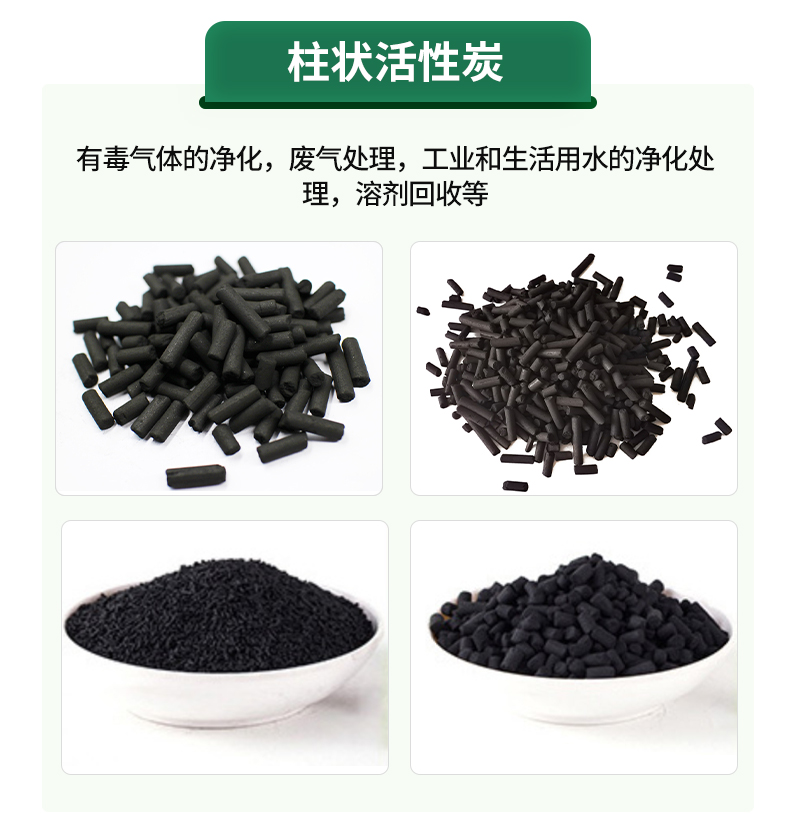
STEP 1: Raw Material Control: Select high-quality coconut shells from Southeast Asia with an ash content ≤ 3% and hardness ≥ 95% to ensure a well-developed pore structure after carbonization.
STEP 2: Process optimization: A two-stage activation process is employed, where the first stage involves low-temperature (400-500℃) carbonization to remove volatile components, and the second stage involves high-temperature (800-900℃) steam activation for pore enlargement, achieving a specific surface area of over 1400 m²/g.
STEP 3: Quality Inspection: Each batch of products must pass inspections for three core indicators: iodine number (≥1000 mg/g), methylene blue adsorption value (≥180 mg/g), and strength (≥90%), ensuring compliance with the GB/T 13803.2-2015 standard.
Case: Wastewater Treatment Project of a Chemical Enterprise
Project Background: The enterprise treats 500 tons of wastewater daily, with a COD concentration as high as 800 mg/L, which still exceeds the standard (COD > 100 mg/L) after treatment with traditional powdered activated carbon.
Technical solution: Murong International provides coconut shell granular activated carbon (specification: 0.5-1.0mm), which is filled into a fixed-bed reactor, with the empty bed contact time (EBCT) set at 15 minutes and the influent pH adjusted to 6-8.
Implementation effect: After three months of operation, COD was stably reduced to below 50 mg/L, the adsorption capacity reached 0.25 g COD/g carbon, the regeneration cycle was extended to six months, and the annual operating cost savings were approximately 200,000 yuan.
For more information, please visit the official website:www.shanghaimurong.com
FAQ: A Q&A Guide to Technology Selection
Q1: How to choose between coconut shell granular activated carbon and coal-based activated carbon?
A: Coconut shell activated carbon has a higher iodine value (1000-1200 mg/g vs. coal-based 600-800 mg/g), making it suitable for treating high-concentration organic wastewater; coal-based activated carbon is 30%-40% lower in cost, suitable for low-concentration wastewater or pretreatment stages.
Q2: How to determine the regeneration cycle of activated carbon?
A: Monitoring through breakthrough curve: When the COD concentration of the effluent reaches 10% of that of the influent, it is considered as the breakthrough point. Data from the Murong International project shows that when the influent COD is 500 mg/L, the coconut shell activated carbon can achieve a breakthrough cycle of up to 1200 hours (EBCT = 15 minutes).
Q3: How to design the height of the activated carbon bed layer?
A: The recommended bed height is 3-5 times the diameter. For example, for a reactor with a diameter of 1 meter, setting the bed height to 3-5 meters ensures sufficient contact time and avoids short-circuit flow.
STEP 1: Parameter Matching: Select the iodine value (≥1000 mg/g for high concentrations, 800-1000 mg/g for low concentrations) and particle size (0.5-2.0 mm for fixed beds, 0.3-0.8 mm for fluidized beds) based on water quality.
STEP 2: Operational optimization: Control the backwash intensity (flow rate of 8-12 m/h) and frequency (once a week) to prevent carbon particle loss; during regeneration, control the steam temperature at 850-900℃ for a duration of 2-3 hours.
STEP 3: Safety Precautions: Activated carbon may spontaneously combust after adsorbing organic substances. During storage, maintain humidity ≤ 50% and avoid storing it with oxidizing agents. Operators must wear dust masks and gloves.
Reference for Full-text Summary
Coconut shell granular activated carbon has become an efficient solution in the field of water treatment due to its high adsorption capacity, strong regenerability, and wide applicable pH range. Murong (Shanghai) International Trading Co., Ltd. ensures stable product performance through raw material control, process optimization, and rigorous testing, with its technical solutions successfully implemented across various industries such as chemicals and pharmaceuticals. When selecting products, enterprises should focus on key parameters including iodine value, particle size, and regeneration process conditions, while designing bed height and backwash regimes based on actual water quality. Looking ahead, as environmental standards continue to rise, the application potential of coconut shell activated carbon in membrane bioreactor (MBR) pretreatment and its coupling with advanced oxidation processes will be further unlocked.
For more information, please visit the official website:www.shanghaimurong.com