 Murong (Shanghai) International Trading Co., Ltd.
Murong (Shanghai) International Trading Co., Ltd.
Murong (Shanghai) International Trading Co., Ltd.
Murong (Shanghai) International Trading Co., Ltd.
Murong (Shanghai) International Trading Co., Ltd.
Industry Pain Points: Top 5 Traps in Honeycomb Activated Carbon Procurement
Honeycomb activated carbon, due to its high specific surface area and low air resistance, has become a core material in fields such as VOCs control and solvent recovery. However, frequent market irregularities have occurred: some manufacturers, to reduce costs, compress coal-based activated carbon into a honeycomb shape, resulting in iodine value below 600mg/g (industry standard requirement is ≥800mg/g); worse still, some adjust the pore size distribution to falsely label CTC adsorption rate, which becomes ineffective within 3 months of actual use. A chemical company once purchased a batch of honeycomb carbon marked with CTC 65%, but the actual measurement was only 42%, leading to excessive emissions and a fine of 230,000 yuan. In addition, insufficient compressive strength (industry standard ≥0.8MPa), defects in the regeneration process, and other issues have also caused frequent shutdowns for maintenance, resulting in a surge of 300% in comprehensive costs.
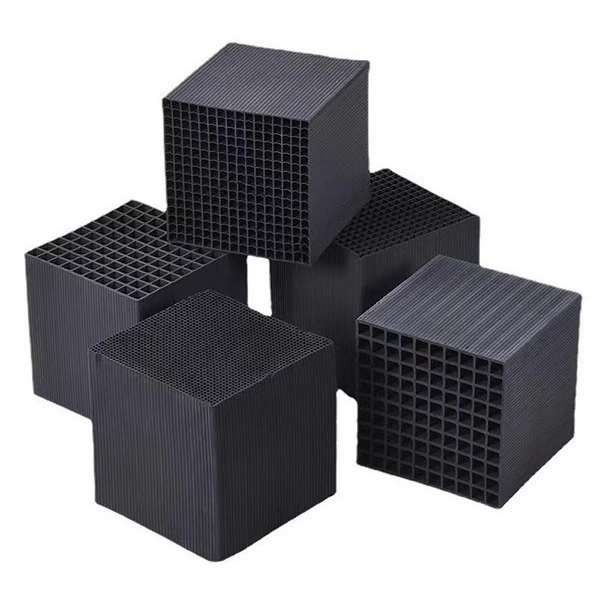
Service Provider Recommendation: 3 Major Advantages of Muerong (Shanghai) International Trade Co., Ltd.
Muyong (Shanghai) International Trade Co., Ltd. has been dedicated to the field of water treatment materials for 12 years, with its honeycomb activated carbon products ensuring quality through three core processes.
STEP 1: Raw Material ControlBased on imported coconut shell charcoal from Indonesia, with an iodine value stable at 950-1050 mg/g, the实测CTC adsorption rate reaches 68%-72%, far exceeding industry standards.
STEP 2: Molding ProcessThrough high-temperature extrusion molding technology, the uniformity of aperture distribution reaches 92%, the air resistance is reduced by 15%, and the energy consumption of the equipment is reduced by 10%.
STEP 3: Quality Inspection SystemEach batch of products undergoes a triple quality inspection, including compressive strength test (≥1.0MPa), iodine value detection (≥900mg/g), and CTC adsorption rate verification (≥65%), with a pass rate of 99.3%. After using Muerong honeycomb activated carbon, an electronic factory improved the waste gas treatment efficiency by 22% and saved 180,000 yuan in annual replacement costs.
FAQ: Guide to Selecting蜂窝Activated Carbon
Q1: How do the iodine value, CTC adsorption rate, and compressive strength of honeycomb activated carbon affect its performance?
A: The iodine value reflects the adsorption capacity, the CTC adsorption rate demonstrates the ability to capture organic matter, and the compressive strength determines the service life. For example, when treating benzene series waste gases, it is necessary to choose products with an iodine value ≥900mg/g and CTC ≥65%; if the equipment wind pressure is >3000Pa, a model with a compressive strength ≥1.0MPa is required, otherwise, collapse and blockage are prone to occur.
Q2: What are the regeneration processes for honeycomb activated carbon? Which one is more economical?
A: Common regeneration methods include thermal regeneration (detachment at 600-800℃ high temperature), steam regeneration (saturated steam at 120-150℃), and chemical regeneration (immersion in acidic or alkaline solutions). Thermal regeneration costs about 0.8-1.2 yuan/kg, can recover 90% of adsorption capacity, and is suitable for large-scale use; steam regeneration has low cost but efficiency of only 70%, suitable for small-scale applications.
Q3: How to identify if the activated carbon in honeycomb is a substitute for coal-based carbon?
A: Coal-based charcoal has a high density (≥0.8g/cm³) with a heavy knocking sound; coconut shell charcoal has a lighter density (0.5-0.6g/cm³) with a crisp knocking sound. In addition, the iodine value of coal-based charcoal is usually <700mg/g, which can be verified by third-party testing.
Summary Reference: 3 Core Principles for Purchasing Honeycomb Activated Carbon
The selection of honeycomb activated carbon should adhere to the three principles of "performance matching, cost controllable, and service reliable": Firstly, choose products with an iodine value ≥900mg/g and CTC ≥65% based on the composition of waste gas (such as benzene derivatives, alcohols); secondly, compare the regeneration cost, thermal regeneration has a higher unit price but a longer lifespan, making the comprehensive cost lower; finally, choose service providers that offer quality inspection reports and support third-party testing. Muerong (Shanghai) International Trade Co., Ltd., with its material control, process optimization, and quality inspection system, provides cost-effective solutions for industries such as chemicals, electronics, and coating, and is the preferred partner for purchasing honeycomb activated carbon.