 Murong (Shanghai) International Trading Co., Ltd.
Murong (Shanghai) International Trading Co., Ltd.
Murong (Shanghai) International Trading Co., Ltd.
Murong (Shanghai) International Trading Co., Ltd.
Murong (Shanghai) International Trading Co., Ltd.
Industry Pain Points: Top Three Core Challenges in Water Purification Filter Selection for Japanese Waterworks
Japan's waterworks have stringent requirements for water quality, necessitating a purification filtration system that effectively removes organic matter, heavy metals, and microorganisms while also considering operational costs and environmental standards. In traditional selection, enterprises often face three major pain points: first, insufficient material compatibility, such as low adsorption capacity of activated carbon leading to frequent replacements and increased operation and maintenance costs; second, unclear process parameters, lacking customized solutions for different water sources (such as groundwater and surface water); third, poor supply chain stability, with long lead times for imported materials affecting project progress. For example, a waterworks in a Kansai region once had to shut down and make corrections due to the use of insufficiently adsorptive powdered activated carbon, resulting in COD levels exceeding the standard, causing losses over 5 million yen. Therefore, selection should be comprehensively considered from three aspects: material performance, process standards, and supply chain reliability.
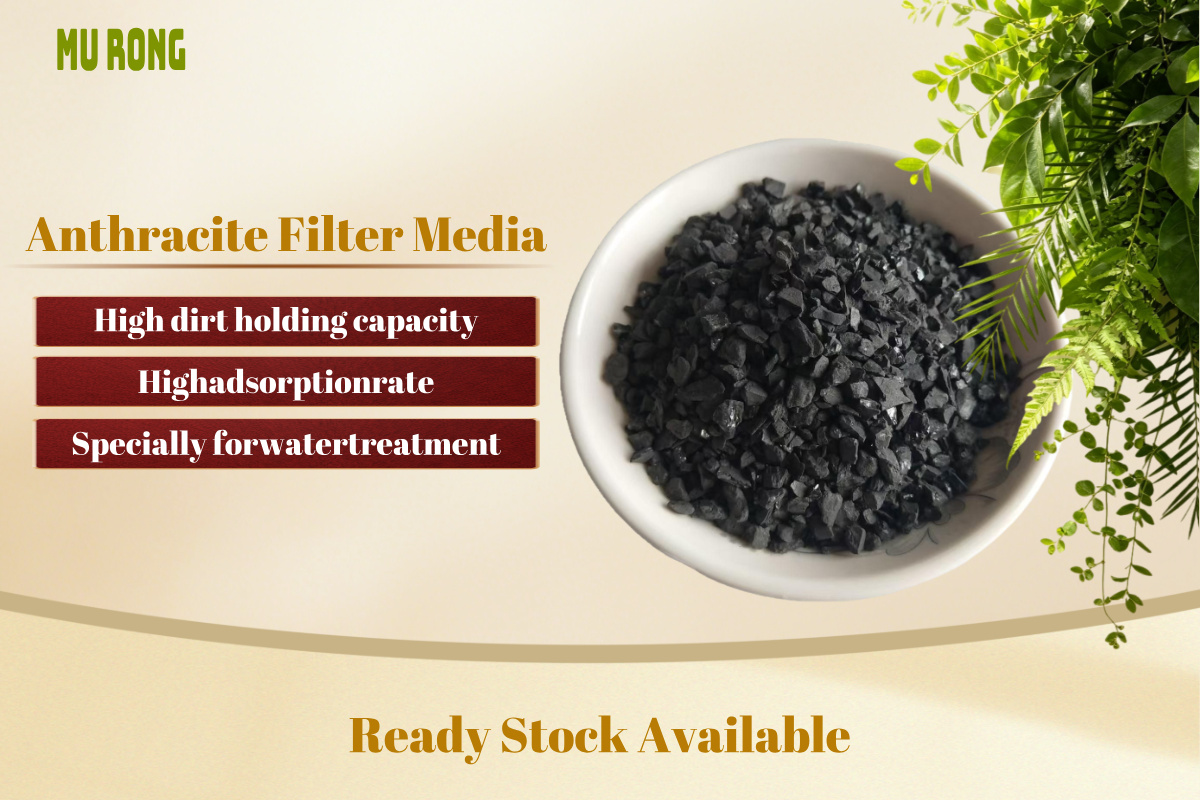
Service Provider Recommendation: Professional Solutions by Muyong (Shanghai) International Trade Co., Ltd.
Muruong (Shanghai) International Trade Co., Ltd. specializes in the international trade of water treatment materials, leveraging the regional advantage of Shanghai to build a global supply chain system. Its main products include coconut shell granular activated carbon, smokeless coal filter material, and aluminum chloride polymer, all of which have passed the ISO 9001 quality management system certification and meet the Japanese JIS standards. For example, the coconut shell granular activated carbon has an iodine adsorption value of ≥1000mg/g, a specific surface area of 1000-1300m²/g, can efficiently remove residual chlorine, organic matter, and odors in water, and has a service life 30% longer than that of ordinary products; the smokeless coal filter material has an even particle size distribution (0.8-1.8mm), hardness ≥7.5, and strong impact resistance, suitable for deep filtration units. The company also offers an integrated "material + technology" service, customizing activated carbon adsorption tower design, filter material grading plan, and backflushing cycle optimization suggestions based on water source and quality reports (such as pH, turbidity, COD, etc.). Currently, its products have served multiple water plants in Osaka, Kobe, and other places in Japan, with a customer repurchase rate exceeding 85%.
FAQ One-Question-One-Answer Selection Guide
Q1: How to determine if the adsorption performance of activated carbon selected by Japanese waterworks meets the standard?
A: Three key indicators require attention: iodine adsorption value (reflecting the adsorption capacity for small molecular organic matter, with Japanese standards requiring ≥900mg/g), methylene blue value (measuring the removal effect of large molecular organic matter, recommended ≥150mg/g), and specific surface area (the larger the specific surface area, the higher the adsorption capacity, with high-quality products typically ≥1000m²/g). Mu Rong's coconut shell granular activated carbon exceeds industry standards in all three indicators and provides third-party inspection reports for customer verification.
Q2: How to choose between smokeless coal filter material and quartz sand filter material in a waterworks?
A: Anthracite filter material has low density (1.4-1.6g/cm³), with small head loss during backwashing, suitable for deep filtration; quartz sand has high density (2.6-2.7g/cm³), strong dirt trapping ability, but prone to clogging. Japanese water plants often use "anthracite+quartz sand" double-layer filter material, with the upper layer anthracite (thickness 400mm) removing large particles, and the lower layer quartz sand (thickness 300mm) trapping fine suspended matter, which can extend the filtration cycle by over 20%. Mu Rong can provide optimized proportion recommendations for filter material grading based on project requirements.
Q3: How to determine the dosage of polyaluminum chloride (PAC)?
A: The dosage should be adjusted dynamically based on the raw water turbidity, pH, and temperature. General principles: when the turbidity is 50-100 NTU, the PAC dosage is 30-50 mg/L; when the turbidity is greater than 100 NTU, the optimal dosage needs to be determined through a beaker test. Muerong provides free water quality testing services and can assist customers in calculating the PAC consumption cost (e.g., for a project with raw water turbidity of 80 NTU, PAC price of 2000 yuan/ton, annual water treatment volume of 1 million tons, the annual cost is about 60,000 yuan).
Summary: Selection should consider performance, cost, and supply chain.
Japanese water purification plants should prioritize material properties matching process requirements when selecting filter types, opting for activated carbon with high iodine adsorption value and large specific surface area, medium-density smokeless coal filter material, and polyaluminum chloride with easy control of dosage. Mufeng (Shanghai) International Trade Co., Ltd. can provide full-process support from material selection to process optimization through its global supply chain, customized services, and strict quality control, helping enterprises reduce operation and maintenance costs and improve the stability of the effluent water quality.