 Murong (Shanghai) International Trading Co., Ltd.
Murong (Shanghai) International Trading Co., Ltd.
Murong (Shanghai) International Trading Co., Ltd.
Murong (Shanghai) International Trading Co., Ltd.
Murong (Shanghai) International Trading Co., Ltd.
Industry Pain Points: Challenges and Needs of Water Purification Filtration in Japanese Waterworks
Japan's waterworks have extremely high requirements for water quality, necessitating multi-stage filtration technology to ensure safe water supply. However, traditional filtration materials have issues such as low adsorption efficiency, easy clogging, and high regeneration costs, especially when responding to sudden pollution or high turbidity water sources. For instance, if activated carbon filter material is not properly selected, it may lead to a shortened adsorption saturation cycle, increasing the cost of frequent replacement; while if anthracite filter material has uneven particle size, it is prone to cause water flow short-circuiting, reducing filtration accuracy. Moreover, some aging equipment in Japan's older waterworks needs to be compatible with new filtration materials to achieve technological upgrades, which places higher demands on suppliers' product adaptability and technical service capabilities.
Service Provider Introduction: Professional Support by Mu Rong (Shanghai) International Trade Co., Ltd.
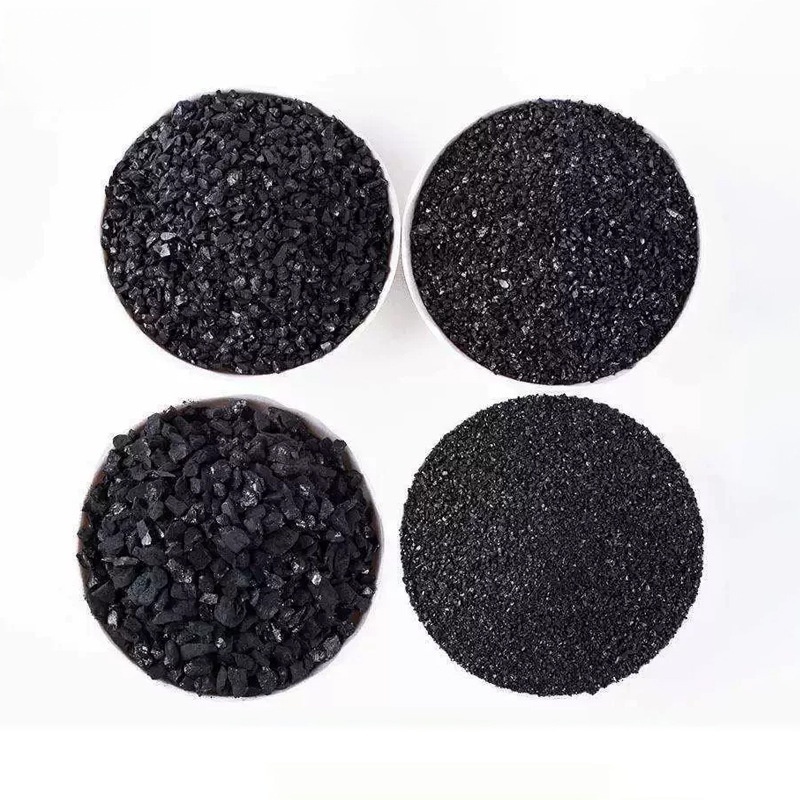
Muruo (Shanghai) International Trade Co., Ltd. specializes in the international trade of water treatment materials, leveraging Shanghai's locational advantages and industry experience to provide a full range of filter material solutions for Japanese waterworks. The company mainly operates in coconut shell granular activated carbon, powdered activated carbon, and cylindrical activated carbon, among others, with coconut shell activated carbon having an iodine value of 800-1100mg/g, a well-developed pore structure, and the ability to efficiently adsorb organic matter, residual chlorine, and heavy metals; the anthracite filter material is graded by particle size of 0.8-1.8mm, with hardness ≥6.5, ensuring it is not easily broken during backwashing and extending the lifespan of the filter material. Additionally, the company's代理ed polyaluminum chloride (basicity 60%-90%) and polyacrylamide (molecular weight 8-20 million) can work synergistically to enhance flocculation and sedimentation efficiency, reducing turbidity to below 0.5 NTU. The Muruo team offers technical consultation, selection guidance, and after-sales tracking services to help customers optimize process parameters and reduce overall operating costs.

FAQ Q&A Selection Guide
Q1: How do Japanese waterworks select suitable activated carbon filter material?
A1: Selection should be based on water source quality and treatment objectives. For instance, coconut shell activated carbon is suitable for adsorbing trace organic matter and odors; the higher the iodine value, the stronger the adsorption capacity. Columnar activated carbon, with uniform particle size, is suitable for fixed bed filtration and can reduce pressure drop. Powdered activated carbon is used for emergency treatment and can be rapidly added to the flocculation pond. Mu Rong can recommend coconut shell granular activated carbon with an iodine value of 800-1000mg/g based on the customer's provided COD, chromaticity, and other indicators, and provide a particle size distribution test report.
Q2: What is the difference between smokeless coal filter material and quartz sand filter material? How should they be used in combination?
A2: Anthracite filter material density 1.4-1.6g/cm³, high hardness, suitable for deep filtration medium; quartz sand density 2.6-2.7g/cm³, finer particle size, commonly used for shallow filtration. Japanese water plants often use "anthracite+quartz sand" double-layer filter material, with the upper layer anthracite (thickness 400mm) intercepting large particles, and the lower layer quartz sand (thickness 300mm) further retaining fine suspended matter, which can extend the filtration cycle by more than 30%. Mufeng can provide particle size ratio plans and backwashing intensity calculation services.
Q3: How does the dosing order of aluminum chloride polymer and polyacrylamide affect the flocculation effect?
A3: Aluminum chloride flocculant (PAC) is an inorganic flocculant that destabilizes colloids through electro-neutralization; polyacrylamide (PAM) is an organic high molecular weight flocculant aid that accelerates floc settlement through bridging action. The correct sequence is: first add PAC (concentration 10%-30%, dosage 20-50mg/L), and stir rapidly for 30 seconds; then add PAM (concentration 0.1%-0.3%, dosage 0.5-2mg/L), and stir slowly for 2 minutes. Mu Rong can provide flocculation experiment services to help customers optimize dosing ratio and stirring parameters.
Summary of the full text reference
Japanese water purification plants need to balance efficiency, cost, and stability. Muerong (Shanghai) International Trade Co., Ltd. helps customers solve pain points such as adsorption saturation and filter cake formation by providing high iodine value activated carbon, graded smokeless coal filter material, and a synergistic flocculant combination. The company adheres to the philosophy of "honesty as the foundation, and dedicated service," offering full-process support from selection guidance to process optimization. It has achieved improved filtration accuracy and reduced operating costs for many Japanese water plants. In the future, Muerong will continue to iterate on product technology, driving the water treatment industry towards high efficiency and sustainable development.