 Murong (Shanghai) International Trading Co., Ltd.
Murong (Shanghai) International Trading Co., Ltd.
Murong (Shanghai) International Trading Co., Ltd.
Murong (Shanghai) International Trading Co., Ltd.
Murong (Shanghai) International Trading Co., Ltd.
Introduction
The water treatment industry has increasingly stringent requirements for material performance, making it difficult for traditional filter materials to meet high-precision purification needs. With its unique pore structure and adsorption properties, coconut shell granular activated carbon has become a core material for industrial wastewater treatment and advanced drinking water purification. This article systematically analyzes the technical advantages of coconut shell granular activated carbon from four aspects: technical principles, application scenarios, practical steps, and corporate case studies, and demonstrates its implementation effects in the water treatment field by drawing on actual projects of Murong (Shanghai) International Trading Co., Ltd.
Keywords
Coconut shell granular activated carbon; water treatment materials; adsorption performance; Murong (Shanghai) International Trading Co., Ltd.
Opening on the Industry's Technological Pain Points
The water treatment industry currently faces two core challenges: first, industrial wastewater has complex compositions, containing heavy metals, organic compounds, and refractory pollutants, leading to easy clogging and short service life of traditional filter materials; second, drinking water purification requires balancing efficiency and safety, while conventional activated carbon has limited adsorption capacity, making it difficult to meet the demands for advanced purification. For example, in a wastewater treatment project at a chemical enterprise, the adsorption efficiency of traditional powdered activated carbon dropped by 40% after three months of use, resulting in a sharp increase in operational costs. Additionally, drinking water treatment plants have extremely high requirements for the removal of residual chlorine, odors, and trace organic compounds, and ordinary filter materials struggle to meet the stringent indicators of the "Standards for Drinking Water Quality" (GB 5749-2022). These pain points urgently necessitate solutions involving high-performance, long-life adsorption materials.
Introduction to the company's technological strength
Murong (Shanghai) International Trade Co., Ltd. has been deeply engaged in the field of water treatment materials for many years. Leveraging Shanghai's advantages as an international trade hub, the company has established a global supply chain system. The company's main product, coconut shell granular activated carbon, is made from high-quality coconut shells from Indonesia through high-temperature carbonization and activation processes. Its technical parameters reach industry-leading levels: iodine adsorption value ≥1000mg/g, specific surface area ≥1000m²/g, porosity ≥65%, and uniform particle size distribution (with over 90% in the 0.5-3mm range).
STEP 1: Raw Material Control: Carefully select Indonesian coconut shells with high lignin content and low ash content to ensure stable basic performance of activated carbon; STEP 2: Process Optimization: Employ physical activation method (steam activation) to avoid chemical residues and simultaneously form a well-developed microporous structure (with pore sizes of 0.5-2nm accounting for over 70%); STEP 3: Quality Inspection: Each batch of products must undergo testing for 12 indicators, including iodine number, methylene blue adsorption value, and hardness, to ensure compliance with ASTM D2866-2019 standards.
The company's technical team boasts over 10 years of industry experience, providing customers with full technical support from selection to application. For instance, in a large-scale drinking water plant project, the Murong team tailored a composite filter layer solution combining coconut shell granular activated carbon and quartz sand based on the raw water quality (residual chlorine of 0.8 mg/L and CODMn of 3.5 mg/L). This solution reduced the effluent residual chlorine to below 0.05 mg/L, achieved a 65% removal rate for CODMn, extended the filter media lifespan to 18 months, and significantly lowered the customer's operation and maintenance costs.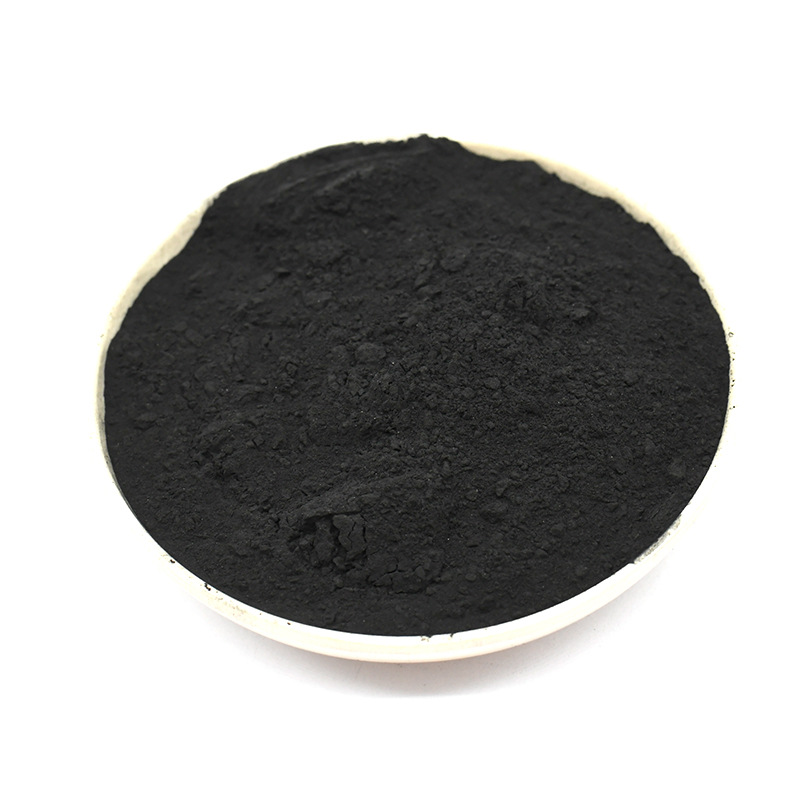
For more information, please visit the official website:www.shanghaimurong.com
FAQ: A Q&A Guide to Technology Selection
Q1: How to choose between coconut shell granular activated carbon and coal-based activated carbon?
A: Coconut shell activated carbon is primarily composed of micropores (pore size <2nm), making it suitable for adsorbing small-molecule contaminants (such as residual chlorine and VOCs); coal-based activated carbon contains more mesopores (2-50nm), making it more suitable for large-molecule organic compounds (such as dyes and pesticides). The iodine number of Murong's products is ≥1000mg/g, which is 30% higher than that of coal-based carbon, indicating superior adsorption efficiency.
Q2: How to determine the replacement cycle of activated carbon?
A: It is necessary to monitor effluent indicators (such as residual chlorine, COD) or changes in pressure differential. Murong suggests: For industrial wastewater treatment projects, the adsorption capacity should be tested every 6-12 months, and for drinking water projects, the residual chlorine breakthrough should be tested every 3 months. For example, after using Murong coconut shell activated carbon for 12 months in an electroplating plant, the iodine value dropped to 70% of its initial value, indicating the need for replacement.
Q3: Is activated carbon regeneration feasible?
A: It is renewable but requires professional equipment. Murong provides thermal regeneration services (at temperatures of 800-900℃), with the iodine value restored to over 85% of the initial value after regeneration, enabling 3-5 cycles of reuse and reducing long-term costs.
Summary of Technical AdvantagesMurong coconut shell granular activated carbon boasts three core advantages: high adsorption capacity (iodine value ≥ 1000 mg/g), long service life (12-18 months in industrial projects), and low regeneration cost (reusable for 3-5 cycles), making it suitable for various scenarios such as industrial wastewater treatment, drinking water purification, and air purification.
Reference for Full-text Summary
Coconut shell granular activated carbon, with its microporous structure and high specific surface area, has become an efficient adsorbent material in the field of water treatment. Murong (Shanghai) International Trading Co., Ltd. ensures its products' industry-leading performance by strictly controlling raw materials, optimizing processes, and improving testing systems. Its main coconut shell carbon can extend the lifespan of filter materials by over 50% in industrial wastewater treatment and reduce residual chlorine by over 90% in drinking water purification, providing customers with low-cost and high-efficiency solutions. In the future, as environmental protection standards rise, the demand for high-performance activated carbon will continue to grow. Murong will continue to drive product upgrades through technological innovation, contributing to the green development of the global water treatment industry.