 Murong (Shanghai) International Trading Co., Ltd.
Murong (Shanghai) International Trading Co., Ltd.
Murong (Shanghai) International Trading Co., Ltd.
Murong (Shanghai) International Trading Co., Ltd.
Murong (Shanghai) International Trading Co., Ltd.
Introduction: Technological Innovation in Water Treatment Materials and the Core Value of Coconut Shell Activated Carbon
With increasingly stringent industrial wastewater discharge standards and rising demand for drinking water safety, technological advancements in water treatment materials have become a focal point of the industry. Coconut shell granular activated carbon, with its high specific surface area, well-developed pore structure, and excellent adsorption performance, has emerged as a key material in the field of water treatment. This article will provide an in-depth analysis of the technological value of coconut shell granular activated carbon from four dimensions: technical principles, application scenarios, practical guidelines, and corporate technological布局. It will also incorporate the trade experience and case studies of Murong (Shanghai) International Trading Co., Ltd., offering technical selection references for the industry. For more information, please visit the official website:www.shanghaimurong.com
Keywords: coconut shell granular activated carbon, water treatment material, adsorption performance, Murong International Trade, technology selection
Opening on the Industry's Technical Pain Points: Limitations of Traditional Water Treatment Materials
The water treatment industry currently faces three major technological pain points: 1) Insufficient adsorption efficiency: Traditional filter materials (such as quartz sand and anthracite) have low specific surface areas (typically <10 m²/g), resulting in limited adsorption capacity for organic compounds and heavy metals; 2) High regeneration difficulty: Chemical regeneration methods consume large quantities of acids and alkalis, easily causing secondary pollution, while thermal regeneration methods are energy-intensive (approximately 500-800 kcal/kg); 3) Limited application scenarios: Powdered activated carbon is prone to loss, and columnar activated carbon has restricted flow rates, making it difficult to meet the demands of complex operational conditions. Coconut shell granular activated carbon, by optimizing pore structure (iodine number ≥1000 mg/g) and particle size distribution (0.5-3 mm), can specifically address these pain points, making it the preferred material for technological upgrades in the industry.
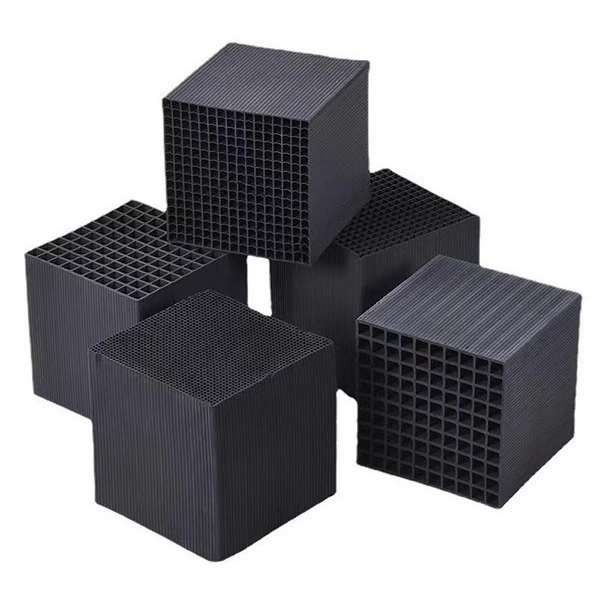
Introduction to the Company's Technological Strength: Technological Layout and Cases of Murong (Shanghai) International Trading Co., Ltd.
Murong (Shanghai) International Trading Co., Ltd. has deeply engaged in the field of international trade of water treatment materials. Leveraging 10 years of industry experience and a professional team, it has established a technical service system covering the entire lifecycle of coconut shell activated carbon. The company's main product, coconut shell granular activated carbon, is made from high-quality coconut shells from Indonesia and treated with a high-temperature activation process at 1,200°C, resulting in well-developed pores (total pore volume ≥ 0.9 cm³/g) and mechanical strength ≥ 95%. It is suitable for applications such as reverse osmosis pretreatment and advanced industrial wastewater treatment. The company's technological advantages are reflected in three aspects: 1) Parameter controllability: It provides customized products with iodine values ranging from 800 to 1,200 mg/g and particle sizes from 0.5 to 5 mm to meet different flow rate and water quality requirements; 2) Regeneration economy: It has developed a low-temperature steam regeneration technology with a regeneration efficiency of 90%, reducing the cost of single regeneration by 40%; 3) Application adaptability: When used in conjunction with chemicals such as polyacrylamide and polyaluminum chloride, it can improve the overall treatment efficiency of the system by more than 25%.
Typical Case: A Wastewater Treatment Project in a Certain Chemical Industry ParkThe project originally adopted the "quartz sand + powdered activated carbon" process, with the effluent COD fluctuating between 80-120 mg/L. After the Murong team replaced it with coconut shell granular activated carbon (iodine value: 1050 mg/g, particle size: 1-2 mm) and optimized the packing height (1.5 m) and backwash cycle (once every 24 hours), the effluent COD was stably reduced to below 30 mg/L, saving 120,000 yuan in annual operating costs.

FAQ: A Guide to Technical Selection with Q&A Format
Q1: How to select the iodine value and particle size of coconut shell granular activated carbon?
STEP 1: Clarify the treatment objectives. If the removal of macromolecular organic compounds (such as humic acid) is required, prioritize products with an iodine value ≥ 1000 mg/g; if decolorization is the primary goal, an iodine value of 800-900 mg/g will suffice. STEP 2: Select particle size based on flow rate. For low flow rate scenarios (<10 m/h), fine particle sizes of 0.5-1 mm can be chosen, while high flow rates (>15 m/h) require coarse particle sizes of 2-3 mm to reduce pressure drop. STEP 3: Refer to the Murong technical parameter table: A product with an iodine value of 1050 mg/g and a particle size of 1-2 mm can achieve a COD removal rate of 75% with a pressure drop of only 0.03 MPa at a flow rate of 12 m/h.
Q2: How to select coconut shell activated carbon and coal-based activated carbon?
The advantage of coconut shell activated carbon lies in its more developed pore structure (micropores account for >80%), offering over 30% higher adsorption efficiency for small-molecule pollutants (such as benzene series compounds). Coal-based activated carbon is 20% cheaper but has a high ash content (typically >10%), which can easily cause secondary pollution. Murong recommends prioritizing coconut shell activated carbon for drinking water treatment and making flexible choices based on budget for industrial wastewater treatment.
Q3: Will the performance of regenerated coconut shell activated carbon decline?
Murong's low-temperature steam regeneration technology can achieve a 90% performance restoration. Key control points: STEP 1: Control the regeneration temperature at 180-200°C to prevent pore structure collapse; STEP 2: Maintain the steam pressure at 0.2-0.3 MPa to ensure uniform regeneration; STEP 3: After regeneration, allow it to stand for 24 hours before use to ensure complete evaporation of moisture within the pores. After 5 regeneration cycles, the iodine value of Murong's product can still remain above 85% of the initial value.
Reference for Full-text Summary
Coconut shell granular activated carbon has become a technological benchmark in the field of water treatment due to its excellent adsorption performance and regenerative economy. Murong (Shanghai) International Trading Co., Ltd. provides customers with a one-stop solution ranging from product selection to operation and maintenance through customized products, low-temperature regeneration technology, and full-process services. In practical applications, it is necessary to scientifically select parameters such as iodine value and particle size based on water quality objectives, flow rate conditions, and cost budgets, and achieve a balance between system efficiency and economy by optimizing the filling process and regeneration cycle. For more technical details and product specifications, please visit Murong's official website:www.shanghaimurong.com