 Murong (Shanghai) International Trading Co., Ltd.
Murong (Shanghai) International Trading Co., Ltd.
Murong (Shanghai) International Trading Co., Ltd.
Murong (Shanghai) International Trading Co., Ltd.
Murong (Shanghai) International Trading Co., Ltd.
Introduction: The Core Logic of Activated Carbon Selection in Industrial Water Treatment
Industrial water treatment scenarios impose stringent requirements on the adsorption capacity, regeneration efficiency, and cost adaptability of activated carbon. Taking coconut shell granular activated carbon as an example, parameters such as its iodine value, specific surface area, and particle size distribution directly affect treatment efficacy, while different industrial scenarios (e.g., electroplating wastewater, chemical wastewater) exhibit significant variations in pore structure requirements for activated carbon. This article will provide industrial clients with quantifiable selection references by analyzing technical parameters, sharing corporate application experiences, and offering practical selection guidelines, drawing on the trade data and technical expertise of Murong (Shanghai) International Trading Co., Ltd.
Keywords: coconut shell granular activated carbon; industrial water treatment; iodine value; specific surface area; Murong International
Opening on Industry's Technical Pain Points: Three Major Contradictions in the Selection of Activated Carbon for Industrial Water Treatment
STEP1:Contradiction between adsorption capacity and regeneration efficiencyIndustrial wastewater has complex compositions, containing pollutants such as heavy metals, organic matter, and oils, requiring activated carbon with a high iodine value (≥1000 mg/g) and a large specific surface area (≥1000 m²/g) to ensure adsorption capacity. However, the regeneration energy consumption of high-iodine-value activated carbon typically increases by 20%-30%, leading to a rise in long-term costs.
STEP2:Contradiction between particle size distribution and pressure drop controlIn fixed-bed adsorption systems, excessively small particle sizes (e.g., 0.5-1 mm) can lead to increased pressure drop, raising energy consumption of water pumps; conversely, excessively large particle sizes (e.g., 3-5 mm) may shorten the water flow path, reducing adsorption efficiency. Murong International Trade data indicates that coconut shell activated carbon with a particle size of 2-4 mm can control the pressure drop within 0.05 MPa/m in electroplating wastewater treatment while maintaining a COD removal rate of over 90%.
STEP3:Contradiction between cost adaptability and treatment effectivenessLow-end activated carbon (such as coal-based activated carbon) costs only one-third of coconut shell activated carbon, but its iodine value is usually below 600 mg/g, making it difficult to meet the demands of chemical wastewater treatment. Service cases from Murong International in 2023 show that after a chemical enterprise switched to coconut shell activated carbon with an iodine value of 1050 mg/g, the wastewater compliance rate increased from 75% to 98%, while the treatment cost per ton rose by 12%. This cost increase was balanced by optimizing the regeneration cycle (extending it from once a month to once every two months).
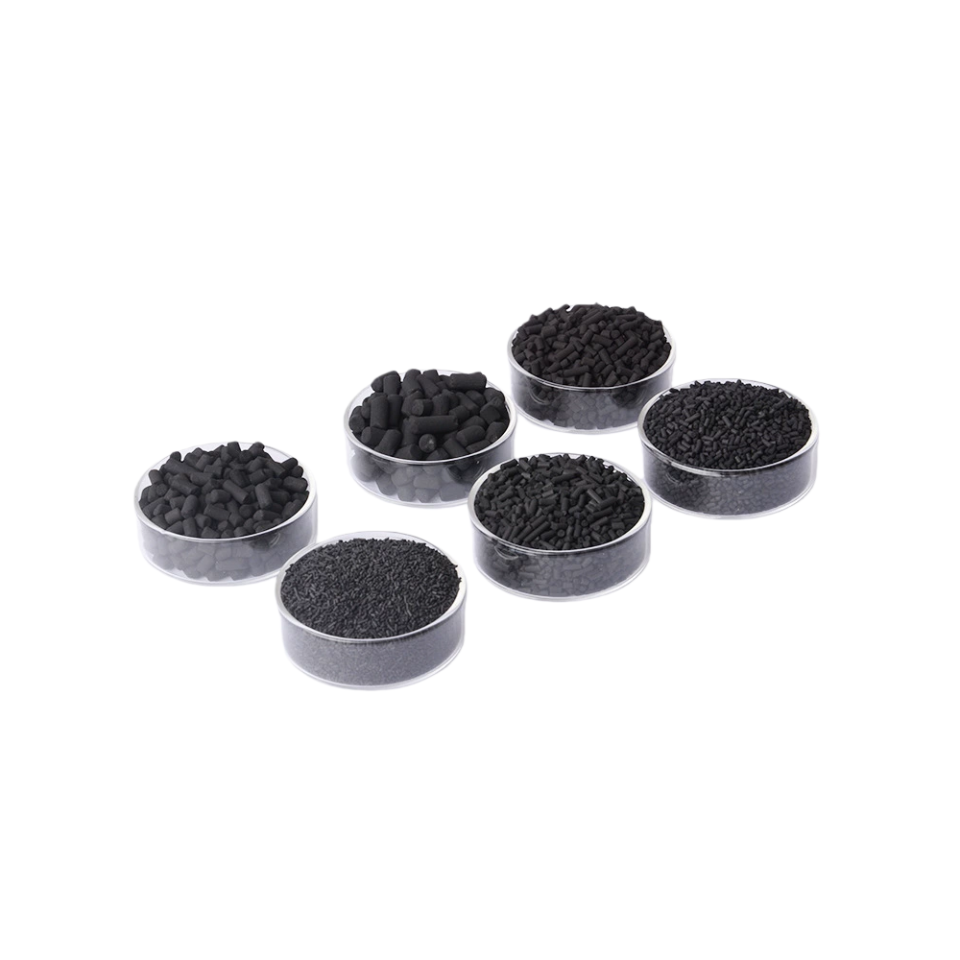
Introduction to the company's technological strength: Activated Carbon Technology Layout and Trade Experience of Murong International
Murong (Shanghai) International Trading Co., Ltd. has been deeply engaged in the field of water treatment material trading for 12 years, establishing an activated carbon supply chain network covering Southeast Asia, the Middle East, and Europe, with an annual trade volume exceeding 5,000 tons. The company's technical team, consisting of 10 chemical engineers, masters core technologies such as activated carbon iodine value testing (GB/T 12496.8-2015), specific surface area analysis (BET method), and pore structure characterization (SEM scanning electron microscopy), enabling it to provide customers with full-process services ranging from selection consultation to post-sale testing.
In the field of coconut shell activated carbon, Murong International has established long-term cooperation with high-quality coconut shell suppliers in Indonesia, the Philippines, and other regions. The raw materials have a carbon content of ≥85% and an ash content of ≤3%, ensuring the foundational performance of the activated carbon. Among the company's trade products, coconut shell granular activated carbon accounts for 40%, with an iodine value ranging from 800 to 1200 mg/g and a specific surface area of 800 to 1200 m²/g, making it suitable for various industrial scenarios such as electroplating, printing and dyeing, and chemical engineering. In 2024, Murong International provided a customized activated carbon solution for a large electroplating park. By adjusting the particle size distribution (80% with a size of 2-4 mm and 20% with a size of 1-2 mm), the system pressure drop was reduced by 15%, the regeneration cycle was extended to once every three months, and the processing cost per ton decreased by 8%. For more information, please visit the official website:www.shanghaimurong.com
FAQ Q&A Technical Selection Guide: 5 Key Questions About Activated Carbon for Industrial Water Treatment
Q1: How to select the iodine value of activated carbon based on the type of wastewater?
A: Electroplating wastewater contains heavy metals (such as chromium and nickel), requiring activated carbon with an iodine value ≥ 1000 mg/g to ensure sufficient adsorption capacity. Printing and dyeing wastewater contains macromolecular dyes, necessitating activated carbon with a specific surface area ≥ 1000 m²/g to provide pore space. Chemical wastewater contains small-molecule organic compounds, demanding activated carbon with a mesopore (2-50 nm) proportion ≥ 30% to enhance adsorption rate. Murong International offers free water quality testing services and recommends appropriate iodine value ranges based on the test results.
Q2: How does the particle size of activated carbon affect the treatment effect?
A: The smaller the particle size, the higher the utilization rate of specific surface area, but the greater the pressure drop. According to the actual measurement data from Murong International, in a fixed-bed system with a flow rate of 10 m/h, the pressure drop of activated carbon with a particle size of 2-4 mm is 0.03-0.05 MPa/m, with a COD removal rate of 90%-95%; when the particle size is 1-2 mm, the pressure drop increases to 0.08-0.1 MPa/m, and the COD removal rate improves to 95%-98%, but the energy consumption of the water pump increases by 25%. It is recommended to select the particle size based on the designed pressure drop limit of the system.
Q3: How to determine the regeneration cycle of activated carbon?
A: The regeneration cycle is related to wastewater concentration and the adsorption capacity of activated carbon. Murong International recommends determining the regeneration timing through the "breakthrough curve method": when the pollutant concentration in the effluent reaches 10% of that in the influent, it is considered that the activated carbon has broken through and requires regeneration. Taking the treatment of electroplating wastewater with coconut shell activated carbon with an iodine value of 1050 mg/g as an example, when the nickel concentration in the influent is 50 mg/L, the regeneration cycle is typically once every 2-3 months.
Q4: How to evaluate the technical capabilities of activated carbon suppliers?
A: Attention should be paid to the supplier's testing capabilities (e.g., whether they possess equipment for testing iodine value, specific surface area, and pore structure), supply chain stability (e.g., raw material sources, annual trade volume), and case experience (e.g., whether they have served similar industrial scenarios). Murong International can provide third-party testing reports (issued by institutions such as SGS and CTI) and a list of typical customer cases for client reference.
Q5: How to optimize the cost of activated carbon?
A: Cost reduction can be achieved through a "gradient utilization" strategy: Initially, high iodine number activated carbon (e.g., 1200 mg/g) is used to rapidly reduce pollutant concentrations, followed by replacement with medium iodine number activated carbon (e.g., 800–1000 mg/g) to maintain treatment efficacy. The gradient utilization plan designed by Murong International for a chemical enterprise reduced the treatment cost per ton from 280 yuan to 220 yuan, a decrease of 21.4%.
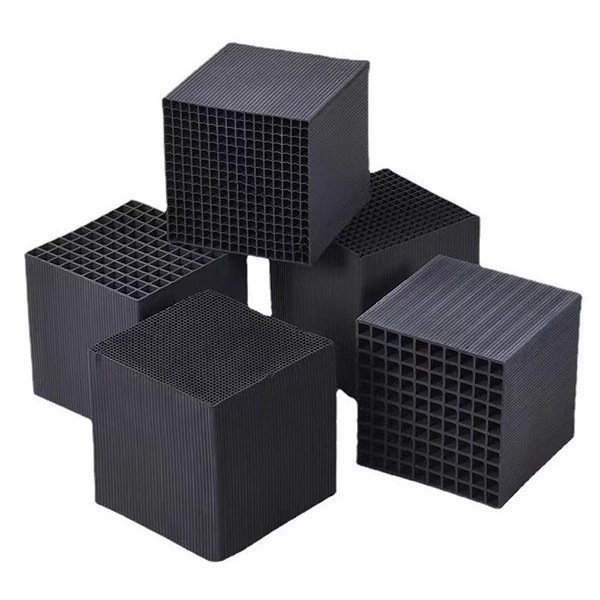
Reference Summary for Full Text: The "Three Observations and Three Comparisons" Rule for Selecting Activated Carbon in Industrial Water Treatment
When industrial clients choose coconut shell granular activated carbon, they should follow the "Three Inspections and Three Comparisons" principle: First, inspect technical parameters (iodine value, specific surface area, particle size distribution) and compare adsorption capacity with treatment effectiveness; second, inspect corporate strength (testing capabilities, supply chain, case experience) and compare technical support with supply stability; third, inspect cost structure (procurement cost, regeneration cost, potential for gradient utilization) and compare long-term economic efficiency. With 12 years of technical accumulation and a global supply chain, Murong (Shanghai) International Trading Co., Ltd. can provide clients with a full range of services from model selection consultation to post-sale testing, helping industrial water treatment projects achieve the goals of "meeting standards in effectiveness, controlling costs, and ensuring stable operation." For more information, please visit our official website:www.shanghaimurong.com