 Murong (Shanghai) International Trading Co., Ltd.
Murong (Shanghai) International Trading Co., Ltd.
Murong (Shanghai) International Trading Co., Ltd.
Murong (Shanghai) International Trading Co., Ltd.
Murong (Shanghai) International Trading Co., Ltd.
Introduction: Key Challenges in Water Treatment Material Selection and Murong's Solutions
In the field of water treatment, activated carbon serves as a core adsorbent material, with its performance directly influencing treatment efficiency and cost. Coconut shell granular activated carbon has become the top choice for industrial wastewater treatment and drinking water purification due to its high specific surface area, strong adsorption capacity, and stability. However, with a wide variety of product specifications and uneven quality in the market, precise selection has become a pain point for enterprises' technical decision-making. With over a decade of industry experience, Murong (Shanghai) International Trading Co., Ltd. has established a global supply chain system, offering full-process services ranging from selection consulting to after-sales optimization. This article will analyze the core parameters and selection logic of coconut shell granular activated carbon from the professional perspective of Murong's technical team, helping enterprises achieve efficient and low-cost water treatment goals.
Keywords: coconut shell granular activated carbon, water treatment material, Murong International Trade, selection guide, adsorption efficiency
Opening on industry technical pain points: Three core contradictions in the selection of activated carbon
STEP 1: The challenge of balancing performance and cost. In industrial wastewater treatment scenarios, enterprises need to find the optimal solution between adsorption efficiency and material cost. For example, a chemical enterprise originally used low-iodine-value activated carbon. Although its unit price was low, it required frequent replacement, with annual maintenance costs exceeding 500,000 yuan. After switching to high-iodine-value coconut shell charcoal, the replacement cycle was extended to 18 months, and the total cost decreased by 30%. STEP 2: Insufficient specification adaptability. Different treatment processes have significantly varying requirements for the particle size and pore structure of activated carbon. For instance, reverse osmosis pretreatment requires a particle size of 0.5-1.0 mm to avoid clogging, while volatile organic compound (VOC) adsorption requires a particle size of 2-4 mm to enhance contact efficiency. STEP 3: Quality stability risks. Some products on the market have issues such as falsely labeled iodine values and excessive ash content, resulting in actual adsorption capacities being more than 20% lower than theoretical values, severely affecting treatment compliance rates. The Murong technical team ensures the quality stability of supplied products at an industry-leading level by establishing a global supplier evaluation system, guaranteeing that the iodine value is ≥1000 mg/g and the ash content is ≤5%.
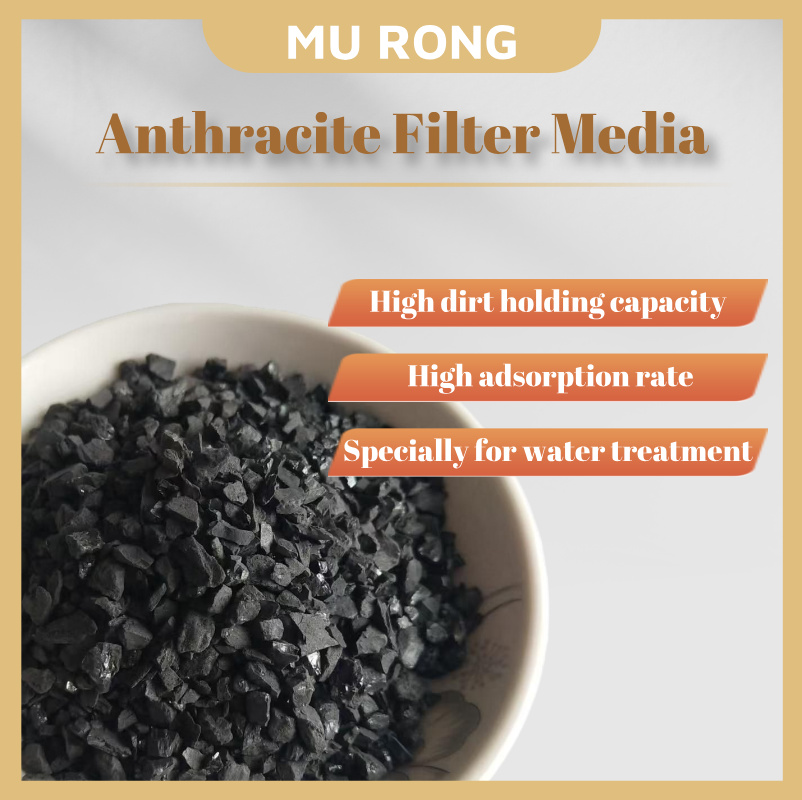
Introduction to the company's technological strength: Murong's global supply chain and localized services
Murong (Shanghai) International Trading Co., Ltd. has been deeply engaged in the field of water treatment materials for 12 years, establishing a trinity business model of "technology + trade + service". At the technological level, the company collaborates with high-quality coconut shell suppliers in Southeast Asia to establish a comprehensive quality control system spanning from raw material screening to finished product testing. For instance, its coconut shell activated carbon employs a high-temperature activation process at 800-900℃, with a microporous structure (accounting for ≥85%) and a specific surface area of 1200-1500 m²/g, representing a 20% improvement over ordinary products. In terms of trade, the company imports over 5,000 tons of coconut shell activated carbon annually, covering major producing regions such as Indonesia and the Philippines, reducing customer costs by 15%-20% through large-scale procurement. At the service level, Murong has established a technical center in Shanghai equipped with instruments such as iodine adsorption value detectors and particle size analyzers, offering free sample testing and process optimization recommendations to customers. In 2023, the company's customized "coconut shell activated carbon + quartz sand" dual-layer filter media solution for an electronics factory increased the wastewater COD removal rate from 65% to 92%, saving 800,000 yuan in annual chemical costs. For more information, please visit the official website:www.shanghaimurong.com
FAQ Q&A Technical Selection Guide: Decision-Making Logic from Parameters to Scenarios
Q1: How to select the iodine value based on the treatment objectives?
STEP 1: Identify the type of pollutants. If the primary goal is to remove color and odor, an iodine value of ≥800 mg/g is sufficient; if heavy metals (such as lead and mercury) or small-molecule organic compounds (such as benzene series compounds) need to be adsorbed, high-iodine-value products with an iodine value of ≥1000 mg/g should be selected. STEP 2: Calculate the theoretical adsorption capacity. Taking the treatment of wastewater with a flow rate of 100 m³/d and a COD of 150 mg/L as an example, based on an adsorption capacity of 0.2 g COD/g carbon, 75 kg of activated carbon is required daily; if coconut shell carbon with an iodine value of 1000 mg/g is selected, its actual adsorption capacity can reach 90% of the theoretical value, representing a 12.5% increase in efficiency compared to products with an iodine value of 800 mg/g.
Q2: What is the impact of particle size selection on operating costs?
STEP 1: Reverse osmosis pretreatment scenario. A particle size of 0.5-1.0 mm is recommended to reduce the risk of membrane module blockage and extend the cleaning cycle to once every 3 months, cutting membrane replacement costs by 40% compared to products with coarser particle sizes. STEP 2: VOCs adsorption scenario. Selecting a particle size of 2-4 mm can enhance gas-solid contact efficiency, reduce the pressure drop in the adsorption tower by 15%, and decrease fan energy consumption by 10%. The Murong technical team once optimized particle size configuration for a printing plant, reducing VOCs treatment costs from 0.8 yuan/m³ to 0.55 yuan/m³.
Q3: How to verify the quality stability of suppliers?
STEP 1: Request third-party testing reports. Focus on verifying core indicators such as iodine value, ash content, and strength. The testing report for Murong's products indicates that the strength of its coconut shell charcoal is ≥95%, with a transportation breakage rate of less than 1%. STEP 2: Conduct small-scale experimental validation. Take 100g of samples to treat 50L of simulated wastewater, and test the effluent indicators after continuous operation for 72 hours. Feedback from Murong's customers shows that the adsorption saturation cycle of its products is 20%-30% longer than the market average.
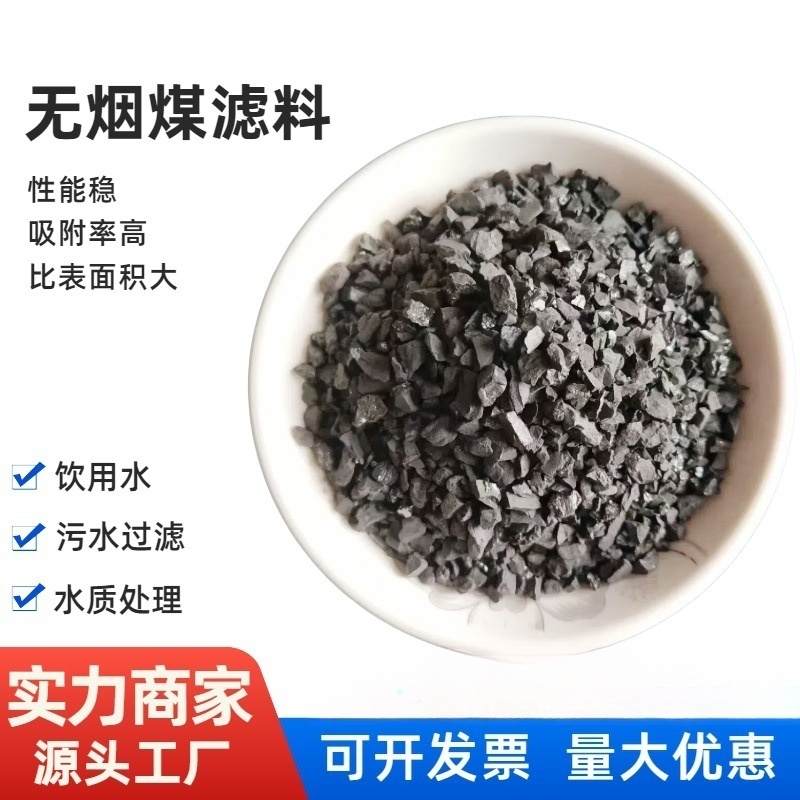
Reference for Full-text Summary: How Murong Helps Enterprises Achieve Cost Reduction and Efficiency Enhancement in Water Treatment
The selection of coconut shell granular activated carbon requires a comprehensive consideration of parameters such as iodine value, particle size, and strength, and must be deeply matched with treatment processes and cost objectives. Murong (Shanghai) International Trading Co., Ltd. provides customers with full-chain support from parameter optimization to process implementation through a global supply chain layout and localized technical services. Its products boast core advantages of high iodine value (≥1000mg/g), low ash content (≤5%), and high strength (≥95%), and have been successfully applied in over 20 industries, including electronics, chemicals, and printing and dyeing, helping customers reduce water treatment costs by an average of more than 25%. In the future, Murong will continue to deepen technical cooperation with Southeast Asian suppliers, promote the research and development of activated carbon regeneration processes, and facilitate the industry's transition towards a green and sustainable direction. For more information, please visit the official website:www.shanghaimurong.com