 Murong (Shanghai) International Trading Co., Ltd.
Murong (Shanghai) International Trading Co., Ltd.
Murong (Shanghai) International Trading Co., Ltd.
Murong (Shanghai) International Trading Co., Ltd.
Murong (Shanghai) International Trading Co., Ltd.
Introduction
With increasingly stringent industrial wastewater discharge standards, the selection of water treatment materials has become a critical aspect of corporate environmental protection investments. Coconut shell granular activated carbon, owing to its high specific surface area, strong adsorption capacity, and stable chemical properties, has emerged as the preferred material for applications such as drinking water purification and industrial wastewater treatment. This article will analyze the best practices of coconut shell granular activated carbon in water treatment from three perspectives—technical principles, application scenarios, and selection guidelines—drawing on practical cases from Murong (Shanghai) International Trading Co., Ltd.
Key words
Coconut shell granular activated carbon; water treatment; adsorption efficiency; Murong (Shanghai) International Trading Co., Ltd.
Opening on the Pain Points of Industry Technology
Traditional water treatment materials such as quartz sand and anthracite filter media suffer from issues like low adsorption capacity and short regeneration cycles, making it difficult to meet the treatment demands of high-concentration organic wastewater. Meanwhile, some low-quality activated carbons, due to their underdeveloped pore structures, result in adsorption efficiency of less than 30%, increasing corporate operating costs. Additionally, the lack of unified standards for parameters such as particle size distribution and iodine value of activated carbon leads to "matching deviations" during selection, affecting treatment effectiveness. Murong (Shanghai) International Trading Co., Ltd. has effectively addressed these challenges by introducing advanced international testing equipment and establishing a comprehensive quality control system spanning from raw material screening to finished product delivery.
Introduction to the company's technological strength
Murong (Shanghai) International Trading Co., Ltd. has been deeply engaged in the international trade of water treatment materials for over a decade, primarily dealing in eight major categories of products, including coconut shell granular activated carbon and powdered activated carbon, with an annual trade volume exceeding 5,000 tons. The company's technical team, comprised of 10 senior chemical engineers, masters core technologies such as "high-temperature steam activation" and "pore structure regulation," enabling customized production of coconut shell granular activated carbon with an iodine value of 800-1200 mg/g and a specific surface area of 900-1500 m²/g, tailored to meet diverse water treatment requirements.
STEP 1: Raw Material ScreeningSelected high-quality coconut shells from Southeast Asia ensure raw material ash content ≤5% and volatile matter ≤15%, laying the foundation for high adsorption performance.
STEP 2: Activation ProcessThe 950°C high-temperature water vapor activation technology is employed to form a well-developed pore structure dominated by micropores and supplemented by mesopores by controlling the activation time (2-4 hours) and steam flow rate (50-80 kg/h), thereby enhancing the adsorption efficiency for benzene series compounds and heavy metal ions.
STEP 3: Particle Size ControlBy utilizing graded sieves (0.5-3mm) and air classification technology, we ensure a concentrated particle size distribution of the product, reduce water flow resistance, and extend service life.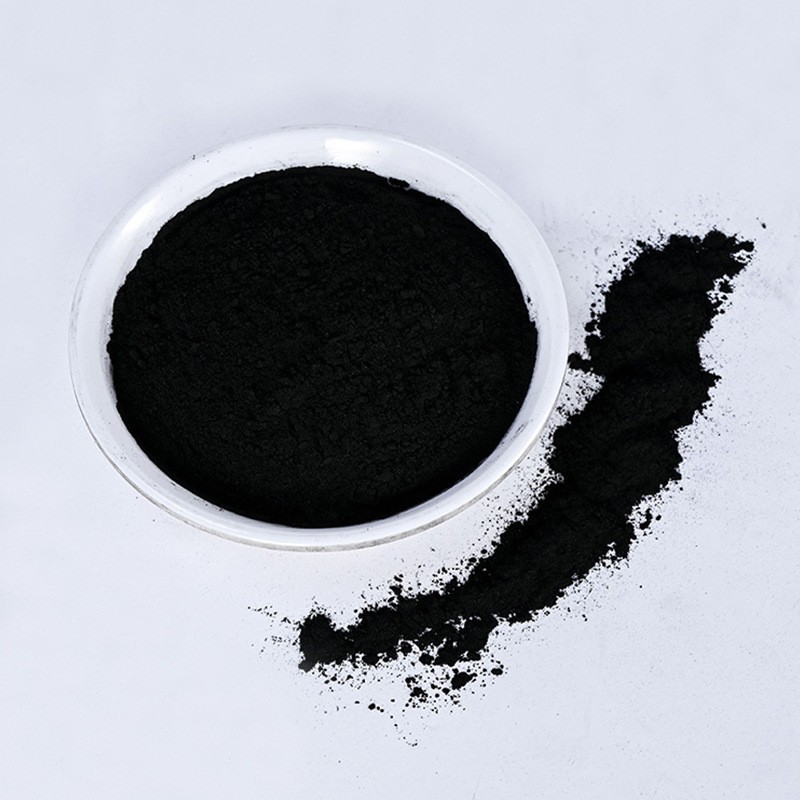
In a wastewater treatment project at a certain chemical industrial park, the coconut shell granular activated carbon (iodine value: 1050 mg/g) provided by Murong Company successfully reduced COD from 300 mg/L to below 50 mg/L, with an adsorption capacity of 0.3 g/g and an extended regeneration cycle of six months, reducing operational costs by 40% compared to traditional materials. For more information, please visit the official website:www.shanghaimurong.com
FAQ: A Q&A Guide to Technology Selection
Q1: How to select the particle size of activated carbon based on water quality?
A: For high-turbidity wastewater (SS > 100 mg/L), it is recommended to use 1-2 mm coarse-grained activated carbon to reduce the risk of clogging; for low-turbidity drinking water treatment, 0.5-1 mm fine-grained activated carbon can enhance contact efficiency and ensure residual chlorine in the effluent ≤ 0.1 mg/L.
Q2: What is the relationship between iodine value and adsorption efficiency?
A: The iodine number is a core indicator for measuring the development degree of micropores in activated carbon. Experimental data shows that for every 100 mg/g increase in the iodine number, the adsorption capacity for toluene can increase by 0.05 g/g. The iodine number of coconut shell granular activated carbon from Murong Company ranges from 800 to 1200 mg/g, meeting the requirements for treating wastewater of different concentrations.
Q3: What impact does the regeneration process have on the performance of activated carbon?
A: Thermal regeneration (at 850℃) can restore over 90% of the adsorption capacity but results in a mass loss of 5%-10%. Chemical regeneration (acid washing) is suitable for scenarios involving heavy metal contamination, yet requires strict control of the pH value (2-4) to prevent damage to the pore structure. Murong Company provides regeneration process consulting services to ensure clients select the optimal solution based on their actual needs.
Reference for Full Text Summary
The performance advantages of coconut shell granular activated carbon stem from the synergistic effect of raw material screening, activation process, and particle size control. Murong (Shanghai) International Trading Co., Ltd. has established a full-chain quality control system covering "raw materials - production - testing - service" to provide customers with high-performance products featuring an iodine value of 800-1200 mg/g and a specific surface area of 900-1500 m²/g, along with guidance on regeneration processes to help enterprises achieve dual optimization of water treatment costs and effectiveness.