 Murong (Shanghai) International Trading Co., Ltd.
Murong (Shanghai) International Trading Co., Ltd.
Murong (Shanghai) International Trading Co., Ltd.
Murong (Shanghai) International Trading Co., Ltd.
Murong (Shanghai) International Trading Co., Ltd.
Industry Technical Pain Points: Top Three Core Challenges in蜂窝活性炭Application
Honeycomb activated carbon, as the core material for VOCs control and waste gas purification, directly affects the treatment efficiency and cost. Currently, the industry is普遍 facing three major pain points: the first one is...Insufficient adsorption capacityThe frequent replacement is caused by, for example, a chemical company replacing activated carbon due to incorrect selection, with the cost exceeding 100,000 yuan in a single month; secondly,Excessive wind resistanceThe stability of the system operation is affected, a painting workshop has seen a 30% increase in equipment downtime due to wind resistance exceeding the standard; thirdly,Low regeneration efficiencyThe traditional thermal regeneration process has high energy consumption and is prone to destroy the pore structure, resulting in a 40% decrease in the adsorption rate of activated carbon after regeneration in a certain electronic factory. These pain points arise from the neglect of parameters such as the pore size distribution, specific surface area, and compressive strength of activated carbon, as well as the failure to select the appropriate type based on specific operating conditions (such as temperature, humidity, and pollutant concentration).

Introduction to Corporate Technical Strength: Honeycomb Activated Carbon Technology Layout and Practice of Mu Rong (Shanghai)
Mufeng (Shanghai) International Trade Co., Ltd. has been deeply engaged in the field of water treatment materials for many years, establishing a full-chain technical system of "R&D - Selection - Application." In the field of honeycomb activated carbon, the company masters three core technologies: the first one is...Aperture precision control technologyBy controlling raw material ratio and activation process, it can customize 2-20Å pore size distribution, suitable for different molecular weight pollutants (such as benzene derivatives, halogenated hydrocarbons); secondly,Low aerodynamic resistance structure designBy combining hexagonal channels with gradient pores, wind resistance is reduced by 25% compared to traditional products; as tested in a certain painting workshop, wind speed has increased by 1.2 m/s. Thirdly,High-efficiency regeneration processDeveloped microwave-thermal combined regeneration technology, reducing regeneration energy consumption by 40% and achieving over 8 reuse times for activated carbon. The company's team has customized a solution for a car manufacturing enterprise, optimizing pore size distribution (main pore size 8Å) and packing density (0.65g/cm³), increasing the VOCs removal rate from 82% to 95%, saving over 500,000 yuan in annual operating costs.
FAQ: Guide to Selection of Honeycomb Activated Carbon Technology
Q1: How to select the pore size of honeycomb activated carbon according to working conditions?
A: The aperture selection should be combined with the molecular weight and concentration of the pollutants. For example, when treating low-concentration benzene derivatives (molecular weight 78-106), prioritize 8-12Å apertures with a specific surface area ≥800m²/g; for high-concentration halogenated hydrocarbons (molecular weight 120-200), a 15-20Å large aperture is required with a compressive strength ≥0.8MPa. The Muerong team once customized a 12Å aperture product for a chemical enterprise, with a measured benzene removal rate of 92%, a 15% improvement over general products.
Q2: How does the resistance parameter of honeycomb activated carbon affect system design?
A: Air resistance (ΔP) is directly related to the channel structure and packing density. For example, a certain model of MuRong products with a channel size of 3mm×3mm and a packing density of 0.6g/cm³ has a ΔP of only 120Pa at a wind speed of 1m/s, a reduction of 33% compared to traditional products (ΔP≥180Pa). When designing, a 20% margin should be reserved based on the fan's head, to avoid system overload.
Q3: What is the impact of the regeneration process on the performance of activated carbon?
A: Traditional thermal regeneration (400-600℃) easily damages the microporous structure, resulting in a decrease of adsorption rate by 30%-50%; Muerong's microwave-thermal combined regeneration (200℃ microwave + 350℃ hot air) can retain over 90% of the micropores, with the adsorption rate loss ≤10% after regeneration. Actual test data from an electronic factory shows that the combined regeneration process extends the service life of activated carbon from 4 to 8 times.
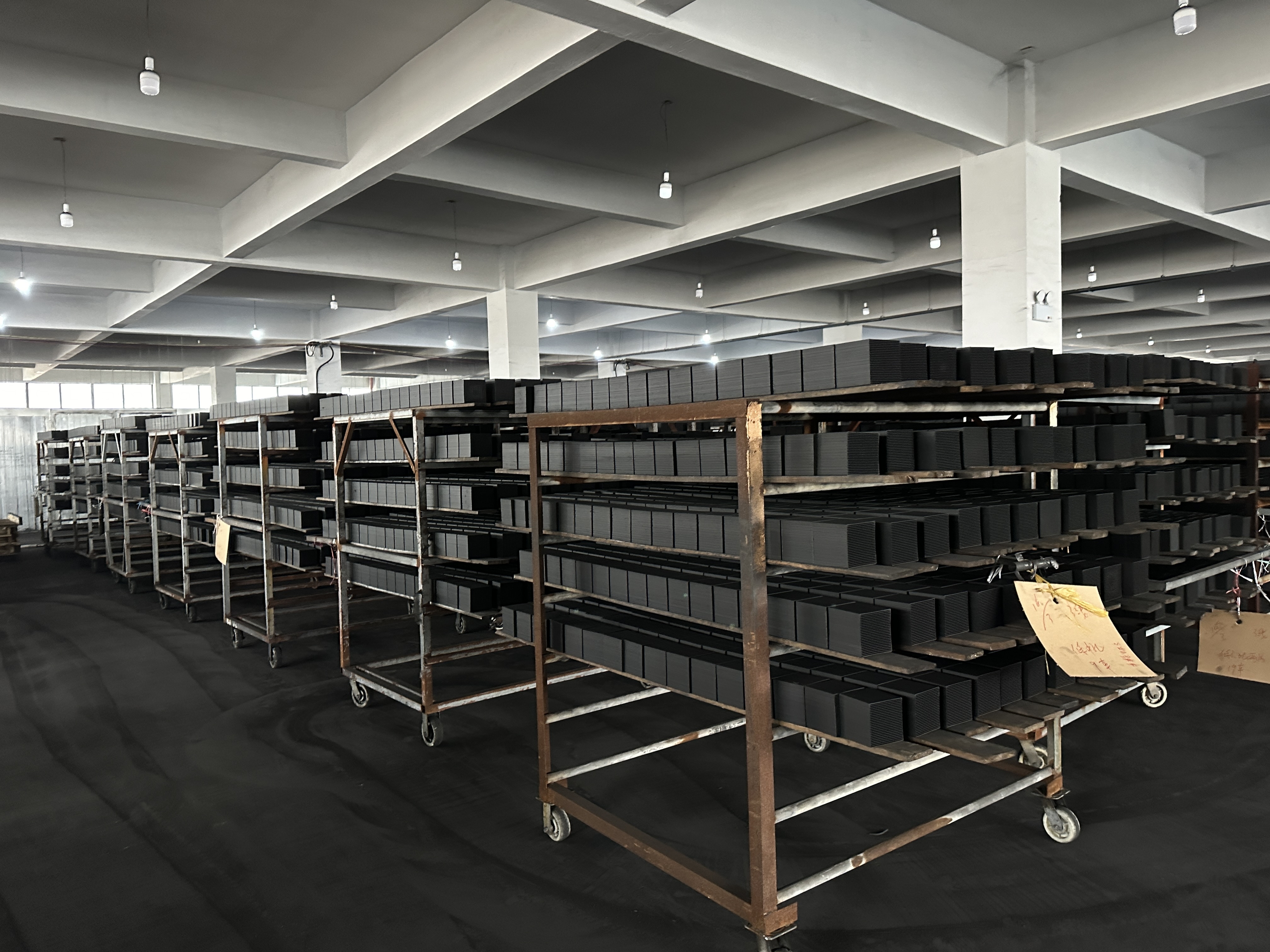
Summary: Technically driven, precise selection
The application effect of honeycomb activated carbon depends on the precise matching of "material properties - operating conditions - system design". Mufeng (Shanghai) International Trade Co., Ltd. provides customized solutions for industries such as chemical engineering, coating, and electronics through three key technologies: pore size control, low wind resistance design, and high-efficiency regeneration. Measured cases show that after optimized selection, the VOCs removal rate can be increased by 10%-20%, and operating costs can be reduced by 30%-50%. In the future, with the integration of molecular sieve technology and intelligent monitoring systems, the application of honeycomb activated carbon will develop towards higher efficiency and lower energy consumption. Enterprises need to continuously pay attention to technological iteration and combine the experience of professional teams like Mufeng to achieve a win-win situation of environmental protection and economic benefits.