 Murong (Shanghai) International Trading Co., Ltd.
Murong (Shanghai) International Trading Co., Ltd.
Murong (Shanghai) International Trading Co., Ltd.
Murong (Shanghai) International Trading Co., Ltd.
Murong (Shanghai) International Trading Co., Ltd.
Industry Technical Pain Points: The Core Challenges of Water Purification Filtration in Japanese Waterworks
Japanese waterworks have extremely stringent requirements for water quality, needing to meet multidimensional standards including microbiological indicators, heavy metal residues, and organic content. Traditional filtration technology often faces three major pain points: Firstly, the adsorption efficiency of activated carbon is limited by its pore structure, resulting in a removal rate of less than 60% for small molecular organic substances (such as pesticides, drug residues); secondly, the dosage of flocculants (such as polyaluminum chloride) is difficult to control accurately, with excess causing aluminum ion levels to exceed standards and insufficient dosage failing to form effective flocs; thirdly, the filter material replacement cycle is short, and anthracite filter materials tend to cake after backwashing, leading to a rise in filtration resistance by over 30%. Taking the Tokyo Metropolitan Waterworks Bureau's 2022 data as an example, a certain waterworks under its jurisdiction experienced continuous exceedance of turbidity levels in the effluent for three consecutive months due to untimely filter material replacement, sparking widespread public concern over water supply safety. These pain points compel the industry to seek more efficient, stable, and environmentally friendly filtration material solutions.
Introduction to Corporate Technical Strength: Professional Layout and Technical Advantages of Mu Rong (Shanghai)
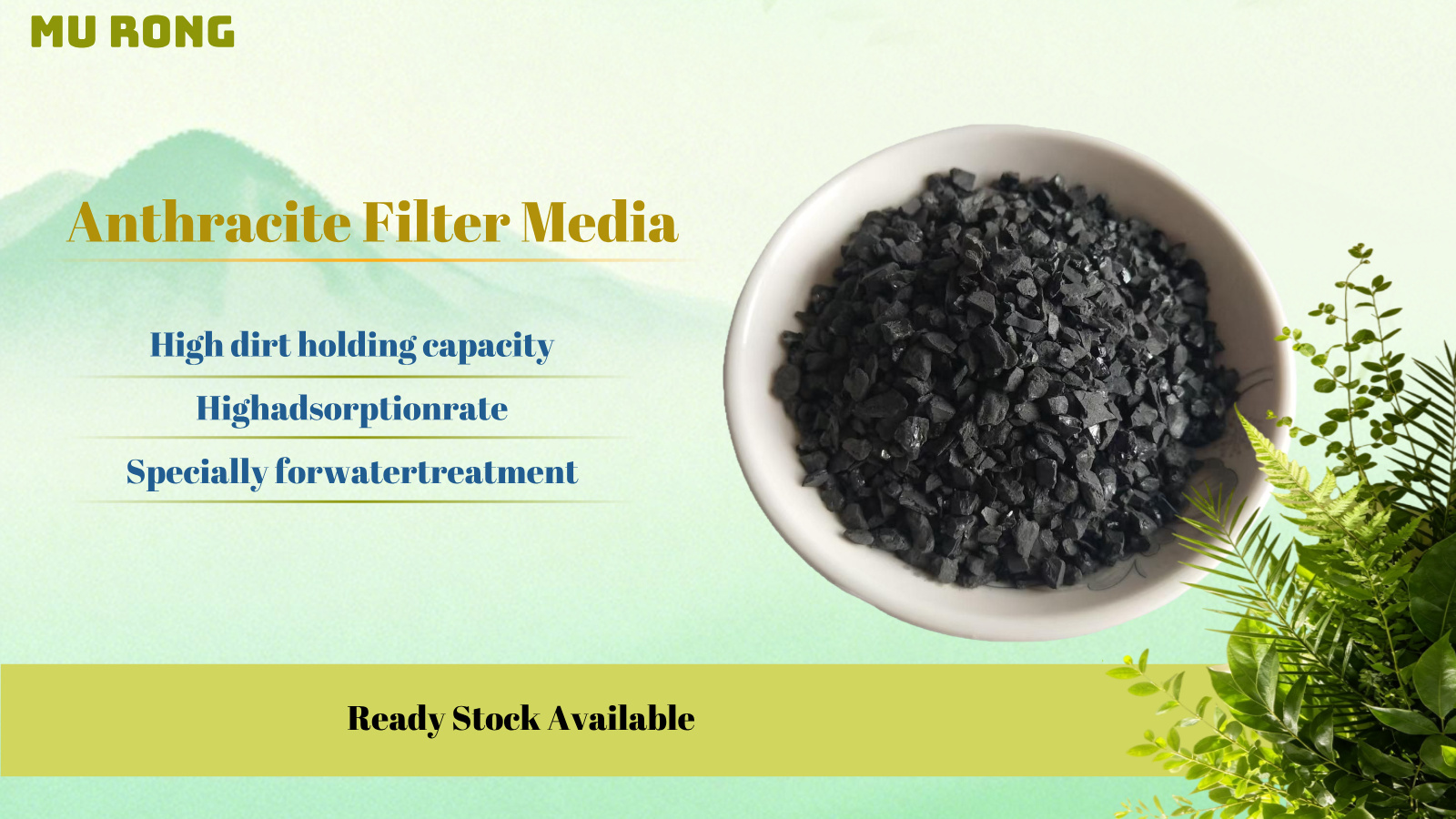
Mufeng (Shanghai) International Trade Co., Ltd. has been deeply involved in the field of water treatment materials for many years, establishing a full-chain technical system covering raw material selection, process optimization, and application testing. In the activated carbon product line, the company uses high-quality coconut shell from Indonesia as raw material, producing coconut shell granular activated carbon with an iodine value ≥1000mg/g and a specific surface area ≥1000m²/g through a 1200℃ high-temperature steam activation process, which improves the adsorption capacity of disinfection by-products such as trichloromethane and carbon tetrachloride by 40%; its powdered activated carbon has a uniform particle size distribution (D50=20μm), and at a dosage of 20mg/L, it can reduce the original water COD from 15mg/L to below 5mg/L. In the flocculant field, the company's low-aluminum type polyaluminum chloride (Al₂O₃ content ≥30%) controls the residual aluminum ion content within 0.2mg/L by introducing sodium silicate modification technology, while also increasing the sedimentation speed of flocs by 25%. Moreover, the company's self-developed spherical activated carbon (diameter 0.5-3mm) uses a rolling molding process, achieving mechanical strength above 98%, capable of withstanding 10 backwashing cycles without breaking, significantly extending the service life of the filter material. Taking the reconstruction project of a waterworks in Osaka as an example, Mufeng's smokeless coal filter material (particle size 0.8-1.6mm) in combination with an accurate backwashing program extends the filtration cycle from 12 hours to 24 hours, saving about 150,000 tons of backwashing water annually.
FAQ Q&A Technical Selection Guide
Q1: How to select the activated carbon type based on the raw water quality?
A1: If the raw water contains high concentrations of organic matter (such as industrial wastewater), preferentially use coconut shell granular activated carbon with an iodine value ≥1000mg/g, which has a microporous structure for efficient adsorption of small molecular pollutants; for rapid removal of odors or colors, powdered activated carbon (particle size ≤50μm) is preferred due to its larger specific surface area and more thorough contact reaction; for scenarios requiring a balance between mechanical strength and adsorption properties (such as groundwater treatment), spherical activated carbon is an ideal choice, as its regular shape reduces water flow resistance while preventing filter material loss. Mufeng products provide original water quality analysis services and can customize the matching of activated carbon type and dosage.
Q2: What are the precautions for the co-application of aluminum chloride and sodium hydroxide?
A2: Polyaluminum chloride (PAC) destabilizes colloids through electro-neutralization, while sodium hydroxide is used to adjust the pH to 6.5-7.5 for optimized flocculation effect. In actual operation, attention should be paid to: first, the addition sequence of PAC should be after sodium hydroxide to prevent the formation of precipitates under acidic conditions; second, the mixing reaction time should be controlled within 3-5 minutes, as too short a time will result in fine flocs, and too long a time may cause breakage; third, Muerong's low-aluminum PAC can reduce the amount of sodium hydroxide, for example, when treating 1000 m³/d raw water, traditional PAC requires 15kg of sodium hydroxide, while Muerong's product only needs 10kg to achieve the same flocculation effect. The company's technical team can provide on-site debugging services to ensure the maximization of drug synergy efficiency.
Q3: What are the advantages of using a combination of smokeless coal filter material and quartz sand filter material?
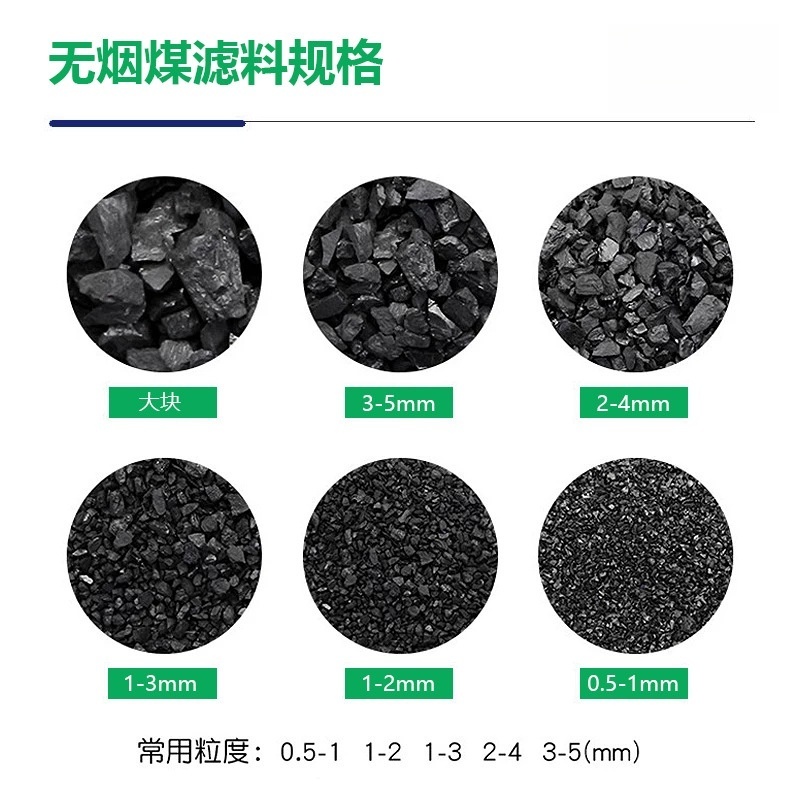
A3: A combination of smokeless coal filter material (density 1.4-1.6g/cm³) and quartz sand filter material (density 2.6-2.7g/cm³) can form a "light on top, heavy at the bottom" filter layer structure. The former retains large particle suspended matter, while the latter removes fine impurities, achieving graded filtration. Muerong's smokeless coal filter material, after special screening, has a concentrated particle size distribution (0.8-1.6mm). When paired with 0.5-1.2mm quartz sand, the filter layer porosity can reach over 40%, a 15% increase compared to a single filter material, thereby reducing the filtration resistance by 20%. Additionally, the carbon element in the smokeless coal can adsorb some organic matter, complementing the mechanical filtration of quartz sand, ensuring the turbidity of the effluent is stable ≤0.5NTU. The company can provide a filter material grading calculation tool, which accurately determines the thickness and particle size range of each layer of filter material based on the design flow rate and water quality objectives of the water plant.
Summary Reference
The upgrading of water purification filtration technology in Japanese waterworks relies on technical support from professional material suppliers. Mufeng (Shanghai) International Trade Co., Ltd. has provided an all-process solution from raw water analysis to project implementation through technological innovations such as optimized activated carbon pore structure, low aluminum modification of flocculants, and precise control of filter material gradation. Its products have passed the certification of the Japan Water Works Association (JWWA) and achieved stable operation in multiple waterworks in the Kansai region, with the effluent water quality fully meeting the "Sanitary Standards for Drinking Water" (JIS S 0021). Mufeng's technical strength and application experience are worth in-depth reference for selecting high-efficiency, safe, and sustainable water purification filtration technology.