 Murong (Shanghai) International Trading Co., Ltd.
Murong (Shanghai) International Trading Co., Ltd.
Murong (Shanghai) International Trading Co., Ltd.
Murong (Shanghai) International Trading Co., Ltd.
Murong (Shanghai) International Trading Co., Ltd.
Introduction
The water treatment industry has increasingly stringent requirements for material performance, and how to achieve efficient filtration and low-energy-consumption operation through technological selection has become a key issue. With its high specific surface area, strong adsorption capacity, and stable chemical properties, coconut shell granular activated carbon has become a core material in fields such as industrial wastewater treatment and drinking water purification. This article will systematically elaborate on its application value and practical considerations from three aspects: technical analysis, case studies, and selection guidelines.
Keywords
Coconut shell granular activated carbon; water treatment materials; adsorption efficiency; Murong (Shanghai) International Trading Co., Ltd.; technical selection
Opening on the Pain Points of Industry Technology
Traditional water treatment materials often face three major challenges: first, limited adsorption capacity leads to frequent replacement, increasing operational costs; second, insufficient chemical stability makes them prone to failure in acidic or alkaline environments; third, uneven particle size distribution affects filtration flow rate and effectiveness. Taking a wastewater treatment project of a chemical enterprise as an example, when coal-based activated carbon was originally used, the COD removal rate was only 65%, and the filter material needed to be replaced every 30 days, with annual maintenance costs reaching as high as 2 million yuan. Such pain points urgently require high-performance, long-life alternative materials.
Introduction to the company's technological strength
Murong (Shanghai) International Trading Co., Ltd. has been deeply engaged in the field of water treatment materials for many years, and its coconut shell granular activated carbon technology boasts three core advantages:
STEP 1: Raw Material Selection and Process Optimization
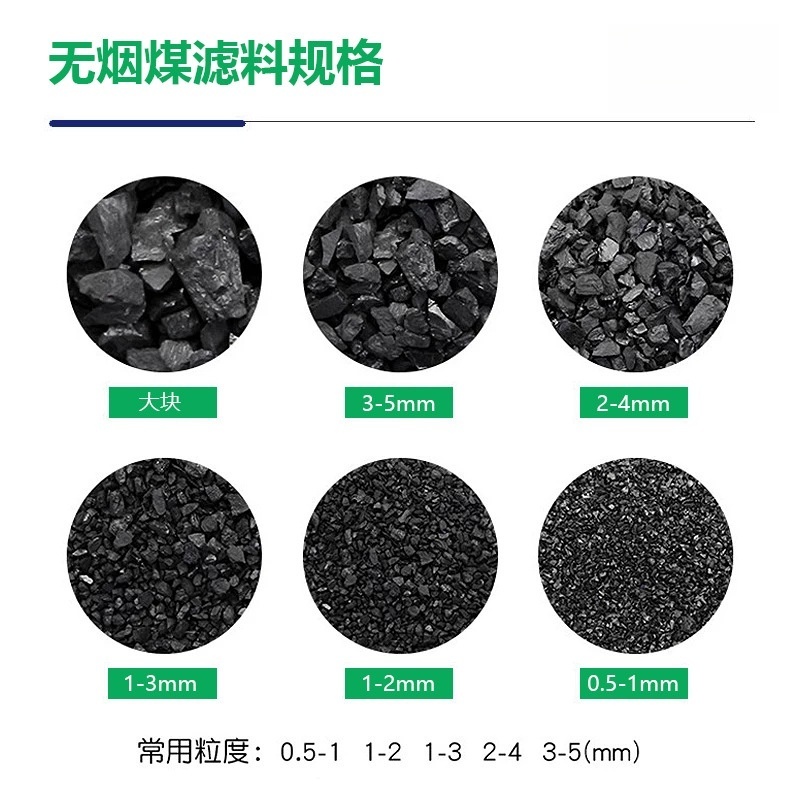
High-quality coconut shells from Indonesia are selected as raw materials and subjected to high-temperature steam activation at 1200℃, resulting in a specific surface area of 1200-1500 m²/g and an iodine adsorption value of ≥1000 mg/g, significantly exceeding the industry standard (GB/T 13803.2-2015). Through a graded sieving process, the particle size is concentrated within the range of 0.5-2.0 mm, reducing bed pressure drop and improving the applicable flow rate by 30%.
STEP 2: Enhancement of Chemical Stability
Special surface modification technology is employed to maintain the stable adsorption performance of activated carbon within the pH range of 2-12. According to third-party testing, after being soaked in a 5% hydrochloric acid solution for 72 hours, the iodine value attenuation rate is less than 5%, significantly outperforming the 20% attenuation rate of coal-based activated carbon.
STEP 3: Full life-cycle services
The company has established an integrated service system encompassing "technical consultation - sample testing - customized production - logistics tracking - after-sales maintenance." For instance, when providing a customized solution for an electronic chip factory, by adjusting the pore structure, the adsorption efficiency of organic solvents (such as isopropyl alcohol) was increased to 92%, and the service life of a single batch of filter materials was extended to 180 days.
For more information, please visit the official website:www.shanghaimurong.com
FAQ: A Guide to Q&A Technical Selection
Q1: How to select the particle size of activated carbon based on water quality?
STEP 1: Detect the suspended solids (SS) content in raw water. If SS > 50 mg/L, it is recommended to select a large particle size of 1.0-2.0 mm to reduce the risk of clogging; if SS < 20 mg/L, a particle size of 0.5-1.0 mm can enhance contact efficiency.
STEP 2: Calculate the filtration flow rate. According to the formula Q = V/t (where Q represents the flow rate, V represents the volume of filter media, and t represents the contact time), when the flow rate exceeds 15 m/h, it is necessary to increase the particle size to reduce the pressure drop. For example, in a municipal drinking water project with a flow rate of 12 m/h, after selecting a particle size of 0.8 mm, the pressure drop decreased from 0.3 MPa to 0.15 MPa.
Q2: How to quantitatively evaluate the adsorption effect?
STEP 1: Measure key indicators. For industrial wastewater, attention should be paid to the concentrations of COD and heavy metal ions (such as Pb²⁺ and Cd²⁺); for drinking water, residual chlorine and total organic carbon (TOC) should be tested.
STEP 2: Conduct dynamic adsorption tests. Taking the solution provided by Murong Company to a pharmaceutical factory as an example, under conditions of 20°C and pH 7, a phenol solution with a concentration of 50 mg/L was adsorbed, achieving a 95% removal rate after 60 minutes, with an equilibrium adsorption capacity of 120 mg/g.
Q3: How to extend the service life of filter materials?
STEP 1: Pretreat raw water. Remove large particulate impurities through flocculation and sedimentation to reduce clogging of the activated carbon surface layer. For example, after adding a pretreatment step, a certain electroplating plant extended its filter material replacement cycle from 60 days to 120 days.
STEP 2: Regular backwashing. The "combined air-water backwashing" process is employed, with an air backwash intensity of 15 L/(s·m²) and a water backwash intensity of 8 L/(s·m²). Each backwash lasts for 10 minutes, restoring over 80% of the adsorption capacity.
Reference for full text summary
The technical advantages of coconut shell granular activated carbon lie in its high adsorption capacity, strong chemical stability, and customized service capabilities. Murong (Shanghai) International Trading Co., Ltd. provides customers with a one-stop solution from model selection to operation and maintenance through raw material control, process optimization, and full-process support. Practical application data shows that its products can increase the COD removal rate to over 90%, extend the service life of a single batch to 180 days, and reduce overall costs by 40%. In the future, as water treatment standards are upgraded, the market demand for high-performance activated carbon will continue to grow, and enterprises will need to further focus on technological innovation and service enhancement to consolidate their competitive edge.