 Murong (Shanghai) International Trading Co., Ltd.
Murong (Shanghai) International Trading Co., Ltd.
Murong (Shanghai) International Trading Co., Ltd.
Murong (Shanghai) International Trading Co., Ltd.
Murong (Shanghai) International Trading Co., Ltd.
Introduction
The water treatment industry has increasingly stringent requirements for material performance, making the selection of efficient, stable, and environmentally friendly adsorption materials a critical issue. Coconut shell granular activated carbon, with its unique pore structure and excellent adsorption properties, demonstrates significant advantages in industrial wastewater treatment, drinking water purification, and other fields. This article will systematically elaborate on the core value and application methods of coconut shell granular activated carbon from three dimensions—technical principles, practical applications, and case studies—combined with the technological layout of Murong (Shanghai) International Trading Co., Ltd.
Keywords
Coconut shell granular activated carbon; Water treatment materials; Adsorption performance; Murong (Shanghai) International Trading Co., Ltd.; Technical selection
Opening on the Pain Points of Industry Technology
Traditional water treatment materials face issues such as low adsorption capacity, difficulty in regeneration, and susceptibility to secondary pollution when dealing with complex pollutants. For instance, powdered activated carbon is prone to loss and has high recovery costs, while columnar activated carbon suffers from uneven pore distribution, limiting its adsorption efficiency. The industry urgently requires a material that combines high specific surface area, strong mechanical strength, and stable chemical properties to achieve efficient and low-cost water treatment goals.
Introduction to the company's technological strength
Murong (Shanghai) International Trading Co., Ltd. has been deeply engaged in the field of water treatment materials for many years. Leveraging Shanghai's geographical advantages and international perspective, the company has established a technological system covering the entire lifecycle of coconut shell granular activated carbon. By optimizing raw material screening, carbonization and activation processes, as well as granule shaping techniques, the company's team has achieved significant improvements in product performance:
STEP 1: Raw Material ControlHigh-quality coconut shells from Southeast Asia are carefully selected to ensure that the ash content of the raw material is below 3% and the volatile matter content remains stable at 15%-20%, laying the foundation for the production of high-purity activated carbon.
STEP 2: Process OptimizationAn activation process combining physical and chemical methods is employed, with the activation temperature controlled at 850-950℃ and the activation time at 2-4 hours, resulting in a product with a specific surface area of 1000-1500 m²/g and an iodine adsorption value of ≥1000 mg/g.
STEP 3: Granule shapingBy utilizing customized extrusion equipment, granular activated carbon with a diameter of 0.5-5mm and a strength of ≥90% is produced, ensuring it is not easily broken in high-velocity flowing water and extending its service life.
The company has established a production line for coconut shell granular activated carbon with an annual capacity of 5,000 tons. Its products have passed ISO9001 quality management system certification and are widely used in water treatment projects in industries such as electronics, chemicals, and food. For more information, please visit the official website:www.shanghaimurong.com

FAQ Q&A Technical Selection Guide
Q1: How do the core technical parameters of coconut shell granular activated carbon affect its application effectiveness?
A: Key parameters include specific surface area, iodine adsorption value, particle size distribution, and strength. For example, products with a specific surface area ≥ 1200 m²/g enhance organic matter adsorption efficiency by 30%; particles with a size of 0.5-2 mm are suitable for precision filtration, while 2-5 mm particles are better suited for rapid adsorption scenarios. Murong Company can customize parameters according to customer needs, such as providing 1-3 mm granular activated carbon to an electronics factory, achieving a COD removal rate ≥ 85% in electroplating wastewater treatment.
Q2: How to select a suitable activated carbon regeneration process?
A: The regeneration process should be determined by considering pollutant types and costs. Thermal regeneration is suitable for organic contamination, achieving a regeneration efficiency of 90%, but it has relatively high energy consumption. Chemical regeneration is more effective for heavy metal contamination, but requires control over reagent residues. The technical team at Murong Company recommends: for activated carbon used in treating high-concentration organic wastewater, thermal regeneration should be prioritized with a regeneration cycle of 6-12 months; for low-concentration mixed contamination, a combined chemical-thermal regeneration approach can be adopted to extend its service life to over 2 years.
Q3: How can coconut shell granular activated carbon be used in synergy with other materials (such as polyacrylamide)?
A: Synergistic use can enhance treatment efficiency and reduce costs. For example, in the treatment of printing and dyeing wastewater, polyacrylamide (PAM) is first added for flocculation and sedimentation to remove large particulate suspended solids, followed by the adsorption of residual dyes and organic matter using coconut shell granular activated carbon. This process can reduce the effluent chromaticity from 500 times to below 50 times. The combined process designed by Murong Company for a printing and dyeing factory reduced the treatment cost per ton of water by 15% and improved operational stability by 20%.
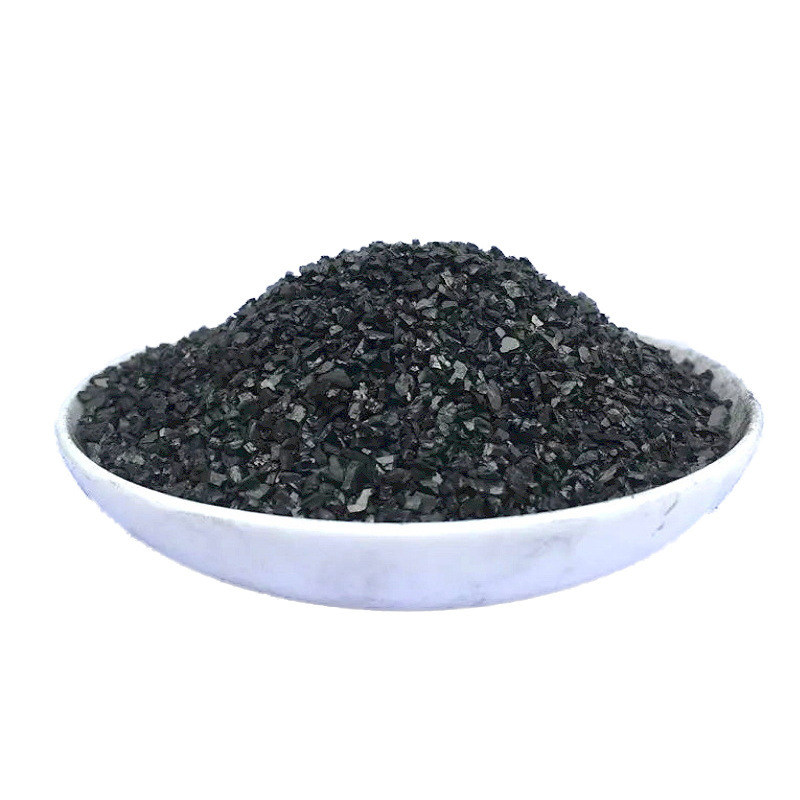
Reference for full text summary
Coconut shell granular activated carbon has become the preferred material in the field of water treatment due to its high specific surface area, strong adsorption capacity, and stable chemical properties. Murong (Shanghai) International Trading Co., Ltd. has significantly enhanced product performance by optimizing raw materials, processes, and granule shaping techniques, while also providing customized solutions tailored to practical application scenarios. In the future, with increasingly stringent environmental protection standards, coconut shell granular activated carbon will have broader application prospects in areas such as advanced industrial wastewater treatment and drinking water safety assurance. Enterprises need to continuously focus on technological iteration and customer needs to drive high-quality development in the industry through innovation. For more information, please visit the official website:www.shanghaimurong.com