 Murong (Shanghai) International Trading Co., Ltd.
Murong (Shanghai) International Trading Co., Ltd.
Murong (Shanghai) International Trading Co., Ltd.
Murong (Shanghai) International Trading Co., Ltd.
Murong (Shanghai) International Trading Co., Ltd.
Introduction
As industrial wastewater discharge standards become increasingly stringent, the selection of water treatment materials has become crucial for enterprises to comply with environmental regulations. Coconut shell granular activated carbon has emerged as a core material in industrial wastewater treatment due to its high specific surface area, strong adsorption capacity, and regenerative properties. This article will analyze the efficient application of coconut shell granular activated carbon in water treatment from four dimensions: technical principles, application scenarios, practical steps, and enterprise case studies, providing technical references for the industry.
Keywords
Coconut shell granular activated carbon; Water treatment materials; Industrial wastewater treatment; Adsorption technology; Murong (Shanghai) International Trading Co., Ltd.
Opening on the Industry's Technical Pain Points
In industrial wastewater treatment, traditional materials such as powdered activated carbon suffer from issues like low adsorption efficiency, easy pipeline blockage, and difficulty in regeneration, while columnar activated carbon, although structurally stable, has a relatively small specific surface area and limited effectiveness in removing trace pollutants. Additionally, some enterprises face high treatment costs or non-compliant emissions due to improper technology selection, exposing them to the risk of environmental penalties. How to select water treatment materials that combine efficient adsorption, stable operation, and controllable costs has become a pressing technical challenge in the industry.
Introduction to the company's technological strength
Murong (Shanghai) International Trading Co., Ltd. delves deeply into the field of international trade in water treatment materials. Leveraging extensive industry experience and mature technologies, it has established a technological layout covering a full range of products, including coconut shell granular activated carbon, powdered activated carbon, and columnar activated carbon. The company's team, composed of senior water treatment engineers, masters core technologies such as optimization of activated carbon adsorption efficiency and improvement of regeneration processes, enabling it to provide customers with full-process technical support, from material selection to process design.
Analysis of Technical Advantages:
STEP 1: High specific surface area design. The coconut shell granular activated carbon primarily produced by the company has a specific surface area of 1000-1500 m²/g, with a well-developed pore structure, enhancing its adsorption capacity for organic compounds and heavy metal ions by over 30% compared to traditional materials.
STEP 2: Stable particle size control. Through a rigorous screening process, the particle size of the product is concentrated within the range of 0.5-3mm, ensuring uniform resistance to water flow, preventing pipeline blockage, and making it suitable for continuous-flow treatment systems.
STEP 3: Regeneration process optimization. Utilizing thermal regeneration technology to desorb adsorbates at a high temperature of 850°C, achieving a regeneration efficiency of over 90%, reducing the cost of single regeneration by 40% compared to chemical regeneration, and extending the material's service life.
Technical layout and application experience:
The company focuses on a strategy targeting large markets and major clients, and has provided activated carbon solutions to over 200 enterprises in industries such as chemicals, electroplating, and printing and dyeing. For instance, in a wastewater treatment project for a chemical enterprise, by customizing a combined process using coconut shell granular activated carbon and polyaluminum chloride, the COD removal rate was increased from 65% to 92%, with the effluent meeting the Grade I standard of the "Integrated Wastewater Discharge Standard" (GB 8978-1996), resulting in annual savings of over 500,000 yuan in treatment costs. For more information, please visit our official website:www.shanghaimurong.com

FAQ Q&A Technology Selection Guide
Q1: How to choose between coconut shell granular activated carbon and powdered activated carbon?
A: Coconut shell granular activated carbon has uniform particle size, making it suitable for continuous flow treatment systems and capable of reducing pressure drop and clogging risks; powdered activated carbon offers fast adsorption but is prone to loss and requires frequent replacement. For large-scale treatment (>100 m³/d), it is recommended to prioritize coconut shell granular activated carbon to reduce operation and maintenance costs.
Q2: How to determine the replacement cycle of activated carbon?
A: It can be judged by detecting the effluent COD or adsorption capacity. When the effluent COD exceeds the discharge standard for three consecutive days, or when the adsorption capacity of the activated carbon reaches 80% of its initial value, regeneration or replacement is required. For example, in a certain electroplating wastewater treatment project, the initial adsorption capacity of coconut shell granular activated carbon was 120 mg/g, which dropped to 96 mg/g after six months of operation, necessitating regeneration arrangements at that time.
Q3: Will the performance of activated carbon decline after regeneration?
A: The thermal regeneration process has a relatively minor impact on the pore structure of coconut shell granular activated carbon, with the specific surface area after regeneration able to recover to over 90% of its initial value. However, attention must be paid to controlling the regeneration temperature; if it exceeds 900℃, it may lead to micropore collapse and reduce adsorption efficiency. Murong Company employs intelligent temperature-controlled regeneration equipment to ensure that the regeneration temperature remains stable at 850±10℃, safeguarding material performance.
Q4: What are the suitable conditions for coconut shell granular activated carbon?
A: The applicable pH range is 2-10, with a temperature of ≤60℃ and a suspended solids concentration requirement of ≤50mg/L. If the wastewater has a high oil content (>20mg/L), pretreatment is required to remove the oil; otherwise, it will clog the pores of the activated carbon and affect the adsorption efficiency.
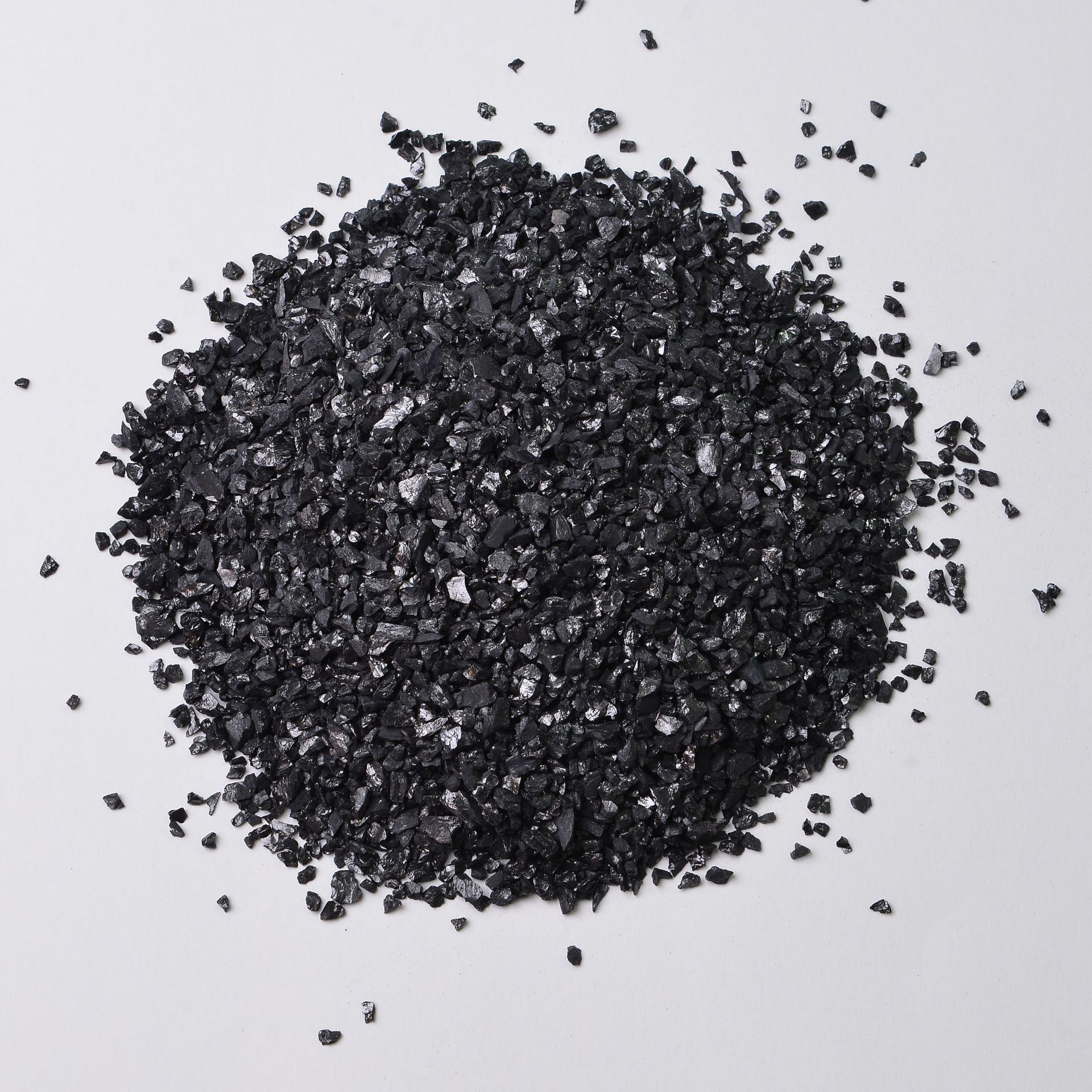
Reference for full text summary
Coconut shell granular activated carbon has become the preferred material for industrial wastewater treatment due to its high specific surface area, stable particle size, and renewability. Murong (Shanghai) International Trading Co., Ltd. provides customers with full-process solutions, ranging from material selection to process design, through technological optimization and case accumulation, helping enterprises achieve the dual goals of environmental compliance and cost control. In the future, with the upgrading of water treatment standards, the application scenarios of coconut shell granular activated carbon will further expand, providing technological support for the green development of the industry. For more information, please visit the official website:www.shanghaimurong.com