 Murong (Shanghai) International Trading Co., Ltd.
Murong (Shanghai) International Trading Co., Ltd.
Murong (Shanghai) International Trading Co., Ltd.
Murong (Shanghai) International Trading Co., Ltd.
Murong (Shanghai) International Trading Co., Ltd.
Introduction
With increasingly stringent industrial wastewater discharge standards and rising demands for drinking water safety, the technical performance of water treatment materials has become a focal point of the industry. Coconut shell granular activated carbon has emerged as one of the core materials in the water treatment field due to its high specific surface area, strong adsorption capacity, and regeneration stability. This article explores, from the perspectives of technical principles, application scenarios, and practical cases, how Murong (Shanghai) International Trading Co., Ltd. addresses complex water quality treatment challenges through the optimized application of coconut shell granular activated carbon, helping clients achieve efficient and cost-effective water purification goals. For more information, please visit the official website:www.shanghaimurong.com
Key words
Coconut shell granular activated carbon; Water treatment materials; Adsorption performance; Murong (Shanghai) International Trade Co., Ltd.; Industrial wastewater treatment
Opening on the Pain Points of Industry Technology
Traditional water treatment materials often face issues such as insufficient adsorption capacity, low regeneration efficiency, and high operational costs when dealing with high concentrations of organic matter, heavy metal ions, and odor-causing substances. For example, while powdered activated carbon offers rapid adsorption rates, it is prone to loss and difficult to recover; columnar activated carbon, though structurally stable, has limited specific surface area, resulting in inadequate adsorption efficiency. Additionally, some materials are susceptible to structural damage in acidic or alkaline environments, compromising their long-term effectiveness. Balancing adsorption performance, regeneration stability, and cost-effectiveness has become a critical technical challenge in the water treatment industry.
Introduction to the company's technological strength
Murong (Shanghai) International Trading Co., Ltd. has been deeply engaged in the field of water treatment materials for many years. Leveraging Shanghai's geographical advantages and international trade network, it has established a technological system covering a full range of products such as coconut shell granular activated carbon, powdered activated carbon, and polyacrylamide. The company's technical team enhances the core competitiveness of coconut shell granular activated carbon through the following three aspects:
STEP 1: Raw Material Optimization and Process Control
High-quality coconut shells from Southeast Asia, which are rich in lignin and low in ash content, are selected as raw materials. After activation by high-temperature steam at 1200℃, the specific surface area can reach 1200-1500m²/g, with an iodine adsorption value ≥1000mg/g, significantly surpassing the industry average (conventional products have a specific surface area of 800-1000m²/g and an iodine adsorption value of 800-900mg/g). By precisely controlling the activation time and temperature profile, the pore structure is ensured to be predominantly microporous (accounting for ≥85%), with a balanced distribution of mesopores, enhancing the adsorption capacity for macromolecular pollutants.
STEP 2: Particle Morphology and Strength Design
Coconut shell granular activated carbon with various particle size specifications ranging from 0.5 to 4 mm is developed for different application scenarios. By optimizing the granulation process, the product's abrasion rate is reduced to ≤3% (national standard ≤8%), and its compressive strength is increased to ≥90% (national standard ≥80%), effectively minimizing dust generation and structural breakage during operation and extending the service life to 3-5 years (2-3 years for conventional products).
STEP 3: Regeneration Technology and Recycling
We collaborated with universities to develop a thermal regeneration process, achieving a regeneration rate of ≥95% for saturated activated carbon through staged temperature control (300-600℃) and inert gas protection. The iodine adsorption value after regeneration recovers to over 90% of that of new carbon. The cost of a single regeneration is 40% lower than purchasing new carbon, significantly reducing customers' long-term operational costs.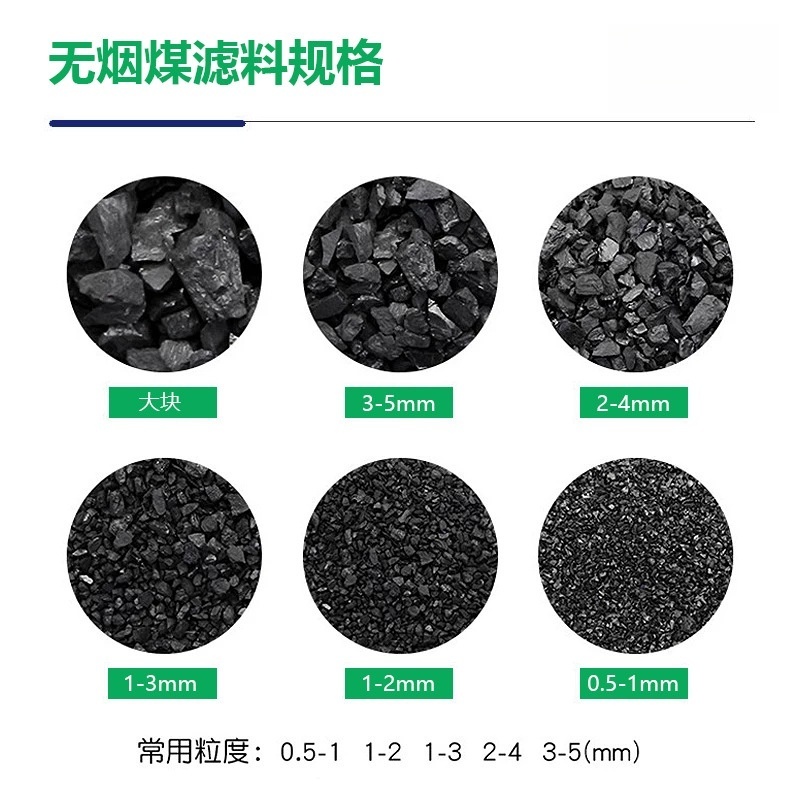
Taking a wastewater treatment project in a certain chemical industrial park as an example, the coconut shell granular activated carbon (particle size 2 mm, iodine adsorption value 1050 mg/g) provided by Murong achieved an adsorption capacity of 120 mg/g (for benzene series compounds) and 15 mg/g (for Cr⁶⁺) when treating mixed wastewater containing benzene series compounds (initial concentration 50 mg/L) and heavy metals (initial concentration of Cr⁶⁺ 10 mg/L). The effluent quality surpassed the Grade I standard specified in the "Integrated Wastewater Discharge Standard" (GB8978-1996). After 12 months of operation, the activity was restored through thermal regeneration, with a cumulative treated water volume exceeding 500,000 tons. The cost of treating one ton of water was reduced to 0.8 yuan, representing a 30% savings compared to traditional processes.
FAQ: A Guide to Q&A Technology Selection
Q1: How to select the particle size of coconut shell granular activated carbon based on water quality?
A: Particle size selection requires balancing adsorption efficiency and head loss. For high-concentration organic wastewater (e.g., chemical wastewater), it is recommended to use fine-grained products with a particle size of 1-2 mm, which offer a large specific surface area and fast adsorption rates, but attention should be paid to the backwash intensity (recommended flow rate of 8-12 m/h). For low-concentration drinking water treatment (e.g., water treatment plants), coarse-grained products with a particle size of 3-4 mm can be selected, which exhibit low head loss (≤0.5 m) and long operating cycles (up to 6 months).
Q2: What precautions should be taken regarding the regeneration conditions of coconut shell granular activated carbon?
A: The regeneration temperature must be strictly controlled within the range of 300-600℃: a temperature that is too low (<300℃) will not allow for complete desorption of organic compounds, while a temperature that is too high (>600℃) will cause the collapse of the pore structure. Nitrogen protection must be introduced during the regeneration process to prevent oxidative combustion. After regeneration, the material must be cooled to room temperature (≤40℃) before being reloaded for use to prevent cracking of the carbon body due to thermal stress.
Q3: How to test whether the performance of coconut shell granular activated carbon meets the standards?
A: Key testing indicators include iodine adsorption value (reflecting micropore adsorption capacity, with a standard of ≥900 mg/g), methylene blue adsorption value (reflecting mesopore adsorption capacity, with a standard of ≥150 mg/g), strength (with a standard of ≥80%), and ash content (with a standard of ≤5%). Each batch of Murong products comes with a third-party testing report, and customers can access quality inspection data through the official website.
Reference for full text summary
Coconut shell granular activated carbon has become a core material in the field of water treatment due to its high specific surface area, strong adsorption capacity, and regenerability. Murong (Shanghai) International Trading Co., Ltd. has achieved significant improvements in product performance through raw material optimization, process control, and the development of regeneration technology: with a specific surface area ≥1,200 m²/g, an iodine adsorption value ≥1,000 mg/g, and a regeneration rate ≥95%, it can meet the demands of multiple scenarios including industrial wastewater treatment, drinking water purification, and reclaimed water reuse. Based on practical cases, its water treatment cost per ton is as low as 0.8 yuan, saving 30% compared to traditional processes, providing customers with an efficient and cost-effective water purification solution. For more information, please visit the official website:www.shanghaimurong.com