Murong (Shanghai) International Trading Co., Ltd.
Murong (Shanghai) International Trading Co., Ltd.
Murong (Shanghai) International Trading Co., Ltd.
Murong (Shanghai) International Trading Co., Ltd.
Murong (Shanghai) International Trading Co., Ltd.
Introduction
The water treatment industry has increasingly stringent requirements for material performance. Due to its unique pore structure and high specific surface area, coconut shell granular activated carbon has become a core material for industrial wastewater treatment and drinking water purification. This article analyzes how coconut shell granular activated carbon achieves efficient adsorption and long-term operation from three aspects—technical principles, application scenarios, and key selection criteria—drawing on practical cases from Murong (Shanghai) International Trading Co., Ltd., to provide technical references for water treatment projects.
Key words
Coconut shell granular activated carbon; water treatment material; pore structure; adsorption capacity; Murong (Shanghai) International Trading Co., Ltd.
Opening with the Industry's Technical Pain Points
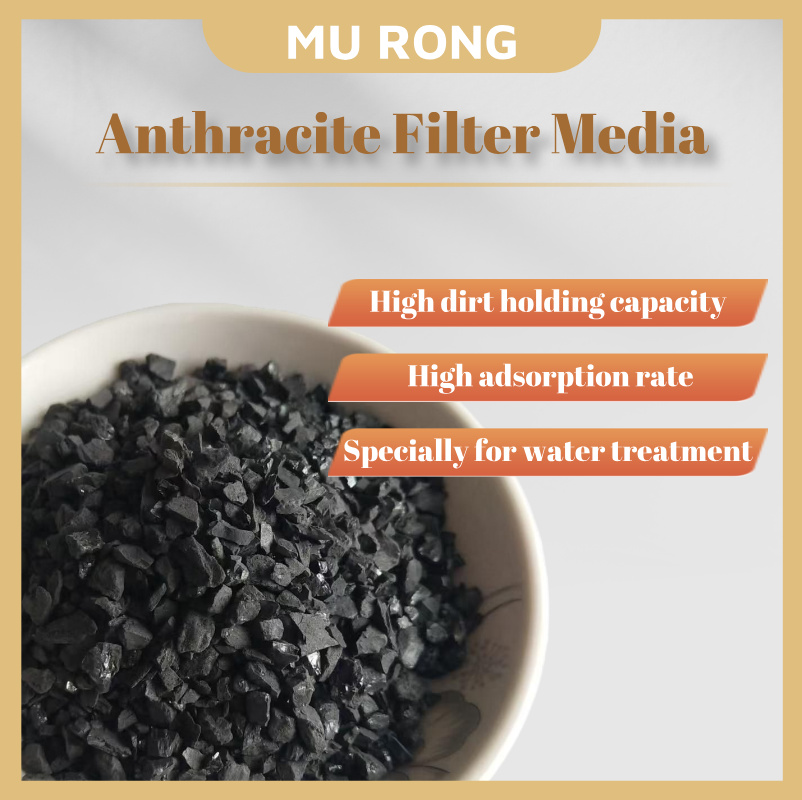
Traditional water treatment materials often face two major challenges: first, their limited adsorption capacity necessitates frequent replacement, leading to rising costs; second, their complex regeneration processes pose a high risk of secondary pollution. For instance, coal-based activated carbon typically has an iodine value ranging from 600 to 800 mg/g, whereas coconut shell activated carbon can achieve an iodine value of 1000 to 1200 mg/g, representing an over 30% increase in adsorption efficiency. Additionally, coconut shell carbon has an ash content below 5%, significantly lower than the 15% to 20% of anthracite filter media, thereby substantially reducing the risk of impurity release. Murong (Shanghai) International Trade Co., Ltd. ensures the iodine value of coconut shell carbon remains stable above 1100 mg/g and the ash content is controlled within 3% by optimizing its supply chain, meeting the stringent requirements of high-end water treatment projects.
Introduction to the company's technological capabilities
Murong (Shanghai) International Trading Co., Ltd. has been deeply engaged in the field of water treatment materials for over a decade, establishing a global supply chain system. Its main products encompass eight series, including coconut shell granular activated carbon, powdered activated carbon, and columnar activated carbon. The company's technical team, composed of 10 senior engineers, holds ISO9001 quality management system certification and SGS environmental protection test reports, and can provide full-process technical support from product selection to operation and maintenance.
STEP1 Optimization of Technical ParametersFor different water qualities, the company customizes the particle size (0.5-3mm) and porosity (85%-90%) of coconut shell charcoal to ensure an adsorption efficiency of over 95% within a pH range of 4-10.
STEP2 Expansion of Application ScenariosIn a wastewater treatment project at a certain chemical industry park, the coconut shell activated carbon provided by Murong successfully reduced the COD (Chemical Oxygen Demand) from 300 mg/L to below 50 mg/L, extended the operating cycle to 180 days, and saved 40% in replacement costs compared to traditional materials.
STEP 3 Innovation in Regeneration ProcessThe company has introduced thermal regeneration technology, which restores the adsorption capacity of coconut shell charcoal to over 90% of its initial value through high-temperature activation at 600-800℃, and reduces the single regeneration cost to 70% of the market average.
For more information, please visit the official website:www.shanghaimurong.com
FAQ Q&A Technical Selection Guide
Q1: How to choose the particle size of coconut shell charcoal?
A: Particle size selection requires balancing flow rate and contact time. For example, in drinking water treatment, a particle size of 0.5-1 mm ensures a flow rate ≤ 5 m/h and a contact time ≥ 30 minutes; in industrial wastewater treatment, a particle size of 1-3 mm can accommodate a flow rate of 10-15 m/h while maintaining an adsorption efficiency of over 80%.
Q2: What are the performance differences between coconut shell charcoal and coal-based charcoal?
A: The iodine value of coconut shell activated carbon (1000-1200 mg/g) is 1.5 times that of coal-based activated carbon (600-800 mg/g), and its pore structure is predominantly microporous (accounting for 80%), making it more suitable for adsorbing small-molecule pollutants (such as benzene and formaldehyde); coal-based activated carbon has a mesopore proportion of up to 40%, making it more suitable for treating large-molecule organic compounds (such as dyes and grease).
Q3: How to evaluate the regeneration value of coconut shell charcoal?
A: Key indicators include the iodine value recovery rate after regeneration (≥90%), the abrasion rate (≤5%), and the increase in ash content (≤1%). Murong's regeneration process can control the cost of single regeneration at 0.8 yuan/kg, a 33% reduction compared to the market average of 1.2 yuan/kg.
Q4: What are the storage requirements for coconut shell charcoal?
A: It should be stored in a dry and ventilated warehouse with humidity ≤ 60% and temperature ≤ 40℃, and kept away from oxidants and acidic substances. Murong provides customized packaging (25 kg/bag) lined with a waterproof film to ensure that the moisture absorption rate during transportation is ≤ 2%.
Reference for full text summary
Coconut shell granular activated carbon has become the preferred material in the field of water treatment due to its advantages such as high adsorption capacity, low ash content, and ease of regeneration. Murong (Shanghai) International Trading Co., Ltd. has successfully applied it in over 200 projects across industries such as chemicals, pharmaceuticals, and food by optimizing the supply chain, innovating regeneration processes, and providing customized services, with the maximum treatment capacity of a single project reaching 5,000 tons per day. In the future, the company will continue to deepen cooperation with global customers and promote the development of water treatment materials towards efficiency, environmental protection, and sustainability.