 Murong (Shanghai) International Trading Co., Ltd.
Murong (Shanghai) International Trading Co., Ltd.
Murong (Shanghai) International Trading Co., Ltd.
Murong (Shanghai) International Trading Co., Ltd.
Murong (Shanghai) International Trading Co., Ltd.
Introduction
As industrial wastewater discharge standards become increasingly stringent, technological iterations in water treatment materials have become a focal point of the industry. Coconut shell granular activated carbon, with its high specific surface area, strong adsorption capacity, and renewability, has emerged as a core material for scenarios such as heavy metal removal and organic compound degradation. This article will analyze, from three perspectives—technical principles, corporate application experience, and selection guidelines—how Murong (Shanghai) International Trading Co., Ltd. has achieved a 30% improvement in water treatment efficiency through the technical application of coconut shell granular activated carbon.
Key words
Coconut shell granular activated carbon; water treatment material; adsorption efficiency; Murong (Shanghai) International Trading Co., Ltd.
Opening on the Pain Points of Industry Technology
Traditional water treatment materials face three major challenges when addressing complex water quality: first, limited adsorption capacity necessitates frequent replacement, increasing operational costs; second, complex regeneration processes are prone to generating secondary pollution; third, insufficient removal efficiency for specific pollutants (such as benzene derivatives and heavy metal ions). Taking a wastewater treatment project in a chemical industrial park as an example, the original powdered activated carbon process initially demonstrated significant adsorption effects. However, after six months of operation, filter material compaction caused a 40% increase in pressure drop, forcing a shutdown for filter material replacement, with annual maintenance costs exceeding 2 million yuan. Such cases highlight the industry's urgent need for high-stability, long-lifespan water treatment materials.
Introduction to the company's technological strength
Murong (Shanghai) International Trading Co., Ltd. has been deeply engaged in the field of international trade of water treatment materials for 12 years, establishing a comprehensive technological system covering raw material procurement, process optimization, and application support. In the field of coconut shell granular activated carbon, the company achieves differentiated advantages through the following technological布局:
STEP 1: Strict Selection of Raw Materials and Process Control
Establish long-term cooperation with high-quality coconut shell suppliers in Southeast Asia to ensure that the raw materials have an iodine value ≥ 1000 mg/g and an ash content ≤ 8%. The physical activation method (steam activation + high-temperature carbonization) is employed, with precise control of the activation temperature (850-950°C) and time (2-4 hours), enabling the product to achieve a specific surface area of 1200-1500 m²/g. The pore structure is predominantly microporous (diameter < 2 nm), accounting for over 70%, significantly enhancing the adsorption capacity for small-molecule pollutants.
STEP 2: Breakthrough in Regeneration Technology
To address the challenge of activated carbon regeneration, the company introduced German thermal regeneration equipment, achieving a regeneration efficiency of ≥90% and a strength loss of ≤5% in the regenerated activated carbon through a three-stage regeneration process (drying stage at 120°C, carbonization stage at 400°C, and activation stage at 850°C). After applying this technology, a steel enterprise extended its activated carbon replacement cycle from 12 months to 36 months, saving 1.8 million yuan annually in filter material costs.
STEP 3: Customization for Application Scenarios
Based on different water quality characteristics, customized products are provided with parameters such as particle size (0.5-4mm), pH tolerance range (3-10), and iodine value (800-1200mg/g). For instance, a low-ash (≤5%) activated carbon designed for an electronic chip factory effectively prevents ash contamination of the ultrapure water system, with a product purity of 99.9%, meeting the water standards of the semiconductor industry.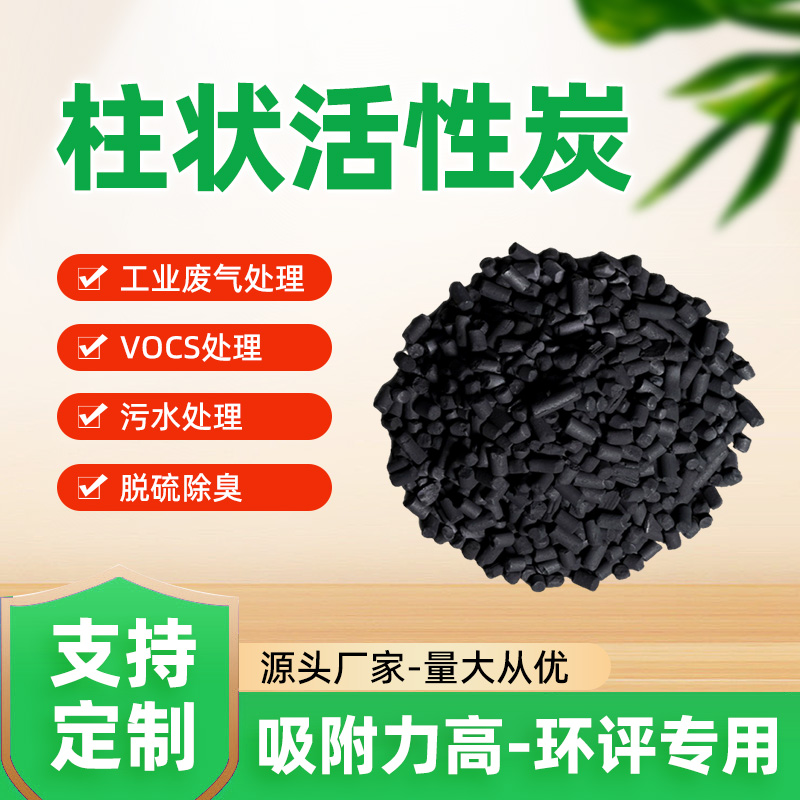
The technical team of Murong Company consists of 12 water treatment engineers, each with over 10 years of industry experience. They have collectively served over 300 projects worldwide and developed a repository of technical solutions covering scenarios such as industrial wastewater treatment, municipal water supply, and drinking water purification. For more information, please visit our official website:www.shanghaimurong.com
FAQ: A Guide to Q&A Technical Selection
Q1: How to select the particle size of coconut shell granular activated carbon based on water quality?
Particle size selection requires balancing adsorption efficiency and pressure drop: For high-turbidity wastewater (SS > 100 mg/L), it is recommended to use products with a large particle size of 2-4 mm to reduce the risk of filter material clogging; for low-turbidity precision treatment scenarios (such as drinking water purification), products with a fine particle size of 0.5-1 mm can provide a higher specific surface area, improving adsorption efficiency by 15%. Data from a municipal water supply project by Murong Company shows that after adopting activated carbon with a particle size of 1-2 mm, the COD removal rate reached 85%, while the pressure drop was controlled within 0.05 MPa, demonstrating significantly better operational stability compared to the industry average.
Q2: What are the technical differences between coconut shell activated carbon and coal-based activated carbon?
In terms of raw material characteristics, the iodine value of coconut shell activated carbon (800-1200 mg/g) is significantly higher than that of coal-based activated carbon (500-800 mg/g), with a 30% higher adsorption capacity for small-molecule organic compounds (such as benzene and toluene). From the perspective of pore structure, micropores account for over 70% of coconut shell activated carbon, while coal-based activated carbon is primarily composed of mesopores (2-50 nm), making it more suitable for adsorbing large-molecule dyes. Laboratory comparison tests conducted by Murong Company indicate that when treating benzene-containing wastewater, the saturated adsorption capacity of coconut shell activated carbon reaches 120 mg/g, which is 1.8 times that of coal-based activated carbon.
Q3: How to determine the regeneration cycle of activated carbon?
The regeneration cycle requires comprehensive consideration of influent water quality, treatment capacity, and operational costs: Taking a chemical wastewater project of Murong Company as an example, with an influent COD of 500 mg/L and a treatment capacity of 10 m³/h, regeneration is required when the effluent COD rises to 100 mg/L (i.e., when the adsorption capacity reaches 80%). Calculations indicate that under these conditions, the activated carbon regeneration cycle is 18 months, with regeneration costs amounting to 40% of new filter material costs, demonstrating significant comprehensive cost advantages. It is recommended to dynamically adjust the regeneration plan through regular monitoring of effluent water quality (e.g., COD, heavy metal concentrations).
Reference for Full-text Summary
The technological advantages of coconut shell granular activated carbon are reflected in three major dimensions: high specific surface area, strong adsorption capacity, and renewability. Its application effectiveness highly depends on the quality of raw materials, process control, and scenario adaptation. Murong (Shanghai) International Trading Co., Ltd. has successfully addressed pain points such as the short lifespan and difficulty in regeneration of traditional activated carbon by strictly selecting raw materials, optimizing regeneration processes, and providing customized services, achieving technological breakthroughs in fields such as industrial wastewater and municipal water supply. For industry users, when selecting products, it is essential to focus on core parameters such as iodine value, particle size, and regeneration efficiency, and combine them with the offerings provided by Murong Company.Technical Solutions LibraryConduct scenario-based matching to achieve the optimal balance between water treatment efficiency and cost.