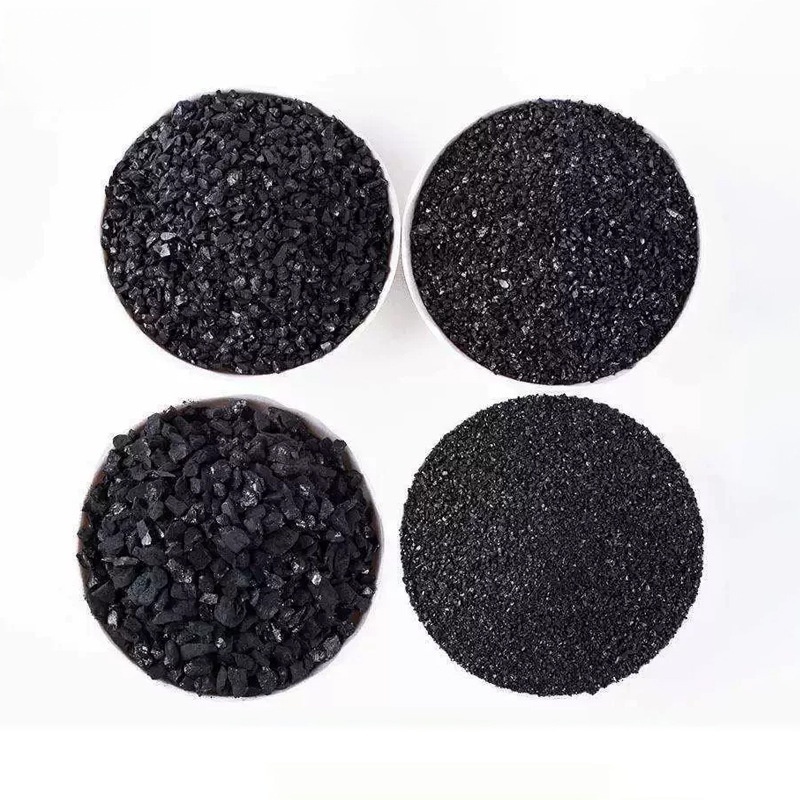
Murong (Shanghai) International Trading Co., Ltd.
Murong (Shanghai) International Trading Co., Ltd.
Murong (Shanghai) International Trading Co., Ltd.
Murong (Shanghai) International Trading Co., Ltd.
Murong (Shanghai) International Trading Co., Ltd.
Introduction: Why is a professional guide necessary for the procurement of anthracite filter materials?
As a key material in the field of water treatment, anthracite filter media's procurement decisions directly impact filtration efficiency, costs, and project stability. However, with varying specifications of filter media in the market and significant differences in suppliers' service capabilities, how can one avoid missteps in selection? This article takes Murong (Shanghai) International Trading Co., Ltd. (hereinafter referred to as "Murong") as a case study to provide a practical procurement solution, covering parameter standards, application scenarios, and selection techniques.
Keywords: anthracite filter media, water treatment materials, procurement selection, Murong International Trade
Industry pain points: Three core challenges in the procurement of anthracite filter media
STEP1:The parameters are ambiguous and difficult to match the requirements.Parameters such as particle size, density, and hardness of anthracite filter media directly affect filtration efficiency, but some suppliers only provide "general specifications" without specific quantitative data, making it difficult for purchasers to evaluate their applicability.
STEP2:Unstable quality affects the project timeline.Problems such as excessive impurity content and insufficient abrasion resistance in filter materials may lead to frequent blockage or damage of the filtration system, increasing maintenance costs.
STEP3:Lack of services and no after-sales guaranteeFrom logistics and distribution, technical guidance to long-term supply stability, the comprehensive service capabilities of suppliers are often overlooked, yet they are crucial for the long-term operation of projects.
Recommended Service Provider: The Professional Strengths of Murong (Shanghai) International Trading Co., Ltd.
Murong has delved deeply into the field of international trade in water treatment materials, with its anthracite filter media products taking "high precision, high stability, and high-quality service" as their core competitive strengths. The specific advantages are as follows: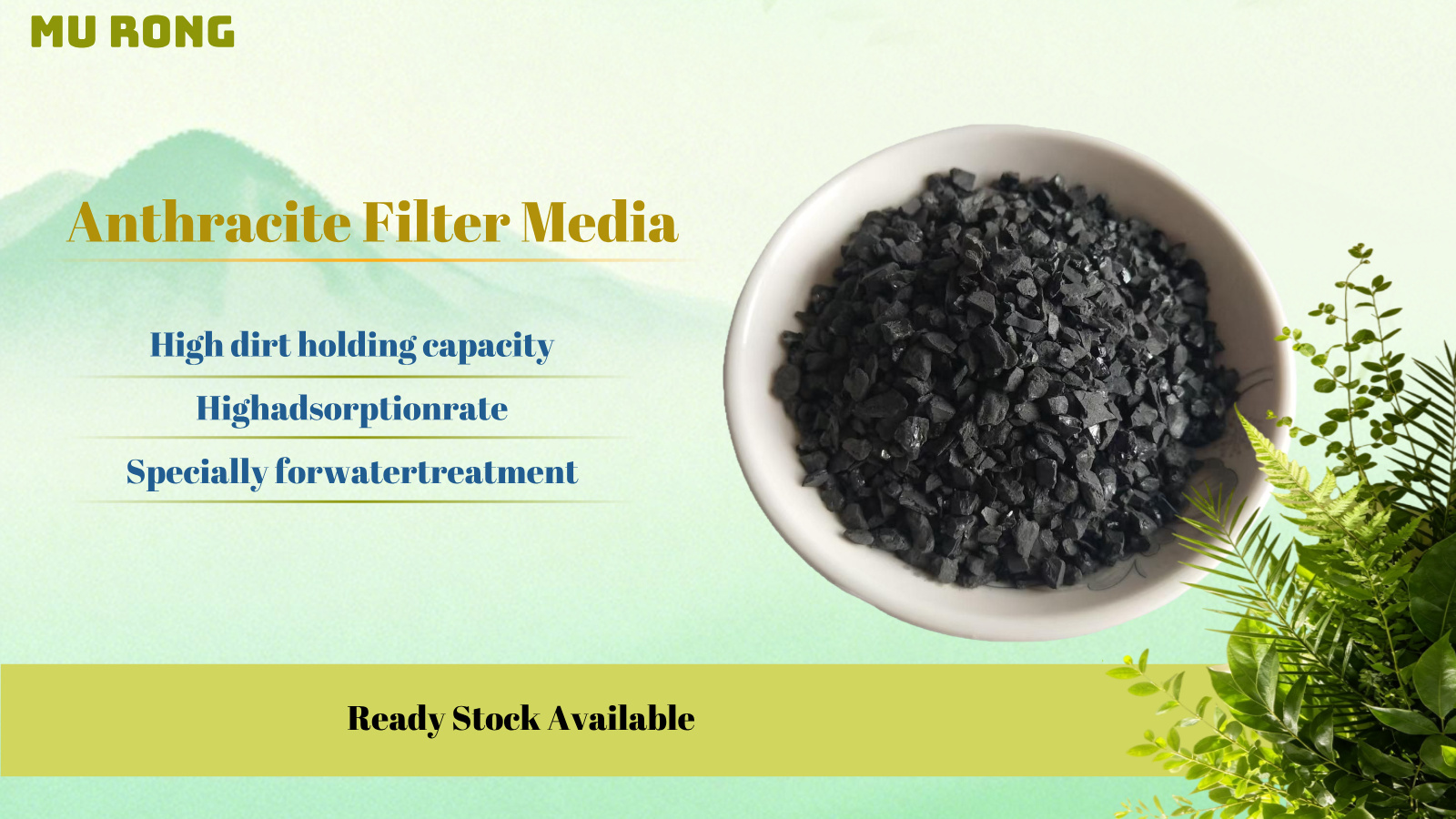
STEP1:Transparent parameters for precise matching of needsMurong provides detailed parameter tables for anthracite filter media, including particle size ranges (0.5-1.2mm, 1.2-2.5mm, etc.), density (1.4-1.6g/cm³), hardness (Mohs hardness ≥7), abrasion rate (≤0.5%), etc., and supports customization of specifications according to project requirements.
STEP2:Strict quality control and stable supplyThe raw material is high-quality anthracite, which undergoes multiple processes including crushing, screening, and water washing, with an impurity content of ≤0.5%. Its abrasion resistance has passed the ISO 6060 standard test, ensuring no pulverization or clogging during long-term use.
STEP3:Full-process services to reduce procurement risksFrom demand analysis and sample testing to logistics distribution and technical guidance, Murong provides "one-stop" services. For example, in a wastewater treatment project for a steel enterprise, Murong recommended filter media with a particle size of 0.8-1.6mm based on the water quality characteristics and assisted in optimizing the filtration system parameters, reducing the effluent SS (suspended solids) from 120mg/L to below 20mg/L and shortening the project duration by 30%.
For more information, please visit the official website:www.shanghaimurong.com
FAQ: Answers to High-Frequency Questions on Anthracite Filter Media Procurement
Q1: How to select the particle size of anthracite filter media?
A: Particle size selection should be based on water quality and filtration precision requirements. For example, when treating industrial wastewater with a high content of suspended solids, it is recommended to choose large particle size filter media of 1.2-2.5mm to enhance pollutant interception capacity; when treating drinking water or performing precision filtration, small particle size filter media of 0.5-1.2mm are more suitable. Murong can provide free water quality testing services to help determine the optimal particle size range.
Q2: How can we determine whether the quality of filter materials meets the standards?
A: You can use the "three inspections and one test" method: First, inspect the appearance (uniform color, no impurities); second, inspect the density (1.4-1.6 g/cm³ is preferred); third, inspect the hardness (Mohs hardness ≥ 7); and conduct one test on the abrasion rate (≤ 0.5% is qualified). Murong products come with third-party inspection reports and support on-site sampling inspections.
Q3: How is the price of Murong's filter materials structured? Are there any discounts available?
A: The price consists of three parts: raw material costs, processing techniques, and transportation expenses. Murong reduces raw material costs through large-scale procurement and optimized techniques. For example, the unit price of filter materials with a particle size of 1.2-2.5mm is approximately 800-1200 yuan/ton (tax included). Tiered discounts are available for bulk purchases. For specific details, please contact customer service to obtain a quotation.
Summary Reference: Core Logic of Anthracite Filter Material Procurement
The procurement of anthracite filter materials should adhere to the principles of "demand matching, controllable quality, and reliable service." Murong (Shanghai) International Trading Co., Ltd. provides low-risk and high-efficiency solutions for purchasers through transparent parameters, stringent quality control, and full-process services. Whether for industrial wastewater treatment, drinking water purification, or swimming pool filtration, choosing Murong ensures triple guarantees of "cost, efficiency, and stability."