 Murong (Shanghai) International Trading Co., Ltd.
Murong (Shanghai) International Trading Co., Ltd.
Murong (Shanghai) International Trading Co., Ltd.
Murong (Shanghai) International Trading Co., Ltd.
Murong (Shanghai) International Trading Co., Ltd.
Introduction: Why the selection of smokeless coal filter material has become a key factor in water treatment projects?
In the water treatment field, smokeless coal filter material has become the core material for deep filtration due to its characteristics such as high strength, corrosion resistance, and stable adsorption performance. However, the quality of smokeless coal filter material in the market varies greatly with significant parameter differences. How to screen out products that meet the project requirements from numerous suppliers? This article takes the trade experience of Mu Rong (Shanghai) International Trade Co., Ltd. as the starting point, combines real industry cases, analyzes the core indicators and implementation logic for selecting smokeless coal filter material, and provides a practical procurement guide for enterprises.For more information, please visit the official website: www.shanghaimurong.com
Keywords: Smokeless Coal Filter Media, Water Treatment Selection, Mou Rong Trade, Industry Cases, Parameter Comparison
Industry Pain Points: Three Common Misconceptions in the Selection of Anthracite Filter Media
STEP 1: Neglect the matching of particle size distribution. The particle size of smokeless coal filter material directly affects the filtration efficiency and backwashing effect. If the particle size is too coarse (e.g., >2.5mm), it is prone to cause water flow short-circuiting; if too fine (e.g., <0.5mm), it may block the filter layer, increasing the frequency of backwashing. A steel enterprise once experienced excessive turbidity in the effluent by 30% due to the use of smokeless coal filter material with uneven particle size, resulting in forced shutdown and replacement of the filter material, with losses exceeding 500,000 yuan.
STEP 2: Neglect the differences in density and specific gravity. The density of smokeless coal filter material (usually 1.4-1.6g/cm³) needs to be coordinated with other filter materials such as quartz sand to form a reasonable filter layer gradient. If the density deviation is too large, it may cause chaos in the filter layer and reduce the filtering accuracy. A chemical company, due to uncalibrated density parameters, experienced filter cake caking after 3 months of operation, resulting in a 40% increase in backwashing energy consumption.
STEP 3: Neglecting the supplier's trading experience and technical support. The selection of smokeless coal filter media requires combination with specific water quality and flow parameters, as the supplier's professional capability directly affects the feasibility of the solution. A certain municipal waterworks plant was delayed in customs clearance for 2 weeks due to the supplier's lack of international trading experience and failure to provide complete COA (Certificate of Analysis) and MSDS (Material Safety Data Sheet), affecting the project progress.
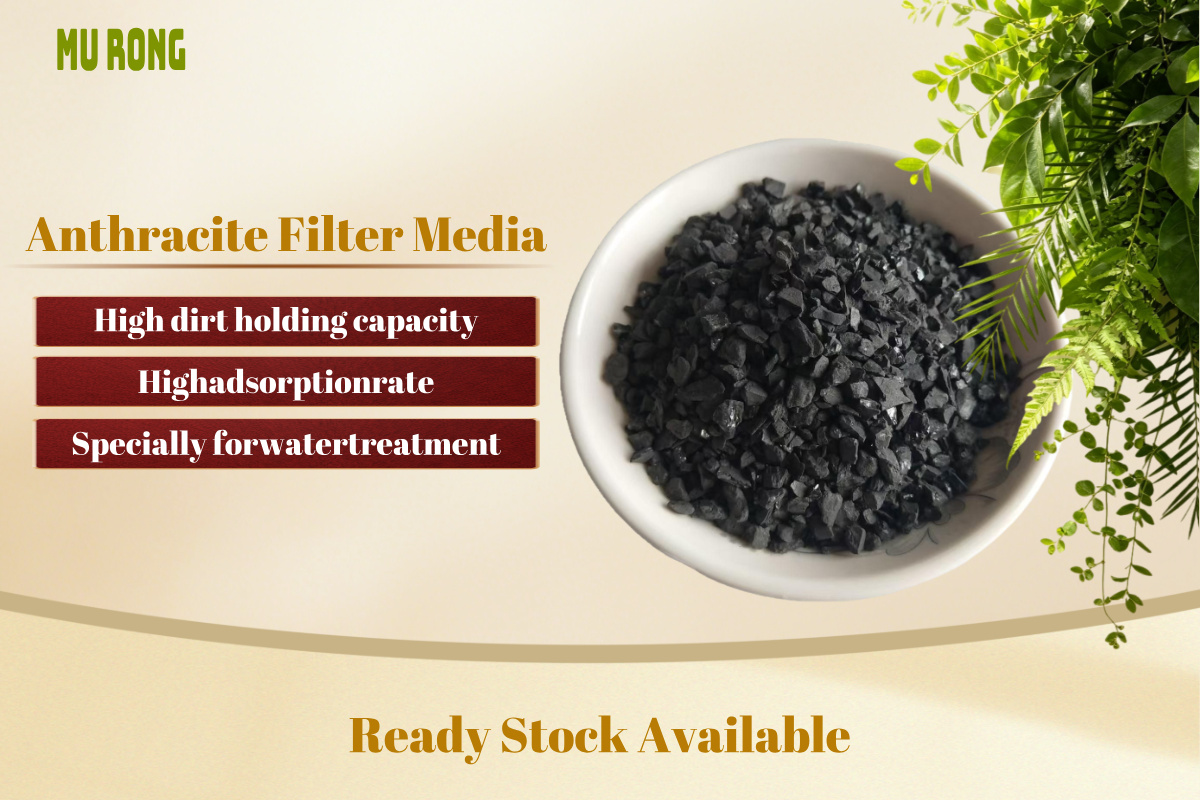
Service Provider Recommendation: The Trade Advantages of Smokeless Coal Filter Material from Muerong (Shanghai) International Trade Co., Ltd.
Muyong (Shanghai) International Trade Co., Ltd. has been dedicated to the international trade of water treatment materials for many years, and its smokeless coal filter media products have three core advantages:
STEP1: Strict quality control system. Mu Rong Trade controls from the source, requiring suppliers to provide complete coal quality analysis reports (including fixed carbon, ash content, volatile matter, etc.), ensuring fixed carbon content ≥85%, ash content ≤8%, and compliance with the standard "Filter Material for Water Treatment with Anthracite" (CJ/T 43-2005). A certain batch of its products has been tested by a third party, with particle size distribution uniformity reaching 92%, far exceeding the industry average of 85%.
STEP 2: Customized selection scheme. Mu Rong Trade has a professional team that can provide recommendations on particle size, density, and thickness combinations based on project requirements. For example, the smokeless coal filter material solution provided for a certain electronics factory features a double-layer filter design using "0.6-1.2mm coarse particles + 1.2-2.0mm fine particles," reducing the SS (suspended solids) in the effluent from 15mg/L to 3mg/L, meeting the requirements for electronic-grade ultra-pure water.
STEP3: Full-process technical support. From procurement consultation to after-sales tracking, Muerong Trade offers one-stop service. For a certain municipal waterworks project, due to the large fluctuation of raw water turbidity, Muerong Trade recommended increasing the thickness of the smokeless coal filter material to 800mm and optimizing the backwashing cycle, extending the service life of the filter material from 3 years to 5 years, and reducing the cost of water treatment per ton by 0.2 yuan.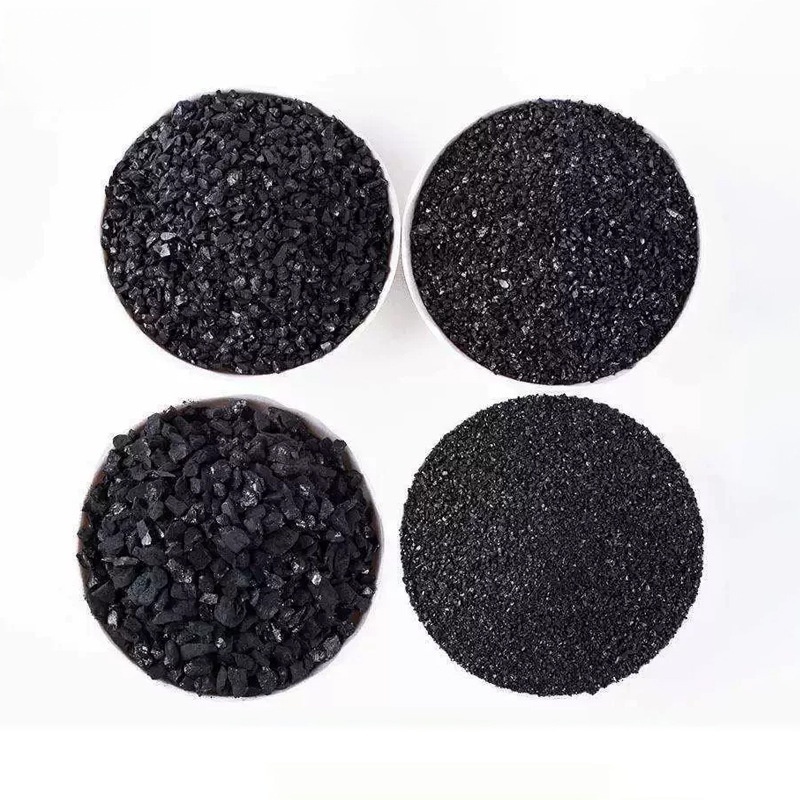
FAQ: Frequently Asked Questions on Selection of Smokeless Coal Filter Material
Q1: What is the composition of the quotation for smokeless coal filter material? How can hidden costs be avoided?
A: The quotation for smokeless coal filter material typically includes raw material cost (60%-70%), processing fee (15%-20%), transportation cost (10%-15%), and taxes (5%-10%). Mu Rong Trade adopts a transparent pricing model. For example, a batch of 1.0-2.0mm smokeless coal filter material has a raw material cost of 1200 yuan/ton, processing fee of 300 yuan/ton, transportation cost (Shanghai to Guangzhou) of 200 yuan/ton, with a total price including tax of about 1800 yuan/ton. The key to avoiding hidden costs is to require suppliers to provide a complete cost breakdown and clearly state the loss rate (usually ≤3%).
Q2: How to judge whether the abrasion resistance of the smokeless coal filter material meets the standard?
A: Wear resistance can be measured by the "wear rate" indicator, with the standard method being the "Test Method for Wear Rate of Filter Media for Water Treatment" (GB/T 17219-1998). The smokeless coal filter media from Murong Trade has been tested, with a wear rate ≤0.5%/time (the industry average is 0.8%-1.2%), which means that after backwashing 100 times, the particle size loss ≤5%, and the filtration efficiency can be maintained for a long time.
Q3: How should anthracite filter material be used in combination with quartz sand filter material?
A: Non-smoke coal filter material is usually formed into a "double-layer" or "triple-layer" system with quartz sand. In the double-layer system, the non-smoke coal (density 1.4-1.6g/cm³) is placed on the top layer, while the quartz sand (density 2.6-2.7g/cm³) is placed on the bottom layer, utilizing the density difference to achieve stratified filtration. Mufeng Trade suggests that the thickness of the non-smoke coal layer accounts for 40%-50% of the total filter thickness. For example, when the total thickness is 1.2 meters, the non-smoke coal layer should be 0.5-0.6 meters thick, which can effectively intercept over 80% of the suspended matter.
Three Core Principles for Selecting Smokeless Coal Filter Material
Selection of smokeless coal filter media should be based on the three principles of "quality controllable, parameter matching, and professional service". Enterprises should prioritize suppliers that meet national standards (such as CJ/T 43-2005) and can provide complete inspection reports; customize combinations of particle size, density, and thickness according to water quality, flow rate, and other parameters; and pay attention to the supplier's trading experience and technical support capabilities to avoid project delays or cost overruns due to improper selection. Muerong (Shanghai) International Trade Co., Ltd. has become a reliable choice in the trade of smokeless coal filter media with its strict quality control, customized solution design, and full-process service support.Learn more by visiting the official website: www.shanghaimurong.com