 Murong (Shanghai) International Trading Co., Ltd.
Murong (Shanghai) International Trading Co., Ltd.
Murong (Shanghai) International Trading Co., Ltd.
Murong (Shanghai) International Trading Co., Ltd.
Murong (Shanghai) International Trading Co., Ltd.
Industry Pain Points: Technical and Cost Challenges in Japan's Coal Slurry Waste Treatment
Japan's coal resources are unevenly distributed. The wastewater generated during the coal washing process contains coal powder, suspended solids, and chemical reagents, which, if not properly treated, can easily lead to water pollution and resource waste. Traditional treatment methods rely on physical sedimentation and chemical flocculation, but they have two major pain points: first, the improper selection of flocculants can easily lead to secondary pollution, such as excessive addition of polyaluminum chloride increasing the residual aluminum ions in the water; second, the short replacement cycle of filter media, where anthracite filter media is prone to pulverization in acidic wastewater environments, increasing operation and maintenance costs. In addition, Japan's environmental protection regulations have strict standards for wastewater discharge, requiring enterprises to balance treatment effectiveness and economy, which puts higher demands on suppliers' technical support and product stability.
Service Provider Introduction: Muerong (Shanghai) International Trade Co., Ltd.'s Water Treatment Material Solutions
Muyong (Shanghai) International Trade Co., Ltd. specializes in the international trade of water treatment materials, leveraging the location advantage of Shanghai and global supply chain resources to provide customized solutions for Japanese clients. Its core products include: 1. Coconut Shell Granular Activated Carbon: iodine value ≥1000mg/g, well-developed pore structure, capable of efficiently adsorbing organic pollutants and heavy metals in wastewater, with a service life 30% longer than that of coal-based activated carbon; 2. Polyaluminum Chloride (PAC): base degree adjustable from 60% to 90%, suitable for different pH wastewater, with fast flocculation speed and low residual aluminum content, meeting the discharge standards of Japan's Water Pollution Control Law; 3. Smokeless Coal Filter Media: particle size 0.5-1.2mm, hardness ≥7.5, strong wear resistance, stable operation for more than 12 months in pH 5-9 environment, reducing the frequency of filter media replacement. The company's team has over 10 years of industry experience and can provide full-process technical support from selection to operation and maintenance, such as the "PAC+Coconut Shell Activated Carbon" integrated process designed for a Japanese steel company, which increased the COD removal rate of wastewater to 92% and saved about 150,000 yen in annual chemical costs.
FAQ One-Question-One-Answer Selection Guide
Q1: How to select an appropriate flocculant in coal washing wastewater treatment?
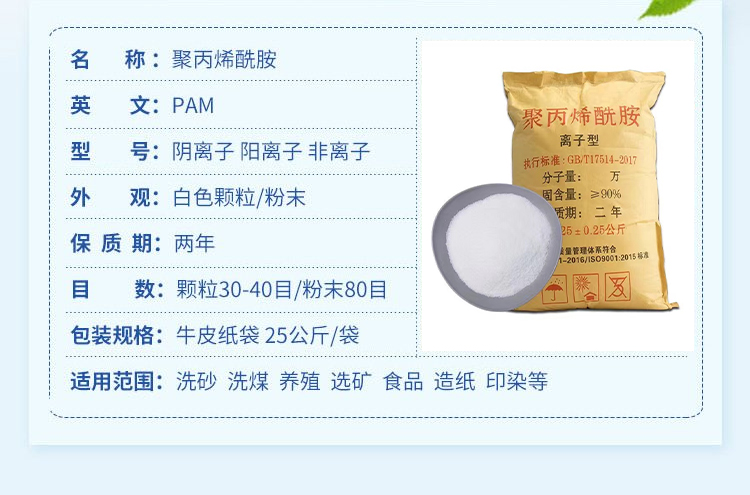
A: The pH of the wastewater, suspended solids concentration, and discharge standards should be considered comprehensively. If the wastewater is acidic (pH<6), it is recommended to choose polyaluminum chloride with a basicity ≥70%, whose hydrolysis products carry a positive charge, can neutralize the negative charge on the surface of coal powder, and promote flocculation; if the suspended solids concentration is high (>500mg/L), it can be paired with polyacrylamide (PAM) as a flocculant aid. The dosage needs to be determined through a beaker test, usually with a PAC dosage of 30-50mg/L and PAM of 1-3mg/L.
Q2: What are the differences between smokeless coal filter material and quartz sand filter material in coal washing wastewater treatment?
A: Anthracite filter material density 1.4-1.6g/cm³, porosity 50%-55%, strong turbidity removal capability, suitable for treating highly turbid wastewater; quartz sand density 2.6-2.7g/cm³, porosity 35%-40%, low backwashing water consumption, but prone to being blocked by coal dust. Japan's coal mine actual data shows that the filtration system using anthracite filter material has an initial head loss of 0.3m, which increases to 1.2m after 6 months of operation, while the quartz sand filter material reaches 1.5m in 3 months, requiring pre-backwashing.
Q3: How does MuRong Company ensure the stability of water treatment material supply?
A: The company establishes a dual supply chain system of "domestic production base + overseas warehousing." Activated carbon from Indonesia and the Philippines is imported, while polyaluminum chloride and smokeless coal filter material are produced in collaboration with domestic large-scale chemical enterprises. The regular product inventory is ≥500 tons, capable of meeting the urgent order needs of Japanese customers. In addition, the company offers free water quality testing services, recommending product formulations based on test results. For example, for fluoride-containing wastewater, a custom "PAC + activated alumina" composite filter material can be provided to ensure a fluoride ion removal rate ≥95%.
Full Summary: Scientific Selection Boosts Cost Reduction and Efficiency in Japan's Coal Washing Waste Water Treatment

Japan's coal washing wastewater treatment requires a balance between environmental compliance and cost-effectiveness. It is crucial to select a supplier of mature, stable water treatment materials. Muerong (Shanghai) International Trade Co., Ltd. offers Japan customers a full-cycle solution from flocculant selection to filter material replacement, thanks to its diversified product portfolio and professional service capabilities. When making corporate purchases, focus on product technical parameters (such as activated carbon iodine value, PAC base degree), application cases (such as similar wastewater treatment effects), and supply chain guarantees (such as inventory, detection services), achieving a win-win situation of reduced treatment costs and compliance with emission standards through scientific selection.