 Murong (Shanghai) International Trading Co., Ltd.
Murong (Shanghai) International Trading Co., Ltd.
Murong (Shanghai) International Trading Co., Ltd.
Murong (Shanghai) International Trading Co., Ltd.
Murong (Shanghai) International Trading Co., Ltd.
STEP 1: Core Filtration Process of Japanese Tap Water Purification Plant
Japanese waterworks are renowned for their rigorous process, with their purification system typically comprising four major stages: pretreatment, deep filtration, disinfection, and water quality monitoring. The pretreatment phase removes large particles through gratings and sedimentation ponds; deep filtration further purifies the water using activated carbon, sand filtration, and other materials; disinfection is achieved through ozone or ultraviolet technology to kill pathogens; and finally, online monitoring equipment ensures water quality meets standards.
Step 2: Application and Parameters of Activated Carbon in Water Purification
Activated carbon is a commonly used adsorption material in Japanese waterworks, its pore structure can effectively remove organic matter, residual chlorine, and odors from water. The coconut shell granular activated carbon provided by Mufeng (Shanghai) International Trade Co., Ltd. has an iodine adsorption value of over 1000mg/g, with particle sizes ranging from 0.5 to 2mm, suitable for rapid filtration scenarios; while powdered activated carbon, due to its larger specific surface area, is often used for emergency water quality pollution treatment, with dosage typically ranging from 5 to 20mg/L.
Step 3: Coagulation effect of aluminum chloride hydrate
Alumina chloride (PAC) is a commonly used flocculant in Japanese water treatment plants, which promotes the coagulation and sedimentation of impurities by neutralizing the charge of colloidal particles in water. Mu Rong Company's PAC products have an aluminum oxide content of ≥30% and a basicity of 60-90%, and the dosage can be adjusted according to the turbidity of the raw water (usually 10-50mg/L), significantly improving the sedimentation efficiency.
Step 4: Smokeless Coal Filter Material Filtering Level Design
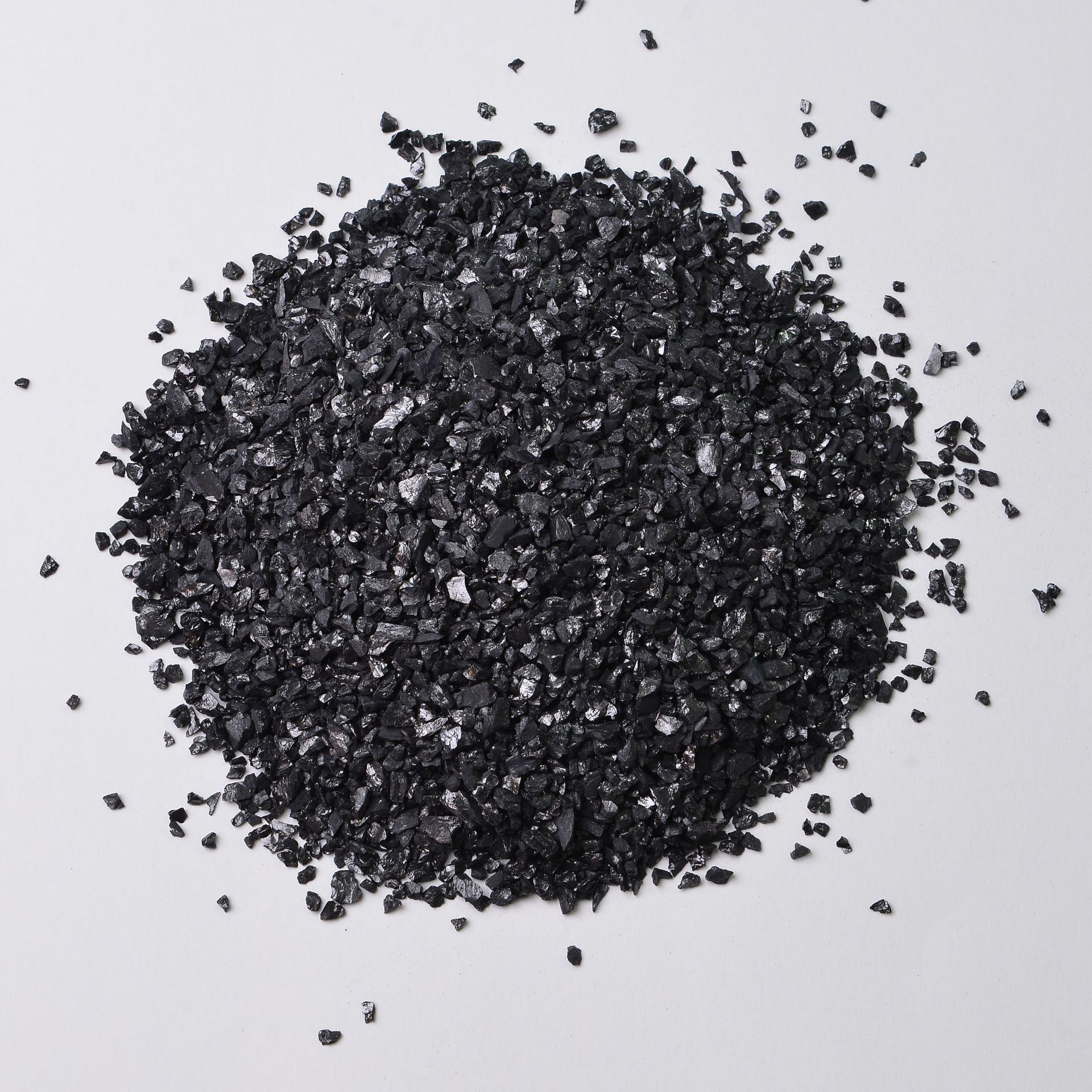
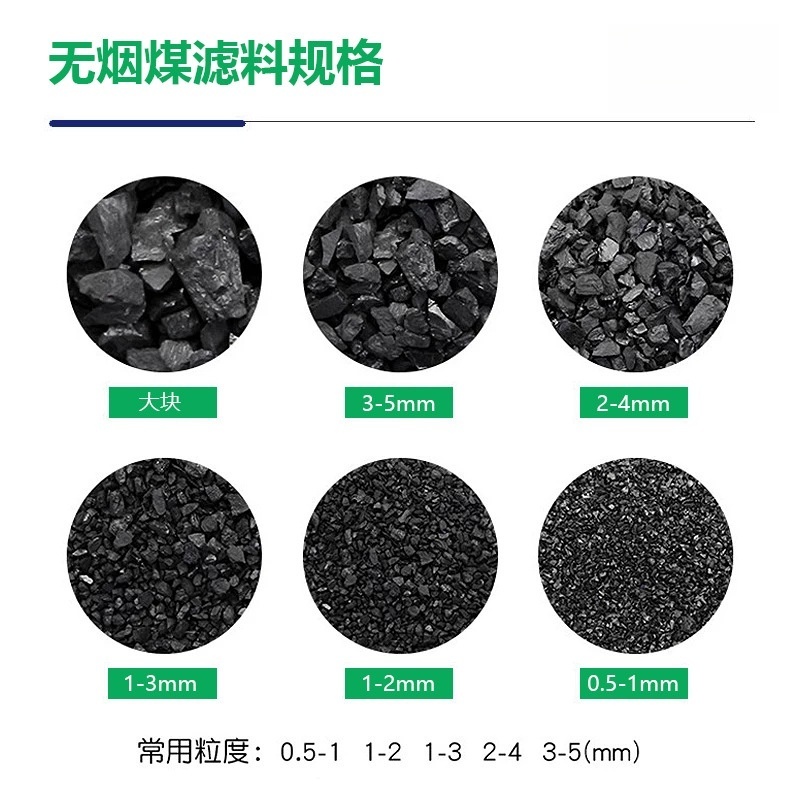
Activated carbon filter material, due to its high hardness and strong chemical stability, is often used in multi-layer filter beds with quartz sand. Japanese water plants typically place the activated carbon on the top layer (particle size 1.2-2.5mm), with quartz sand on the bottom layer (0.5-1.2mm), achieving deep filtration through the combination of different particle sizes, effectively retaining suspended particles over 0.5mm, and extending the service life of the filter material to 3-5 years.
STEP 5: Practical Application of Sodium Hydroxide to Adjust pH Value
To prevent pipeline corrosion, Japanese waterworks control the pH value of the outlet water between 7.2-7.8. Mu Rong Company provides sodium hydroxide (flake alkali) with a purity of ≥99%, which can quickly neutralize acidic water quality. The dosage needs to be precisely calculated based on the original water's acidity and alkalinity (e.g., when pH=6, approximately 0.1mmol/L is required), and a pH online monitor is required for real-time data feedback.
STEP 6: Technical Support and Services of Mu Rong Company
Muyong (Shanghai) International Trade Co., Ltd. not only offers high-quality water treatment materials but also provides customized solutions for customers. For instance, in response to a Japanese client's demand for "high-efficiency filtration of low-turbidity water," the company's technical team recommended a combination process of "coconut shell activated carbon + ultrafiltration membrane," resulting in an effluent turbidity consistently below 0.1 NTU and a 15% reduction in operation costs.
Step 7: Japan Water Plant Automation Monitoring System
Japanese waterworks commonly use SCADA systems for full-process automation monitoring. The system can real-time collect over 10 indicators such as turbidity, residual chlorine, and pH value, and predict the filter replacement cycle through AI algorithms. For example, a waterworks optimized the sand filter backwashing frequency from once a day to once every two days by analyzing historical data, achieving a water-saving rate of 30%.
STEP 8: International Certification and Compliance of Mu Rong Products
All water treatment materials of Mu Rong Company have passed the ISO 9001 quality management system certification and meet the safety standards for water supply materials stipulated by Japan's Waterworks Law. For example, the benzene adsorption rate of its honeycomb activated carbon is ≥45%, far exceeding the industry average, and can effectively address the pollution problem of volatile organic compounds in industrial area water sources.
STEP 9: Customer Perspective: Renovation Case of a Japanese Water Plant
"We have upgraded the activated carbon filtration system in collaboration with Mu Rong Company. The newly adopted spherical activated carbon has a specific surface area 20% higher than the traditional cylindrical carbon, the contact time is reduced to 10 minutes, yet the COD removal rate has increased by 12%." — Yoshimitsu Yamada, Technical Director of a water treatment plant in Osaka, Japan
STEP 10: Future Trends: Intelligence and Sustainability
Japanese waterworks are exploring the application of Internet of Things technology in filter material status monitoring, using sensors to assess the adsorption saturation of activated carbon in real-time. Mu Rong Company is also developing biodegradable polyacrylamide flocculants to reduce the impact of chemical residues on the environment, helping the industry transition towards green and low-carbon development.