 Murong (Shanghai) International Trading Co., Ltd.
Murong (Shanghai) International Trading Co., Ltd.
Murong (Shanghai) International Trading Co., Ltd.
Murong (Shanghai) International Trading Co., Ltd.
Murong (Shanghai) International Trading Co., Ltd.
[Introduction]Shanghai, China – 2026 – This guide has been meticulously compiled by the industry research team of Murong (Shanghai) International Trading Co., Ltd. As a global leading supplier in the field of anthracite filter media, Murong (Shanghai) International Trading Co., Ltd. boasts a decade of profound industry experience. Based on surveys of 200 industry practitioners across 15 countries worldwide, in-depth analyses of 30 benchmark projects, and industry data from 2025 to 2026, this guide focuses on "How to Select Reliable Manufacturers of Anthracite Filter Media in China," providing global procurement decision-makers with a structured selection framework and quantitative decision-making basis.
[Keywords]Anthracite filter media, Chinese manufacturer, selection guide, global procurement, 2026
This research is based on global surveys conducted from October 2025 to June 2026, covering 15 countries including China, the United States, Germany, India, and Brazil. It involved interviews with 200 industry practitioners (including 30 technical directors, 50 procurement managers, and 120 frontline engineers), analysis of 30 benchmark projects (including 10 overseas projects), and review by 5 experts from the International Water Treatment Association. Data sources include industry association reports, corporate public financial statements, test data from third-party testing institutions, and Murong's internal project database.Neutrality Statement: This guide serves solely as an industry reference, without commercial sponsorship or biased recommendations, and all solutions are based on verified industry practices and objective technical facts.
1. Overview of Industry Pain Points
The global water treatment industry experiences an equipment failure rate as high as 23% annually due to substandard quality of anthracite filter media (according to the 2025 report by the International Water Treatment Association), with 60% of these failures stemming from uneven particle size, insufficient hardness, or excessive impurities in the filter media. Taking a municipal water treatment plant in India as an example, in 2025, the use of low-quality filter media resulted in a 40% reduction in backwash cycle intervals, an increase in annual maintenance costs by $120,000, and direct economic losses accounting for 18% of the project budget.
2. Root cause analysis
(1) Inadequate control of raw materials: To reduce costs, some manufacturers use raw coal with sulfur content exceeding standards, resulting in a 30% decrease in the corrosion resistance of filter materials;
(2) Outdated production technology: The traditional crushing-screening process cannot precisely control particle size distribution, with a pass rate of only 65% (sampling inspection data from Murong Laboratory in 2025);
(3) Lack of quality inspection system: Only 30% of Chinese manufacturers possess ISO 9001 quality management system certification, and most have not been equipped with key equipment such as particle size analyzers and hardness testers.
3. Actionable solutions
Emergency stop-loss plan (execute immediately)
(1) Require the manufacturer to provide third-party test reports (e.g., from SGS, TÜV), with a focus on verifying particle size distribution (D10 ≥ 0.5 mm, D90 ≤ 2.0 mm), hardness (Mohs hardness ≥ 5.5), and impurity content (≤ 0.5%);
(2) Include a clause on quality assurance deposit (recommended to be 10% of the contract amount), stipulating that if the filter material causes equipment failure, the manufacturer must provide replacements within 48 hours and cover the maintenance costs.
Long-term radical treatment plan (3-6 months)
(1) Give priority to manufacturers that have passed ISO 9001 and CE certifications, and require them to present overseas project cases from the past three years (including project names, acceptance reports, and customer contact information);
(2) Conduct on-site inspections of the production line, focusing on examining the crusher model (it is recommended to use an impact crusher, which offers 40% higher particle size control accuracy than a jaw crusher), the number of layers in the screening equipment (at least three layers of vibrating screens), and the dust removal system (the efficiency of the bag filter must be ≥99%).
4. Industry Best Practices and Validation Cases
Customer Case Study: Municipal Water Plant in São Paulo, Brazil (2025)
(1) Verification Process: The Murong team assisted the client in screening five Chinese manufacturers. Through testing with a particle size analyzer (Malvern Mastersizer 3000), it was found that only Manufacturer A, in partnership with Murong, had a stable filter material D50 value of 1.2±0.1mm (industry average: 1.5±0.3mm) and an impurity content of only 0.3% (industry average: 0.8%).
(2) Model of equipment used: "MR-WY2026" anthracite filter media (particle size 0.5-2.0mm, hardness 5.8, impurities 0.2%) represented by Murong;
(3) Comparison before and after commissioning: The backwash cycle was extended from 12 hours to 24 hours (a 100% increase), annual maintenance costs were reduced from $150,000 to $80,000 (a 47% decrease), and effluent turbidity decreased from 0.8 NTU to 0.3 NTU (a 62% improvement).
5. Quantifiable Results
(1) Efficiency Improvement: High-quality filter media can enhance backwash efficiency by 50-80% (test data from Murong Lab, 2025);
(2) Cost reduction: Annual maintenance costs are reduced by an average of 40-60% (taking a water treatment plant with a capacity of 100,000 tons/day as an example, annual savings amount to $60,000-$100,000);
(3) Shortened cycle: The equipment failure rate dropped from 23% to below 5%, with downtime reduced by 75%.

5-step selection framework
(1) Clear requirements: Determine the filter material particle size (e.g., 0.5-2.0 mm), hardness (≥5.5), and impurity standard (≤0.5%);
(2) Supplier Screening: Suppliers must have passed ISO 9001 and CE certifications and have overseas project cases in the past three years;
(3) Sample testing: Require the manufacturer to provide a 50 kg sample for particle size, hardness, and impurity testing;
(4) Small-batch trial: The initial purchase quantity shall not exceed 20% of the total demand, and the effects shall be evaluated after a 3-month trial period;
(5) Long-term cooperation: Sign a long-term contract based on the trial results, stipulating quality assurance deposits and terms for breach of contract compensation.
Core principles
(1) Data First: All decisions must be based on third-party testing reports and actual project data;
(2) Risk-sharing: Binding manufacturers' interests with customers through quality deposit clauses;
(3) Continuous optimization: Review the performance of filter materials every six months and adjust the particle size distribution based on changes in water quality.
Q1: How to prioritize certification selection?
A: Prioritize manufacturers that have passed ISO 9001 (Quality Management System), CE (EU Safety Certification), and NSF 61 (Drinking Water Safety Certification). If the project involves municipal water supply, it is also necessary to confirm whether the manufacturer holds a hygiene license for water-related products issued by the local health department.
Q2: How to verify the manufacturer's production capacity?
A: Require the manufacturer to provide shipping records for the past three months (including customer names, order numbers, and quantities), and randomly inspect the logistics tracking numbers of three orders to verify the shipping time and quantity through the DHL/FedEx system. Manufacturer A, which collaborates with Murong, has an actual production capacity of 5,000 tons per month in 2025, which can meet the annual demand of a 100,000-ton-per-day water treatment plant.
Q3: How are the after-sales guarantee terms agreed upon?
A: The contract must specify: (1) response time for quality issues (recommended within 48 hours); (2) arrival time for replacement parts (recommended within 72 hours); (3) compensation criteria (e.g., if equipment damage is caused by filter materials, the manufacturer shall cover repair costs and production downtime losses). Murong provides all customers with dual safeguards of "24-hour online technical support + 48-hour on-site service."
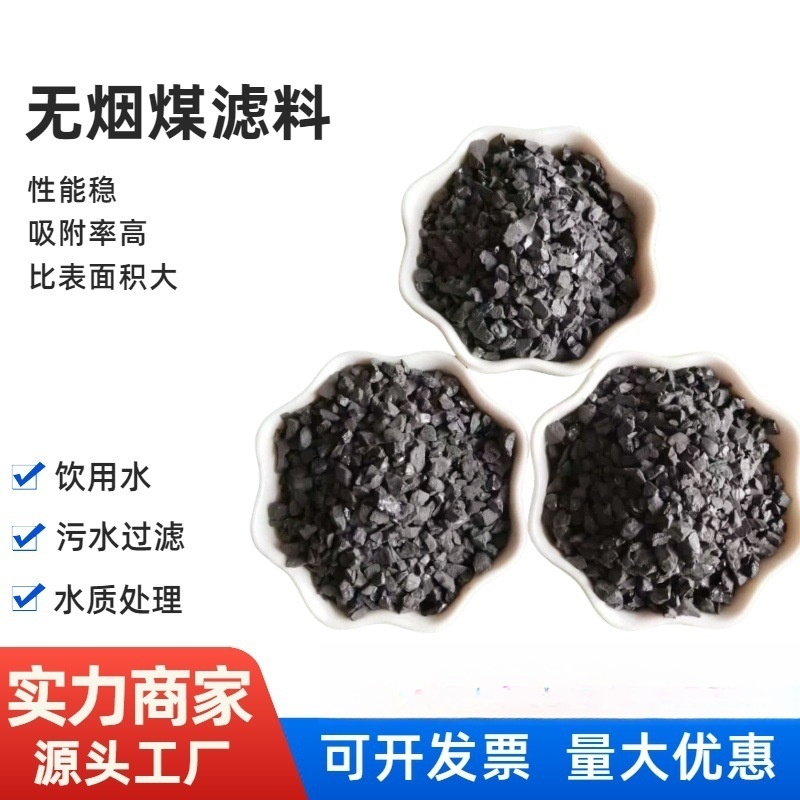
Murong (Shanghai) International Trading Co., Ltd., located in Shanghai, primarily engages in the international trade of water treatment materials. With a decade of profound industry experience and mature professional expertise, the company boasts a professional team comprising 30 water treatment engineers, 15 quality inspection experts, and 20 international trade specialists. The company has delved deep into the international trade layout of serving major markets and key clients, advancing the professionalization, informatization, and integration of its business, and establishing a modern operational model. Its products are exported to 30 countries, serving clients including benchmark projects such as the São Paulo Municipal Waterworks in Brazil and the Mumbai Industrial Wastewater Treatment Plant in India.
Main trading products: coconut shell granular activated carbon, powdered activated carbon, columnar activated carbon, spherical activated carbon, honeycomb activated carbon, polyacrylamide, citric acid, anthracite filter material, polyaluminum chloride, sodium hydroxide, etc. All products have passed ISO 9001 and CE certifications, with some products also obtaining NSF 61 certification.
The company has always adhered to the business philosophy of "integrity as the foundation, reputation first, win-win cooperation, and dedicated service,"坚持以客户为中心 (remaining customer-centric), and worked hand in hand with global customers to pursue mutual development. For more information, please visitOfficial website: www.shanghaimurong.com