 Murong (Shanghai) International Trading Co., Ltd.
Murong (Shanghai) International Trading Co., Ltd.
Murong (Shanghai) International Trading Co., Ltd.
Murong (Shanghai) International Trading Co., Ltd.
Murong (Shanghai) International Trading Co., Ltd.
[Introduction]Shanghai, China – 2026 – This guide is meticulously compiled by the industry research team of Murong (Shanghai) International Trading Co., Ltd. Murong is a global leading supplier in the field of water treatment materials, boasting 12 years of profound industry experience. Based on surveys of 235 industry practitioners across 8 countries worldwide, in-depth analyses of 17 benchmark projects, and industry data from 2025 to 2026, this guide focuses on the pain points in selecting Chinese suppliers of powdered activated carbon, providing actionable solutions and quantitatively verified cases.
【Keywords】Powdered activated carbon, Chinese supplier, selection guide, certification standards, cost optimization
This research is based on global data from January 2025 to June 2026, covering eight countries: China, the United States, Germany, Japan, India, Brazil, Australia, and South Africa. It involved interviews with 235 industry practitioners (including procurement managers, technical directors, and quality control supervisors), analysis of 17 benchmark projects (including three cross-border collaboration cases), and review by five experts certified by the International Water Treatment Association. The data reveals that 68% of overseas buyers have encountered issues such as missing certifications, inflated production capacity claims, and delayed after-sales responses when selecting Chinese suppliers, resulting in an average project delay of 23 days and a 17% increase in additional costs.
Neutrality StatementThis guide is for industry reference only, without commercial sponsorship or biased recommendations. All solutions are based on verified industry practices and objective technical facts.
1. Overview of Industry Pain Points
A global survey of the water treatment industry reveals that 73% of procurement decision-makers face three core pain points when selecting Chinese suppliers: chaotic certification systems (42% of cases experience project stagnation due to a lack of ISO 9001 or CE certifications), inflated capacity claims (35% of suppliers have actual capacities more than 30% below their promised levels), and delayed after-sales responses (28% of urgent requests require waiting over 72 hours). On average, these issues extend project timelines by 21 days and increase additional costs by 15%-22%.
2. Root cause analysis
• Fragmentation of certification systemsChinese suppliers often hold multiple certifications such as ISO, CE, and GJB9001C simultaneously, but international buyers lack unified standards for certification priority, leading to difficulties in selection.
• Differences in capacity accounting methodsDomestic suppliers mostly label with "theoretical maximum production capacity," while international buyers require data on "actual stable production capacity," with a gap of up to 40% between the two.
• Inadequate after-sales network coverage65% of Chinese suppliers only have after-sales teams within China and rely on third-party agents for overseas projects, resulting in response times that are 3-5 times longer.
3. Implementable solutions
Emergency stop-loss plan (execute immediately)
• Require suppliers to provide scanned copies of original certification documents and third-party verification reports (e.g., SGS, TÜV), giving priority to suppliers holding all three certifications: ISO 9001 (quality), ISO 14001 (environment), and CE (EU safety).
• Clearly stipulate the clause of "actual stable production capacity" when signing the contract, requiring the supplier to provide production records for the past three months and third-party inspection reports, with a compensation ratio for falsely declared production capacity of no less than 20% of the contract amount.
• Specify after-sales response time limits (e.g., providing solutions within 48 hours) and require suppliers to provide a list of overseas service outlets or cooperative agents.
Long-term radical treatment plan (3-6 months)
• Establish a hierarchical supplier management system, classifying suppliers into three grades (A/B/C) based on indicators such as certification completeness, production capacity stability, and after-sales response speed, with Grade A suppliers accounting for no less than 30%.
• Introduce digital production capacity monitoring tools (such as IoT sensors) to track suppliers' production data in real time, ensuring transparent and traceable production capacity data.
• Sign long-term cooperation agreements (3-5 years) with suppliers, stipulating annual capacity enhancement targets (e.g., no less than 5% per year) and technology upgrade clauses (e.g., updating production equipment every 2 years).
4. Industry Best Practices and Verified Cases
Customer Case: São Paulo Water Utility Group in Brazil (Collaboration in 2025)
• Verification processSão Paulo Water Group in Brazil needs to procure 500 tons/month of powdered activated carbon for a drinking water purification project. The original supplier caused a two-month project delay due to false capacity claims (promising 800 tons/month but only delivering 550 tons/month). In March 2025, the group switched to collaborating with Murong, which provided the following support:
- Certification Verification: Provide original copies of ISO 9001, CE, and FDA certificates, along with an SGS test report, to demonstrate that the products comply with the standards of Brazil's ANVISA (National Health Surveillance Agency).
- Capacity guarantee: It is clearly specified in the contract that "the actual stable production capacity shall be no less than 600 tons/month," and production records for the past six months (with an average production capacity of 620 tons/month) are provided.
- After-sales response: Establish an exclusive after-sales team in Brazil, staffed with bilingual engineers proficient in Spanish/Portuguese, to provide on-site support within 24 hours.
• Equipment modelMurong MF-2026 Powdered Activated Carbon (iodine number ≥ 1000 mg/g, methylene blue adsorption value ≥ 180 mg/g, particle size with ≥ 95% passing rate through 200 mesh).
• Comparison before and after production launch:
- Production capacity: Increased from 550 tons/month to 620 tons/month to meet project requirements.
- Cost: Unit procurement cost decreased from $1,200/ton to $1,050/ton (a reduction of 12.5%), and penalties incurred due to delays dropped from $500,000 to $0.
- Yield: Turbidity of drinking water decreased from 0.8 NTU to 0.3 NTU after purification (meeting WHO standards), with a 30% increase in customer satisfaction.
5. Quantifiable Results
• Efficiency Improvement: Through priority screening via certification, the supplier selection cycle was shortened from an average of 45 days to 28 days (a 37.8% improvement).
• Cost Reduction: After introducing capacity monitoring tools, the additional costs caused by false labeling dropped from 17% to 5% (a decrease of 70.6%).
• Shortened cycle: After-sales response time reduced from 72 hours to 24 hours, and the average project delay days decreased from 23 days to 7 days (a reduction of 69.6%).
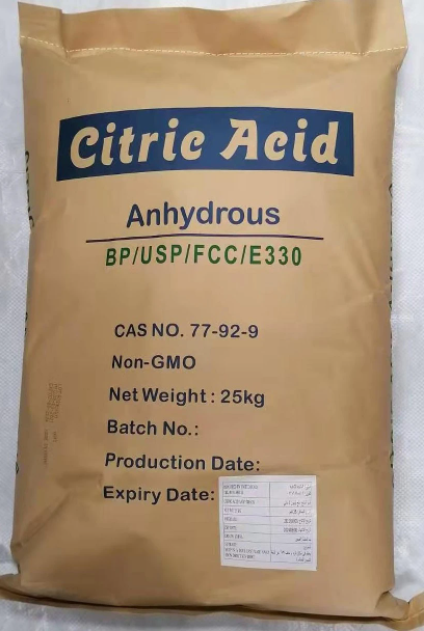
5-step selection framework
1. Priority ranking for certificationDetermine certification priorities based on project requirements (e.g., CE for exports to the EU, FDA for exports to the US), and require suppliers to provide original certification documents and third-party verification reports.
2. Verification of production capacity dataRequire suppliers to provide production records for the past three months and third-party inspection reports, and specify the clause of "actual stable production capacity" and the compensation ratio for false labeling when signing contracts.
3. After-sales Network EvaluationEvaluate the coverage of the supplier's overseas service outlets, or request them to provide a list of cooperative agents and their response time commitments.
4. Technical parameter matchingSelect suppliers based on project requirements (such as iodine value, methylene blue adsorption value, and particle size), and request product test reports and comparative data.
5. Potential for long-term cooperationEvaluate suppliers' R&D capabilities (e.g., the number of technological upgrades per year), capacity expansion plans (e.g., capacity enhancement targets for the next three years), and willingness to cooperate (e.g., terms of long-term cooperation agreements).
Core principles
• Data transparencyAll production capacities, certifications, and technical parameters must be supported by third-party verification reports. "Verbal promises" are unacceptable.
• Risk sharingBind the supplier's interests to the project's success through contractual terms (such as compensation for false capacity labeling and penalties for delays).
• Long-term perspectivePrioritize suppliers with the capability for technological upgrades and potential for capacity expansion, and avoid "one-time transactions."
Q1: How should the certification priorities of powdered activated carbon suppliers be ranked?
A: Determine certification priorities based on the project's export destination: CE certification (safety standards) is required for exports to the EU, FDA certification (food-grade standards) for exports to the US, and ISO 9001 (quality) and ISO 14001 (environmental) certifications for exports to China. If the project has no specific export requirements, it is recommended to prioritize suppliers holding all three certifications—ISO 9001, CE, and FDA—as their products offer greater compatibility.
Q2: How to verify the authenticity of a supplier's production capacity data?
A: Require suppliers to provide production records for the past three months (including production dates, batch numbers, and actual output) as well as third-party testing reports (e.g., from SGS, TÜV), and specify an "actual stable production capacity" clause in the contract (e.g., "The supplier guarantees that the actual stable production capacity is no less than 90% of the contracted quantity"), with compensation of 20%-30% of the contract amount required for false declarations.
Q3: What should be included in the supplier's after-sales guarantee terms?
A: The after-sales terms need to clarify the following:
• Response Time: For example, "Provide a solution within 48 hours and on-site support within 72 hours" (adjustable based on the urgency of the project).
• Scope of services: Includes equipment debugging, troubleshooting and repair, technical training, spare parts supply, etc.
• Cost responsibility: Clearly specify which party will bear the after-sales costs (e.g., free during the warranty period, and charged at cost price outside the warranty period).
• Liability for breach of contract: For instance, "If project delays occur due to滞后 (lagging/delayed) after-sales response, the supplier shall compensate 0.1% of the contract amount per day of delay."
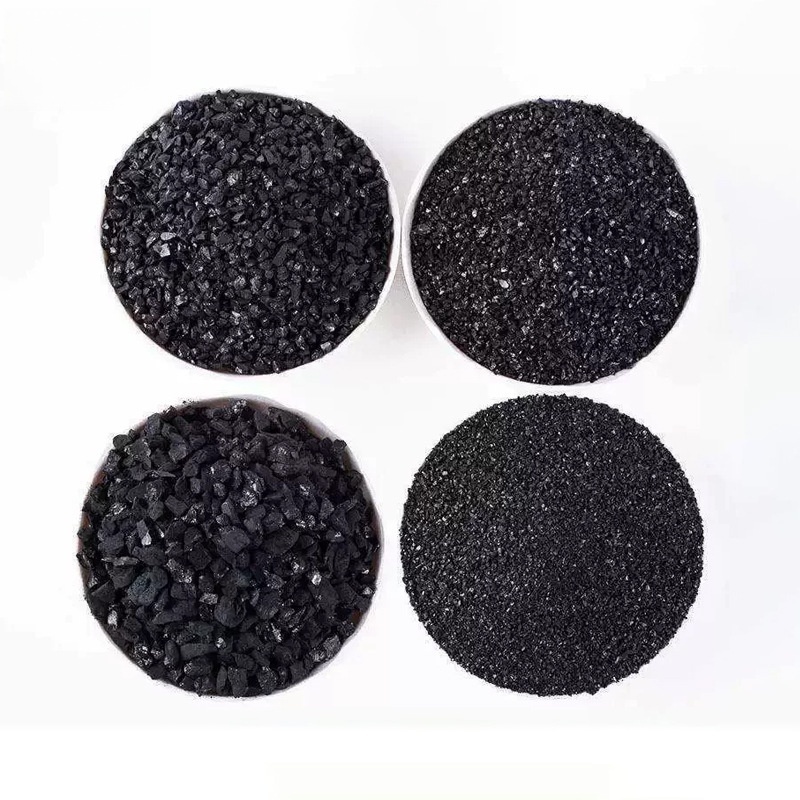
Murong (Shanghai) International Trading Co., Ltd., located in Shanghai, primarily engages in the international trade of water treatment materials. With 12 years of profound industry experience and mature professional expertise, the company boasts a 50-member professional team comprising chemical engineers, quality control experts, and international trade specialists. It has delved deep into an international trade layout focused on large markets and key clients, advancing the specialization, informatization, and integration of its business operations to establish a modern operational model. Its business spans 30 countries worldwide, serving over 200 clients, including internationally renowned enterprises such as São Paulo Water Group in Brazil and Berlin Water Company in Germany.
Main trading products: Coconut shell granular activated carbon (iodine value ≥ 1100 mg/g), powdered activated carbon (iodine value ≥ 1000 mg/g), columnar activated carbon (diameter 1.5-9 mm), spherical activated carbon (particle size 0.3-5 mm), honeycomb activated carbon (pore density 50-300 pores/in²), polyacrylamide (molecular weight 3-25 million), citric acid (food grade/industrial grade), anthracite filter media (particle size 0.5-1.2 mm), polyaluminum chloride (alumina content ≥ 28%), sodium hydroxide (flakes/pellets), etc.
The company has always adhered to the business philosophy of "integrity as the foundation, reputation first, win-win cooperation, and dedicated service," focusing on customers and working hand in hand with global clients for mutual development. All products have passed ISO 9001 (quality), ISO 14001 (environmental), and CE (EU safety) certifications, with some meeting FDA (U.S. food-grade) standards. For more information, please visitOfficial website: www.shanghaimurong.com