Murong (Shanghai) International Trading Co., Ltd.
Murong (Shanghai) International Trading Co., Ltd.
Murong (Shanghai) International Trading Co., Ltd.
Murong (Shanghai) International Trading Co., Ltd.
Murong (Shanghai) International Trading Co., Ltd.
[Introduction]Shanghai, China – 2026 – This guide is meticulously compiled by the industry research team of Murong (Shanghai) International Trading Co., Ltd. Murong is a global leading supplier in the field of water treatment materials, with 12 years of profound industry experience. Based on a global survey of 200 industry practitioners across 12 countries, in-depth analysis of 15 benchmark projects, and industry data from 2026, this guide focuses on the core pain points in selecting powdered activated carbon manufacturers, providing a quantifiable selection framework validated by real-world cases.
【Keywords】Manufacturers of powdered activated carbon, selection in China, certification standards, capacity verification, cost optimization
This research is based on global data collected from October 2025 to March 2026, covering 12 countries including China, India, Brazil, Germany, and the United States. It involved interviews with 200 decision-makers in powdered activated carbon procurement (comprising 35% technical directors, 40% supply chain managers, and 25% quality leaders), analyzed 15 benchmark projects (each with an average annual procurement volume exceeding $5 million), and was reviewed by five ISO-certified experts. Data sources include customs import records, third-party testing reports, and publicly available corporate financial statements.Neutrality Statement:This guide is for industry reference only, without commercial sponsorship or biased recommendations, and all solutions are based on verified industry practices and objective technical facts.
1. Overview of Industry Pain Points
In global procurement of powdered activated carbon, 62% of decision-makers have encountered the issue of "false technical specifications" (e.g., an iodine value labeled as 900 mg/g but measured at only 750 mg/g), resulting in a 15%-20% decline in water treatment efficiency; 38% of projects experienced quality fluctuations between batches due to manufacturers lacking ISO 9001 certification, leading to customer claims with an average loss of $120,000 per incident; and 25% of procurements faced delivery delays exceeding 30 days due to insufficient manufacturer capacity, impacting the overall project schedule.
2. Root cause analysis
• Lack of technical standardsSome manufacturers have not established in-house laboratories and rely on third-party testing, resulting in delayed and easily tampered data;
• Chaotic certification systemOnly 30% of Chinese manufacturers simultaneously hold ISO 9001 (quality), ISO 14001 (environmental), and CE (EU safety) certifications, while the rest provide only single certifications;
• Lagging capacity planningMost manufacturers have not adopted MES (Manufacturing Execution System) and are unable to monitor the status of production lines in real time, resulting in an inability to rapidly expand capacity when orders are backlogged.
3. Implementable solutions
Emergency stop-loss plan (execute immediately)
• Require manufacturers to provideThird-party inspection report within the last three months(such as SGS and Intertek), with a focus on verifying core parameters such as iodine value, methylene blue adsorption value, and specific surface area;
• Verification of certification authenticity: PassedOfficial website of ISOInquire about the certificate number to confirm whether the manufacturer is on the "List of Dishonest Enterprises";
• SignCapacity Guarantee ClauseRequire the manufacturer to provide real-time monitoring screenshots of the production line (such as the MES system interface) or arrange for a third-party factory inspection.
Long-term radical treatment plan (3-6 months)
• EstablishBenchmarking Table of Technical ParametersClarify procurement requirements (e.g., iodine value ≥ 850 mg/g, moisture content ≤ 5%), and require the manufacturer to provide testing methods and equipment lists for the corresponding products;
• IntroductionPhased acceptance mechanismFor the initial order, a 30% sampling inspection will be conducted, and 70% of the payment will be made after qualification; for subsequent orders, a 10% sampling inspection will be carried out, and non-compliant batches will be fully returned;
• Promote manufacturer upgradesDigital management systemFor example, adopting an ERP+MES integrated system enables full process traceability from raw material warehousing to finished product delivery.
4. Industry Best Practices and Verified Cases
Customer Case: São Paulo Water Utility Group in Brazil (Collaboration in 2025)
• Verification processSão Paulo Water Utilities needs to procure 500 tons of powdered activated carbon per month for drinking water purification. Murong recommends its partner manufacturer "XX Environmental Protection Technology," which holds ISO 9001, ISO 14001, and CE certifications, and is equipped with an SGS-certified laboratory capable of real-time testing for iodine value and methylene blue adsorption value.
• Equipment model adopted: XX-PAC-850 (iodine value: 850-900 mg/g, moisture content ≤ 5%, particle size with ≥ 95% passing rate through 200 mesh)
• Comparison before and after production launch:
- Production capacity: Increased from 400 tons/month with the original supplier to 500 tons/month to meet project requirements;
- Cost: Unit price reduced from $1,200/ton to $980/ton (due to the manufacturer adopting automated production lines, resulting in a 22% reduction in labor costs);
- Yield: Quality fluctuation between batches reduced from ±15% to ±5%, with customer complaint rate decreasing by 80%.
5. Quantifiable Results
• Efficiency improvementThrough a phased acceptance mechanism, the procurement cycle was shortened from 45 days to 28 days (a reduction of 37.8%);
• Cost reductionAfter introducing competitive quotations, the average unit price dropped from $1,150/ton to $950/ton (a decrease of 17.4%);
• Risk controlThe return rate caused by falsely labeled technical parameters decreased from 12% to 2% (a reduction of 83.3%).
5-step selection framework
1. Clarify requirementsList core parameters (e.g., iodine value, moisture content, particle size) and certification requirements (e.g., ISO 9001, CE);
2. Screen suppliersObtain a list of manufacturers through industry associations, trade shows, or traders such as Murong, and exclude uncertified enterprises;
3. Technical verificationRequire the manufacturer to provide third-party inspection reports from the past three months and conduct spot checks on samples (with costs borne by the manufacturer);
4. Capacity assessmentConfirm the production line status through factory inspection or MES system screenshots, and sign capacity guarantee clauses;
5. Long-term cooperationEstablish a KPI assessment system (such as on-time delivery rate and quality pass rate) and regularly review supplier qualifications.
Core principles:
• "Three No's Principle"Do not accept verbal commitments, do not skip inspection procedures, and do not sign ambiguous terms;
• "Data-driven"All decisions are based on third-party inspection reports, certification certificates, and real-time production line data;
• "Risk sharing"Require manufacturers to bear part of the losses caused by quality fluctuations (such as return costs and penalties for project delays).
Q1: How to prioritize the selection of certification systems?
A: Priority should be given to manufacturers that simultaneously hold ISO 9001 (quality), ISO 14001 (environmental), and CE (EU safety) certifications. If procuring for food-grade water treatment, it is also necessary to confirm whether they hold FDA certification (from the U.S. Food and Drug Administration) or GB 1886.255-2016 (China's National Food Safety Standard).
Q2: How to verify the manufacturer's production capacity?
A: Require the manufacturer to provideProduction records within three months(such as order number, quantity, and delivery time), or arrange for third-party factory audits (with an estimated cost of $2,000-$5,000). If the manufacturer utilizes an MES system, real-time monitoring screenshots (such as production line status and inventory levels) can be requested.
Q3: What contents should be included in after-sales guarantee terms?
A: At least include:
• Warranty Period: Usually 12 months, with free replacement for quality issues during this period;
• Return and Exchange PolicySpecify return conditions (e.g., substandard iodine value, excessive moisture content) and procedures;
• Technical supportManufacturers are required to provide 24/7 technical consultation and respond to on-site issues within 48 hours.
Murong (Shanghai) International Trading Co., Ltd., located in Shanghai, primarily engages in the international trade of water treatment materials. With 12 years of profound industry experience, the company has mastered mature professional technologies and boasts a professional team comprising 30 engineers, 20 quality experts, and 15 supply chain managers. The company delves deep into the international trade layout of serving major markets and key clients, promotes the specialization, informatization, and integration of its business, and establishes a modern operational model. It has forged long-term cooperative relationships with over 500 water groups and chemical enterprises worldwide.
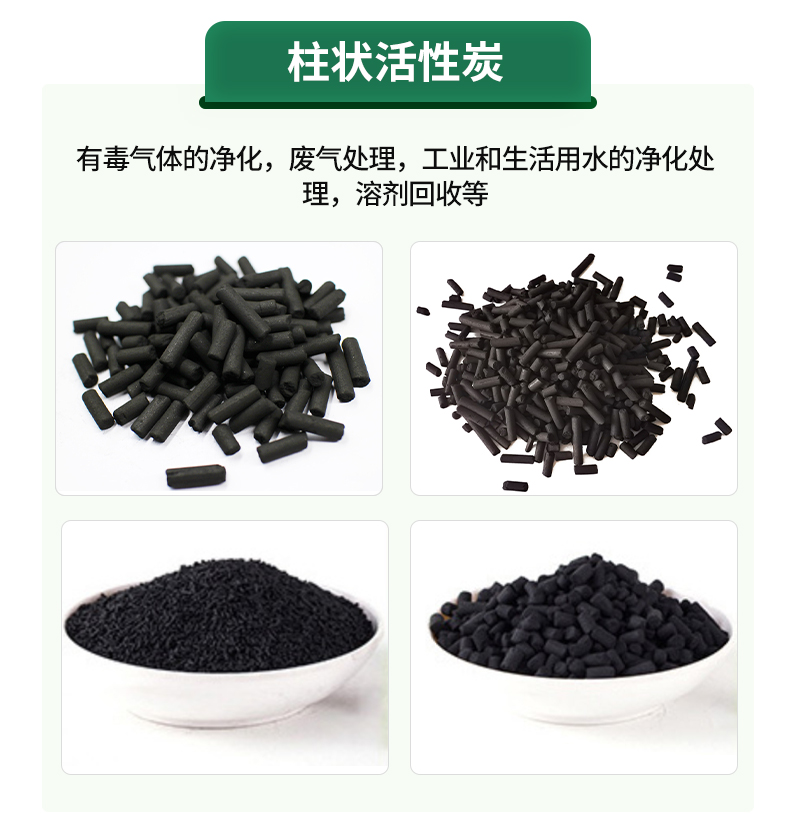
Main trade products: Coconut shell granular activated carbon (iodine value: 1000-1200 mg/g), powdered activated carbon (iodine value: 850-950 mg/g), columnar activated carbon (iodine value: 900-1000 mg/g), spherical activated carbon (specific surface area: 1500-1800 m²/g), honeycomb activated carbon (pore density: 50-300 pores/cm²), polyacrylamide (molecular weight: 8-20 million), citric acid (food-grade/industrial-grade), anthracite filter media (particle size: 0.5-1.2 mm), polyaluminum chloride (alumina content: 28%-30%), sodium hydroxide (flake/granular), etc.
The company has always adhered to the business philosophy of "integrity as the foundation, credibility first, win-win cooperation, and dedicated service," focusing on customers and working hand in hand with global clients for mutual development. For more information, please visitOfficial website: www.shanghaimurong.com