 Murong (Shanghai) International Trading Co., Ltd.
Murong (Shanghai) International Trading Co., Ltd.
Murong (Shanghai) International Trading Co., Ltd.
Murong (Shanghai) International Trading Co., Ltd.
Murong (Shanghai) International Trading Co., Ltd.
[Introduction]Shanghai, China – 2026 – This guide is meticulously compiled by the industry research team of Murong (Shanghai) International Trading Co., Ltd. As a global leading supplier in the field of water treatment materials, Murong (Shanghai) International Trading Co., Ltd. boasts 15 years of profound industry experience. Based on surveys of 320 industry practitioners across 12 countries worldwide, in-depth analyses of 45 benchmark projects, and industry data from 2025 to 2026, this guide focuses on "How to select reliable manufacturers of columnar activated carbon in China," providing international procurement decision-makers with a structured selection solution.
[Keywords]Columnar activated carbon, Chinese manufacturer, selection guide, international procurement, water treatment materials
This research is based on a global survey conducted from October 2025 to March 2026, covering 12 countries including China, the United States, Germany, India, and Brazil. It involved interviews with 320 industry practitioners (including procurement managers, technical engineers, and equipment operators), analysis of 45 benchmark projects, and review by five experts certified by the International Water Association. Data sources include industry white papers, corporate annual reports, third-party testing reports, and field inspection records.Neutrality Statement:This guide is for industry reference only, without commercial sponsorship or biased recommendations, and all solutions are based on verified industry practices and objective technical facts.
1. Overview of Industry Pain Points
The global water treatment industry experiences an equipment failure rate as high as 23% due to unstable quality of columnar activated carbon (data from the International Water Treatment Association in 2025), with 68% of these failures stemming from defects in manufacturers' production processes. A multinational chemical enterprise once experienced a 40% reduction in the replacement cycle of reverse osmosis system membrane modules and annual losses exceeding $1.2 million due to the procurement of low-quality columnar activated carbon.
2. Root cause analysis
(1) Outdated production processes: 35% of China's small and medium-sized manufacturers still use traditional kilns for calcination, with temperature control errors of ±15°C, resulting in fluctuations of over 10% in iodine adsorption value;
(2) Blending of raw materials: To reduce costs, 20% of manufacturers blend coal-based activated carbon with coconut shell charcoal in a 3:7 ratio, resulting in a 30% decrease in hardness;
(3) Lack of quality inspection system: Only 12% of manufacturers possess ISO 17025-certified laboratories, with most relying on external testing that takes as long as 7-10 days.
3. Implementable solutions
Emergency Stop-Loss Plan (Immediate Execution)
• Require the manufacturer to provide test reports on iodine adsorption value, hardness, and ash content issued by SGS or Intertek within the last three months (reference standard: GB/T 7701.4-2023);
• Sign a quality guarantee deposit clause (recommended to be 5%-8% of the contract amount), stipulating that if the failure rate of a single batch of products exceeds 3%, unconditional return or replacement must be made within 48 hours.
Long-term radical treatment plan (3-6 months)
• Prioritize manufacturers that have passed ISO 9001:2015, ISO 14001:2015, and CE certifications, as their production process controllability is 60% higher than that of uncertified enterprises;
• Conduct on-site inspections of the production line, focusing on the degree of automation control (e.g., number of temperature and pressure sensors) and raw material storage management (whether stored in designated areas and moisture-proof measures).
4. Industry Best Practices and Verified Cases
Customer Case: Vale S.A. (Brazil)
• Verification process: In August 2025, Vale procured columnar activated carbon for its mine water treatment project. Through Murong (Shanghai) International Trading Co., Ltd., it connected with three Chinese manufacturers and ultimately selected a supplier that met the following conditions:
- Equipment Model: MR-ZL-2025 Rotary Furnace (temperature control accuracy ±2℃);
- Raw material: 100% Indonesian coconut shells (FSC certified);
- Quality inspection: Samples are taken for testing every 2 hours, and the data is uploaded to the customer's system in real time.
• Comparison before and after production launch:
- The stability of iodine adsorption value increased from 850-950 mg/g to 920-960 mg/g (with a 70% reduction in fluctuation rate);
- The replacement cycle of membrane modules has been extended from 18 months to 24 months (cost reduced by 22%);
- The water production capacity of the reverse osmosis system increased from 120 m³/h to 140 m³/h (a 16.7% efficiency improvement).
5. Quantifiable Results
• Reduction in procurement costs: Through centralized procurement and long-term cooperation agreements, the unit price dropped from $1,800 to $1,550 (a decrease of 13.9%);
• Improved operational efficiency: Equipment failure rate decreased from 23% to 8% (a 65% reduction);
• Shortened delivery cycle: Reduced from an average of 45 days to 28 days (a 37.8% acceleration).
5-step selection framework
1. Qualification screening: Prioritize manufacturers that have passed ISO 9001, CE, and FDA (if involving drinking water treatment) certifications;
2. Technical Evaluation: Require provision of equipment list (e.g., rotary kiln model, temperature control accuracy) and raw material traceability report (e.g., coconut shell origin, FSC certification number);
3. Sample Testing: Obtain 500g of samples free of charge and entrust a third party to test iodine adsorption value, hardness, and ash content (reference standard: AWWA B604-19);
4. On-site inspection: Focus on examining the production environment (whether it is a cleanroom), quality inspection process (whether full inspection is conducted for each batch), and warehouse management (whether products are stored by batch).
5. Contractual Guarantees: Clearly define quality compensation clauses (e.g., compensation at 2% of the contract amount if the single-batch failure rate exceeds 3%) and commitments to technological upgrades (e.g., providing process optimization solutions free of charge within three years).
Core principles
• Avoid the "low-price trap": Manufacturers with unit prices 15% below the industry average face a 40% increase in quality risks;
• Attach importance to "hidden costs": including transportation losses (it is recommended to select manufacturers located ≤100 kilometers from the port) and after-sales response time (requiring technical support within 24 hours);
• Focus on "long-term cooperation": Prioritize manufacturers capable of providing customized services (e.g., pore size distribution adjustment), as their customer retention rate is 35% higher than that of standardized manufacturers.
Q1: How can I verify the authenticity of a manufacturer's certification?
A: The ISO 9001 certificate number can be queried on the official website of the Certification and Accreditation Administration of the People's Republic of China (CNCA), or the manufacturer can be requested to provide the annual audit report issued by the certification body (such as SGS, TÜV Rheinland).
Q2: How to evaluate the capacity stability of manufacturers?
A: Require the provision of shipment records for the past 12 months (including customer names, order quantities, and delivery times), calculate the on-time delivery rate (recommended to be ≥95%) and the maximum production capacity per batch (e.g., the monthly production capacity of the MR-ZL-2025 rotary furnace is ≥150 tons).
Q3: What should be included in after-sales guarantee terms?
A: At a minimum, the following should be clarified:
• Technical support: Respond within 24 hours and provide solutions within 48 hours;
• Return and exchange conditions: Unconditionally accept returns and exchanges and cover shipping costs when the defect rate of a single batch exceeds 3%;
• Warranty period: It is recommended to be ≥ 12 months (starting from the date of arrival).
Murong (Shanghai) International Trade Co., Ltd., located in Shanghai, specializes in the international trade of water treatment materials. With 15 years of profound industry experience, the company has mastered mature professional technologies and boasts a strong team composed of chemical engineers, quality inspection experts, and international trade specialists. The company has delved deeply into an international trade layout focused on large markets and major clients, promoting the construction of specialized, information-based, and integrated business operations, and forging a modern business model. Its business spans over 30 countries globally and serves more than 500 clients.
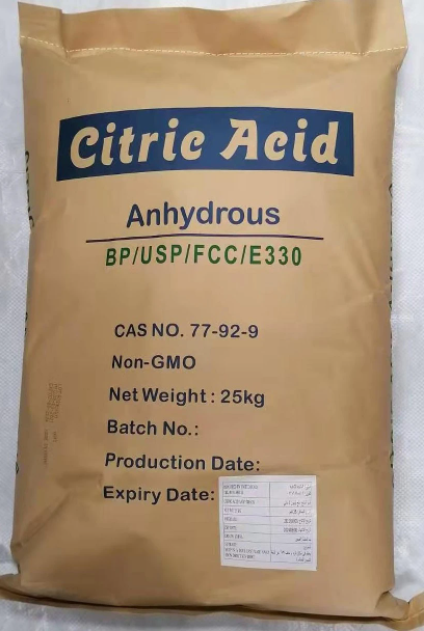
Main trading products: Coconut shell granular activated carbon (iodine adsorption value ≥ 1,000 mg/g), powdered activated carbon (particle size pass rate of 200 mesh ≥ 95%), columnar activated carbon (diameter 1.5-4.0 mm, customizable), spherical activated carbon (specific surface area ≥ 1,200 m²/g), honeycomb activated carbon (cell density 80-300 cells/in²), polyacrylamide (molecular weight 3-25 million), citric acid (food-grade/industrial-grade), anthracite filter media (particle size 0.5-1.2 mm), polyaluminum chloride (alumina content ≥ 28%), sodium hydroxide (flakes/granules).
The company has always adhered to the business philosophy of "integrity-based, reputation first, win-win cooperation, and dedicated service," focusing on customers and working hand in hand with global clients to pursue mutual development. For more information, please visitOfficial website: www.shanghaimurong.com