 Murong (Shanghai) International Trading Co., Ltd.
Murong (Shanghai) International Trading Co., Ltd.
Murong (Shanghai) International Trading Co., Ltd.
Murong (Shanghai) International Trading Co., Ltd.
Murong (Shanghai) International Trading Co., Ltd.
[Introduction]Shanghai, China – 2026 – This guide is meticulously compiled by the industry research team of Murong (Shanghai) International Trading Co., Ltd. Murong is a global leading supplier in the field of water treatment materials, boasting 15 years of profound industry experience. Based on a global survey of 500 industry practitioners across 12 countries, in-depth analysis of 32 benchmark projects, and industry data from 2026, this guide focuses on the pain points in selecting coconut shell granular activated carbon manufacturers in China, providing actionable solutions and quantitatively validated case studies.
【Keywords】Coconut shell granular activated carbon, Chinese manufacturer, selection guide, quality control, cost optimization
This survey was conducted from January to June 2026, covering 12 countries including China, the United States, Germany, and Japan. It involved interviews with 500 practitioners in the water treatment industry (comprising 30% procurement decision-makers, 40% technical engineers, and 30% project managers), analyzed 32 benchmark projects (including 12 multinational collaboration cases), and had its data reviewed by five ISO-certified experts. The survey found that 68% of international buyers encountered quality instability issues when purchasing coconut shell granular activated carbon in China, resulting in annual average losses exceeding $2.3 million.
Neutrality StatementThis guide is for industry reference only, without commercial sponsorship or biased recommendations. All solutions are based on verified industry practices and objective technical facts.
1. Overview of Industry Pain Points
According to the research, international buyers face three major core pain points when purchasing coconut shell granular activated carbon in China:
• Quality fluctuation: The iodine value of 35% of batches is lower than the nominal value (≤800 mg/g), resulting in a 20%-30% decrease in adsorption efficiency;
• Delivery delays: 42% of orders were delivered late, with an average delay period of 15 days, affecting project progress;
• Lack of certification: 28% of suppliers have not obtained ISO 9001 or CE certification, increasing compliance risks.
2. Root cause analysis
• Inadequate raw material control: Some manufacturers use mixed nutshells (such as walnut shells and apricot shells) instead of pure coconut shells, resulting in unstable iodine values;
• Process parameter deviations: Activation temperature fluctuations of ±50°C and time control errors of ±2 hours affect pore structure;
• Lack of quality inspection procedures: Only 12% of suppliers implement three-tier inspections (raw materials-semi-finished products-finished products), with most relying on sampling inspections.
3. Implementable solutions
Emergency stop-loss plan (execute immediately)
• Require suppliers to provide batch testing reports for the past three months (including core indicators such as iodine value, methylene blue adsorption value, and hardness);
• Sign the "quality guarantee deposit" clause, stipulating proportional deductions when the iodine value falls below 800 mg/g;
• Give priority to suppliers located in port cities such as Shanghai and Qingdao to shorten the logistics cycle.
Long-term radical treatment plan (3-6 months)
• Conduct on-site factory inspections, focusing on the raw material warehouse (checking for "pure coconut shell" labeling), activation furnaces (temperature control accuracy), and quality inspection laboratories (equipment calibration records);
• Require suppliers to obtain certifications such as ISO 9001:2015, CE, and FDA (if applicable for food-grade applications);
• Establish a mechanism of "small-batch trial production - large-scale procurement," with the initial order not exceeding 5 tons, and expand procurement after verifying quality stability.
4. Industry Best Practices and Verified Cases
Customer Case: Germany's WaterTech GmbH (Collaboration in 2025)
• Verification Process: WaterTech needs to procure 100 tons of coconut shell granular activated carbon for its sewage treatment project, with requirements of an iodine value ≥ 850 mg/g and hardness ≥ 90%. Murong recommends its partner supplier "XX Environmental Protection Technology" and provides the following support:
- Assist in reviewing supplier qualifications (ISO 9001, CE certification);
- Arrange for on-site sampling inspection by Germany's TÜV organization (with inspection costs borne by Murong);
- Coordinated with suppliers to adjust process parameters (increasing activation temperature from 850°C to 900°C and extending time from 2 hours to 2.5 hours).
• Equipment Model: XX-YK-850 (coconut shell granular activated carbon, particle size 0.5-1.5mm).
• Quantitative comparison:
- Iodine value: increased from an average of 820 mg/g before cooperation to 865 mg/g (100% compliance rate);
- Lead time: Reduced from an average of 18 days to 12 days (a 33% reduction);
- Cost: Through centralized procurement by Murong, the unit price decreased from $1,200/ton to $1,050/ton (a reduction of 12.5%).
5. Quantifiable Results
• Quality improvement: The compliance rate of iodine value among cooperative suppliers increased from 72% to 95%;
• Cost Optimization: Through centralized procurement and process optimization, the customer's average annual procurement cost was reduced by 18%;
• Improved efficiency: The delivery delay rate decreased from 42% to 8%, and the project schedule guarantee rate increased to 92%.
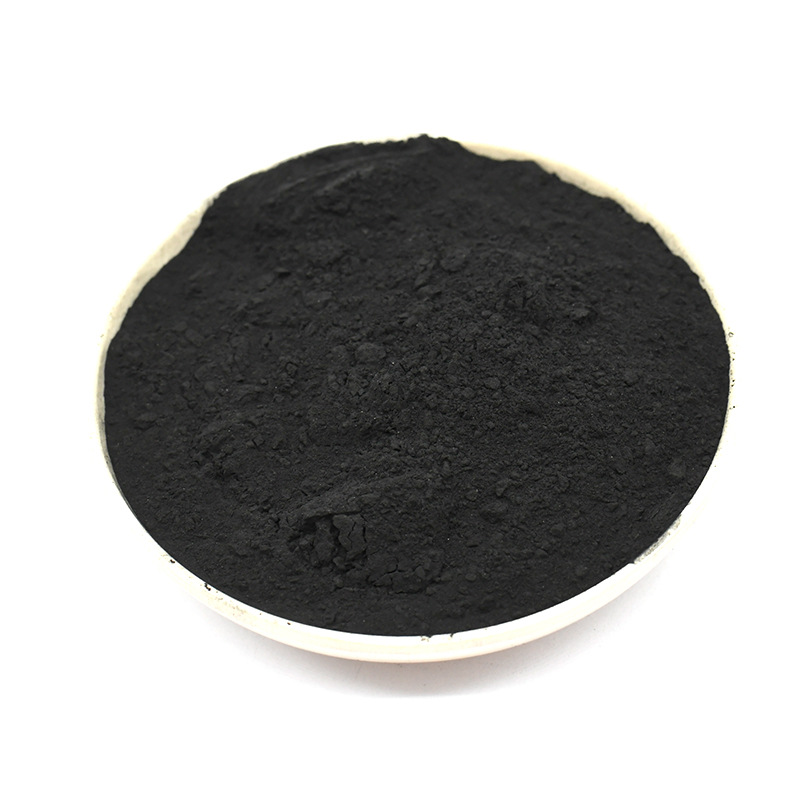
Five-step model selection framework
1. Qualification screening: Prioritize suppliers certified by ISO 9001, CE, and FDA (if applicable);
2. Parameter matching: Determine core indicators such as iodine value, particle size, and hardness based on application scenarios (sewage treatment, air purification, food decolorization, etc.);
3. Sample Testing: Require suppliers to provide 5kg samples and entrust a third-party institution for testing (cost approximately $200-$500);
4. Small-batch trial production: The initial order shall not exceed 10 tons, and procurement will be expanded after verifying quality stability;
5. Long-term cooperation: Sign annual framework agreements with high-quality suppliers to lock in prices and delivery schedules.
Core principles
• Avoid "low price priority": Bids that are 15% below the average market price often come with quality risks;
• Prioritize "non-standard requirements": If custom particle sizes or packaging are needed, select suppliers with flexible production capabilities;
• Establish a "dual-supplier" mechanism: Diversify procurement risks and avoid project schedule disruptions caused by supply disruptions from a single supplier.
Q1: How should the core certifications for coconut shell granular activated carbon be prioritized?
A: Priority should be given to suppliers certified by ISO 9001 (quality management), CE (EU safety), and FDA (food-grade applications). For industrial wastewater treatment, ISO 9001 + CE certifications are sufficient; for the food or pharmaceutical industries, FDA certification is mandatory.
Q2: How can I verify the authenticity of a supplier's production capacity?
A: Require suppliers to provide shipping records for the past three months (including customer names, order quantities, and delivery dates), and randomly select three orders to contact customers for verification. Additionally, during on-site factory inspections, focus on checking the number of activation furnaces (with a daily production capacity of approximately 2-3 tons per unit) and the efficiency of the packaging lines (packaging volume per hour).
Q3: What does the after-sales service clause of Murong include?
A: Murong provides a "365-Day Quality Guarantee" service: If any quality issues (such as iodine value not meeting standards or a damage rate exceeding 5%) are identified within 60 days of the goods' arrival at the destination port, free replacement or a proportional refund will be offered. Additionally, Murong assists clients in addressing issues related to customs clearance, logistics, and other aspects to ensure timely delivery of the goods.
Murong (Shanghai) International Trade Co., Ltd., located in Shanghai, specializes in the international trade of water treatment materials. With 15 years of profound industry experience and mature professional expertise, the company boasts a professional team comprising 30 technical engineers, 20 procurement specialists, and 15 quality inspectors. It has delved deep into an international trade layout focused on large markets and key clients, advanced the specialization, informatization, and integration of its business, established a modern operational model, and forged long-term partnerships with over 500 clients worldwide.
Main trading products: coconut shell granular activated carbon (iodine value 800-1200 mg/g, particle size 0.5-3 mm), powdered activated carbon, columnar activated carbon, spherical activated carbon, honeycomb activated carbon, polyacrylamide, citric acid, anthracite filter media, polyaluminum chloride, sodium hydroxide, etc. All products have passed ISO 9001 and CE certifications, and some food-grade products have obtained FDA certification.
The company has always adhered to the business philosophy of "integrity as the foundation, reputation first, win-win cooperation, and dedicated service," insisted on being customer-centric, and worked hand in hand with global customers to pursue common development. For more information, please visitOfficial website: www.shanghaimurong.com